Still, we have no cause to apprehend a depression comparable to that of the former period, or even to anticipate a deficiency which will intrench upon the ability to apply the annual $10 millions to the reduction of the debt.
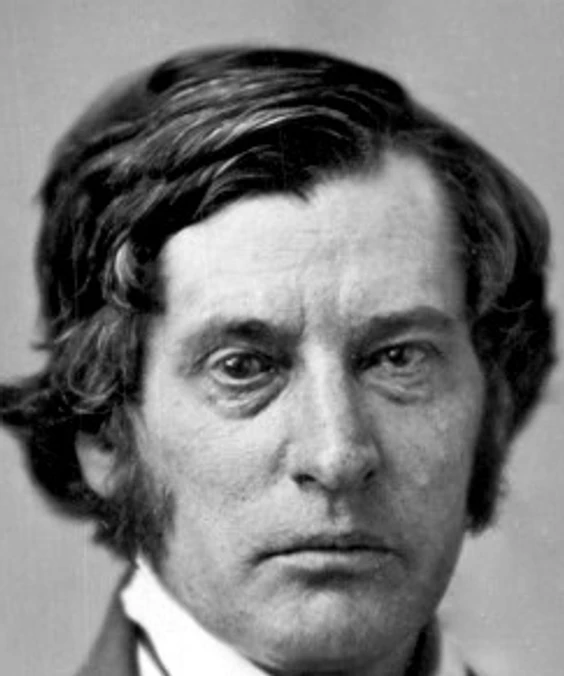
John Quincy Adams
The Public Record
John Quincy Adams was an American statesman and diplomat who served as the sixth President of the United States from 1825 to 1829. A member of the Democratic-Republican Party, he was born on July 11, 1767, in Braintree, Massachusetts. Adams was a strong advocate for modernization and education, and he played a significant role in shaping American foreign policy during his tenure as Secretary of State from 1817 to 1825, where he was instrumental in formulating the Monroe Doctrine.
gutenberg.org
It is well for us, however, to be admonished of the necessity of abiding by the maxims of the most vigilant economy, and of resorting to all honorable and useful expedients for pursuing with steady and inflexible perseverance the total…
It was the introduction of a system to act upon the character and history of our country for an indefinite series of ages.
It was a declaration of that Congress to their constituents and to posterity that it was the destiny and the duty of these confederated States to become in regular process of time and by no petty advances a great naval power.
The piracies with which the West India seas were for several years infested have been totally suppressed, but in the Mediterranean they have increased in a manner afflictive to other nations, and but for the continued presence of our…
When we reflect that the objects effected by the transportation of the mail are among the choicest comforts and enjoyments of social life, it is pleasing to observe that the dissemination of them to every corner of our country has…
The public faith no less than the just rights of individuals and the interest of the community itself appears to require further provision for the speedy settlement of those claims, which I therefore recommend to the care and attention of…
If we turn our thoughts to the condition of their country, in the contrast of the first and last day of that half century, how resplendent and sublime is the transition from gloom to glory!
To preserve, to improve, and to perpetuate the sources and to direct in their most effective channels the streams which contribute to the public weal is the purpose for which Government was instituted.
Our relations of friendship with the other nations of the earth, political and commercial, have been preserved unimpaired, and the opportunities to improve them have been cultivated with anxious and unremitting attention.
The radical principle of all commercial intercourse between independent nations is the mutual interest of both parties.
It is the vital spirit of trade itself; nor can it be reconciled to the nature of man or to the primary laws of human society that any traffic should long be willingly pursued of which all the advantages are on one side and all the burdens…
Treaties of commerce have been found by experience to be among the most effective instruments for promoting peace and harmony between nations whose interests, exclusively considered on either side, are brought into frequent collisions by…
In framing such treaties it is the duty of each party not simply to urge with unyielding pertinacity that which suits its own interest, but to concede liberally to that which is adapted to the interest of the other.
The commercial intercourse between the two countries is greater in magnitude and amount than between any two other nations on the globe.
It becomes not the self respect of the United States either to solicit gratuitous favors or to accept as the grant of a favor that for which an ample equivalent is exacted.
Weakened as it has occasionally been since that time, it can by us never be forgotten, and we should hail with exultation the moment which should indicate a recollection equally friendly in spirit on the part of France.
To this offer no definitive answer has yet been received, but the gallant and honorable spirit which has at all times been the pride and glory of France will not ultimately permit the demands of innocent sufferers to be extinguished in the…
It has been, therefore, with some concern that we have observed indications of intestine divisions in some of the Republics of the south, and appearances of less union with one another than we believe to be the interest of all.
But among the maxims of political economy which the stewards of the public moneys should never suffer without urgent necessity to be transcended is that of keeping the expenditures of the year within the limits of its receipts.
The establishment of a naval academy, furnishing the means of theoretic instruction to the youths who devote their lives to the service of their country upon the ocean, still solicits the sanction of the Legislature.
The acquisition of them, made at the expense of the whole Union, not only in treasury but in blood, marks a right of property in them equally extensive.
More than nine tenths of the lands still remain the common property of the Union, the appropriation and disposal of which are sacred trusts in the hands of Congress.
It can never be the interest or the policy of the nation to wring from its own citizens the reasonable profits of their industry and enterprise by holding them to the rigorous import of disastrous engagements.
In the relations of our Federal Union with our brethren of the human race the changes which have occurred since the close of your last session have generally tended to the preservation of peace and to the cultivation of harmony.
Politicians like John Quincy Adams