Our commercial relations with Great Britain will deserve the serious consideration of Congress and the exercise of a conciliatory and forbearing spirit in the policy of both Governments.
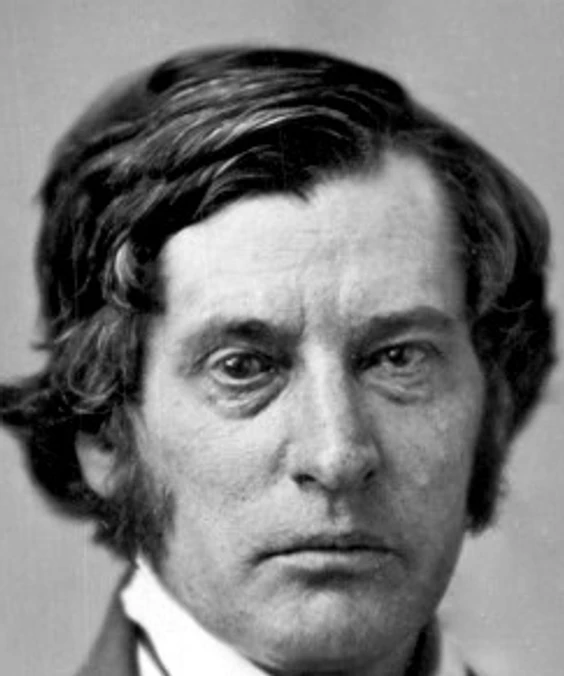
John Quincy Adams
The Public Record
John Quincy Adams was an American statesman and diplomat who served as the sixth President of the United States from 1825 to 1829. A member of the Democratic-Republican Party, he was born on July 11, 1767, in Braintree, Massachusetts. Adams was a strong advocate for modernization and education, and he played a significant role in shaping American foreign policy during his tenure as Secretary of State from 1817 to 1825, where he was instrumental in formulating the Monroe Doctrine.
gutenberg.org
The effect of the interdiction of direct trade, commenced by Great Britain and reciprocated by the United States, has been, as was to be foreseen, only to substitute different channels for an exchange of commodities indispensable to the…
The colonies pay more dearly for the necessaries of life which their Government burdens with the charges of double voyages, freight, insurance, and commission, and the profits of our exports are somewhat impaired and more injuriously…
The resumption of this old and otherwise exploded system of colonial exclusion has not secured to the shipping interest of Great Britain the relief which, at the expense of the distant colonies and of the United States, it was expected to…
This system, first proclaimed to the world in the first commercial treaty ever concluded by the United States--that of February 6th, 1778, with France--has been invariably the cherished policy of our Union.
It is by treaties of commerce alone that it can be made ultimately to prevail as the established system of all civilized nations.
With this principle our fathers extended the hand of friendship to every nation of the globe, and to this policy our country has ever since adhered.
What ever of regulation in our laws has ever been adopted unfavorable to the interest of any foreign nation has been essentially defensive and counteracting to similar regulations of theirs operating against us.
The conclusion of our last treaty of peace with Great Britain was shortly afterwards followed by a commercial convention, placing the direct intercourse between the two countries upon a footing of more equal reciprocity than had ever…
The same principle has since been much further extended by treaties with France, Sweden, Denmark, the Hanseatic cities, Prussia, in Europe, and with the Republics of Colombia and of Central America, in this hemisphere.
It is, indeed, a general law of prosperous commerce that the real value of exports should by a small, and only a small, balance exceed that of imports, that balance being a permanent addition to the wealth of the nation.
The extent of the prosperous commerce of the nation must be regulated by the amount of its exports, and an important addition to the value of these will draw after it a corresponding increase of importations.
This new element of prosperity to that part of our agricultural industry which is occupied in producing the first article of human subsistence is of the most cheering character to the feelings of patriotism.
The great interests of an agricultural, commercial, and manufacturing nation are so linked in union together that no permanent cause of prosperity to one of them can operate without extending its influence to the others.
So far as the object of taxation is to raise a revenue for discharging the debts and defraying the expenses of the community, its operation should be adapted as much as possible to suit the burden with equal hand upon all in proportion…
But the legislation of one nation is some times intentionally made to bear heavily upon the interests of another.
That legislation, adapted, as it is meant to be, to the special interests of its own people, will often press most unequally upon the several component interests of its neighbors.
If the tariff adopted at the last session of Congress shall be found by experience to bear oppressively upon the interests of any one section of the Union, it ought to be, and I can not doubt will be, so modified as to alleviate its burden.
The obstruction of one avenue of trade not unfrequently opens an issue to another.
The tariff of the last session was in its details not acceptable to the great interests of any portion of the Union, not even to the interest which it was specially intended to subserve.
Its object was to balance the burdens upon native industry imposed by the operation of foreign laws, but not to aggravate the burdens of one section of the Union by the relief afforded to another.
If we suppose the case of such conflicting legislation sustained by the corresponding executive and judicial authorities, patriotism and philanthropy turn their eyes from the condition in which the parties would be placed, and from that of…
At the establishment of the Federal Government under the present Constitution of the United States the principle was adopted of considering them as foreign and independent powers and also as proprietors of lands.
They were, moreover, considered as savages, whom it was our policy and our duty to use our influence in converting to Christianity and in bringing within the pale of civilization.
As independent powers, we negotiated with them by treaties; as proprietors, we purchased of them all the lands which we could prevail upon them to sell; as brethren of the human race, rude and ignorant, we endeavored to bring them to the…
Politicians like John Quincy Adams