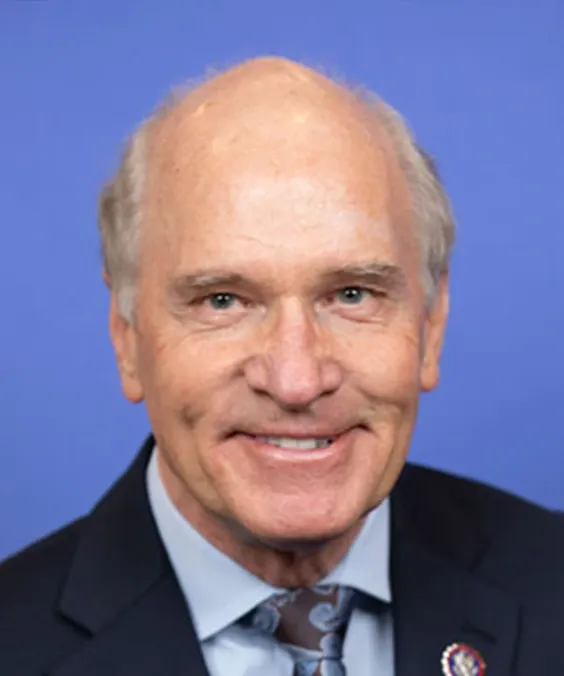
Jim McGovern
The Public Record
Jim McGovern is a Democratic member of the United States House of Representatives, representing Massachusetts's 2nd congressional district since 1997. He has been a strong advocate for issues such as hunger, human rights, and healthcare. Throughout his tenure, McGovern has focused on policies aimed at reducing food insecurity and promoting social justice. He has also been involved in various legislative efforts to improve access to healthcare for all Americans.
Apr 4, 2022
I would like to make the following recommendations to the United States Congress: One, conduct further hearings and testimonies to investigate the serious human rights violations in Southern Mongolia, in particular the ongoing cultural…
Apr 4, 2022
So I look forward to hearing from our witnesses today about the threats to the Mongolian, Tibetan, and Uyghur languages under PRC policies.
Mar 28, 2022
I think though we do have to fix the FDA situation on this, and I think we can do it in a bipartisan way.
Mar 28, 2022
I just want to let you know your advocacy, today you have just got a new sponsor on that bill.
Mar 16, 2022
I want to suggest, after listening to our discussion, that there may be a case for a limited use of proxy voting in the future if there is a major natural disaster in your district, the death of somebody in your family, or a severe illness…
Mar 16, 2022
I think there are situations in the future, post-pandemic, that we heard here today where there might be exceptions, you know, where proxy voting might be useful.
Mar 16, 2022
I think what we did was an absolute necessity. And you are to be commended for your leadership, Mr. Chairman.
Mar 16, 2022
This is not about anything other than giving people the opportunity during these difficult times or during difficult times in their life to be able to participate.
Mar 16, 2022
I do think it probably hurt the ability to collaborate, you know? Because where the friendships really develop are in passing, at dinner, you know, doing sports together, family outings together.
Mar 16, 2022
I think this is--I guess I would--one thing you had suggested, Mr. Roy--and I appreciate this--is, you know--because we are trying in the Modernization Committee to figure out a better way to schedule things.
Mar 16, 2022
Members should be able to avail themselves of proxy voting if they have a compelling medical reason to do so or, I would say, a compelling family reason to do so.
Mar 16, 2022
I think that Mr. Gallagher has put his finger on the question we need to deal with, which is, have there been abuses of this system?
Mar 16, 2022
The principle there the court said in a 7-to-1 decision... was that there is a reasonable expectation of privacy embodied in the Fourth Amendment.
Mar 16, 2022
I think all of us are called upon to do that, and that is why this is an important and fundamental conversation that we are having today.
Mar 16, 2022
The Supreme Court has been very emphatic actually that the values and the principles of the Constitution must be applied by us through the prism of new and existing technology.
Mar 16, 2022
I think that was a testament to the strength of what this body is supposed to mean by our doing our jobs and being physically present.
Mar 16, 2022
I think that is a reasonable, legitimate, and compelling exercise of our power under Article I, section 5, to set the rules of our own proceedings.
Mar 16, 2022
I would say, at the very least, for dealing with a death or very serious illness in the family, Members should be able to meet their constitutional duties of representing their constituents and also meet their family needs.
Mar 16, 2022
I think it is me, okay. I live closer to the Capitol than any other Member of Congress.
Mar 16, 2022
The people's voice was enabled to be heard by virtue of the proxy voting that we developed.
Mar 16, 2022
I continue to believe that what we did at a very challenging time saved lives here.
Politicians like Jim McGovern