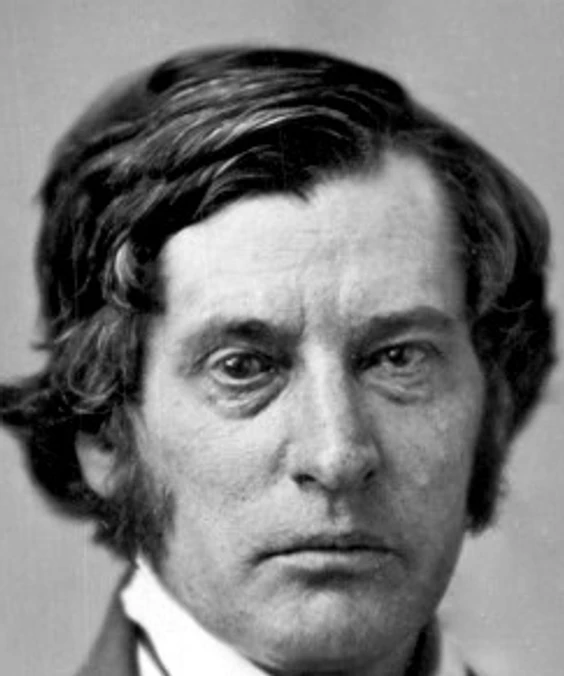
If he failed to make an impression by argument, he took to invective.
George F. Hoar
The Public Record
gutenberg.org
He seemed never to care for the soundness of his opinion before he uttered it, or for the truth of the fact before he said it, if only he could produce a rhetorical effect.
In these days monarchs are learning the love of liberty, and I believe in most cases to-day the reigning sovereigns of Europe are eager to promote constitutional government, and prefer the title of Liberator to that of Despot.
Hungary and Hungary's chief city seem rapidly to be asserting control in their own affairs and an influence in the Austro-Hungary Empire which no monarch will be able to withstand, and which it is quite likely the royal family will not…
But I incline to the belief that, while undoubtedly there may be great truth in the opinion, the spirit of liberty will overcome that danger.
He said the sovereign would always be able to use the military and civil power of one to accomplish his designs against the liberty of the other.
He maintained that constitutional liberty could never be permanent where two countries with separate legislatures were under one sovereign.
To understand it, is to know the secret not only of reaching the heart, but frequently of convincing the understanding of man.
Why it is that two words or phrases which mean precisely the same thing to the intellect, have so different an effect on the emotions, no man can tell.
He seemed to have mastered the whole vocabulary of English speech, and to have a rare gift of choosing words that accurately expressed his meaning, and he used so to fashion his sentences that they were melodious and delightful to the ear.
He cannot follow nor frame ideals; his choice is to be what his age would have him, what it requires in order to be moved by him, or else not to be at all.
The sympathy and concurrence of his time is, with his own mind, joint parent of his work.
Everything needed seems to come out from the secret storehouses of the mind, even the things that have lain there forgotten, rusting and unused.
There is nothing like it as a stimulant to every faculty, not only imagination, and fancy, and reason, but especially, as every experienced speaker knows, memory also.
One thing especially distinguishes our modern orator from the writer in the closet, where he writes solely for his readers, or where he has prepared his speeches beforehand--that is, the influence of the audience upon him.
Some lofty sentiment, some stirring incident, some patriotic emotion, some play of fancy or wit comes from the brain or heart of the speaker.
If any speaker have to get ready in a hurry for a great occasion, let him look through the index of the four volumes of Everett's speeches, and he will find matter enough, not only to stimulate his own thought and set its currents running…
If it be commonplace and hackneyed he makes it fresh and pleasant by giving in detail the circumstances when it was first uttered, or describes some occasion when some orator has applied it before; or calls attention to its very triteness…
If it be new to his audience, he adds to it a newer delight still by his matchless skill as a narrator-- a skill almost the rarest of all talents among public speakers.
It must give voice to its love and its approbation and its condemnation.
In sorrow it must utter its cry of pain; in victory, its note of triumph.
That is the giving utterance to the emotion of the people, whether of joy or sorrow, on the occasions when its soul is deeply stirred--when some great man dies, or there is a great victory or defeat, or some notable anniversary is…
There is one function of the orator peculiar to our country, and almost unknown elsewhere.
He was above all things--I am tempted to say, above all men--the foremost American orator in one class.
Edward Everett seems to me, on the whole, our best example of the orator, pure and simple.
Politicians like George F. Hoar