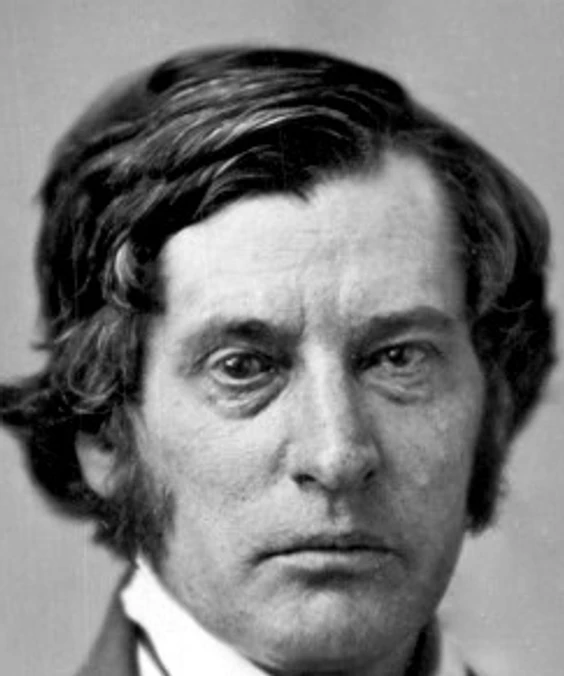
He was the best writer, the best speaker and the best mathematician, the most accomplished person in his knowledge of general literature in the class,--indeed, I suppose, in college,--in his day.
George F. Hoar
The Public Record
gutenberg.org
He was one of the most simple-hearted, affectionate, spotless and lovable of men.
He was at the head of his profession in the country in his own department, became Dean of the Harvard Medical School, and was loved and revered by his numerous pupils as by the members of his profession.
In it were several persons who became eminent scholars and teachers, and some who have been eminent in other walks of life.
One of the seniors, who was a rather dull-witted but well-meaning youth, concluded that it was his duty to inform the Faculty of offences committed by his classmates, a proceeding it is needless to say contrary to all the boys' sentiments…
There was nothing in my time equivalent to what used to be called a rebellion in the older days, and I believe no such event has occurred for the last fifty years.
There was no person among the Faculty at Cambridge who seemed less likely to commit such a bloody and cruel crime as that for which he was executed.
I remember once going into Boston in the omnibus when Peirce got in with a letter in his hand that he had just got from abroad and saying with great exultation to Professor Felton, who happened to be there, "Gauss says I am right.
Undoubtedly he was the foremost American mathematician of his time.
He was a Free Soiler and an Abolitionist, liberally contributing to the Sanitary Commission, and to all agencies for the benefit of the soldiers and the successful prosecution of the war.
I should think it well worth living for to have made that discovery.
His mistake was, in large measure, the prevalent mistake of the College in his time,--the use of ridicule and severity instead of sympathy as a means of correcting the faults incident to youth.
For fresh, racy and correct style, for clear perception and exquisite literary taste, it is one of the best books on the subject, as it one of the best books on any subject ever written by an American.
I have read again lately his book on Rhetoric and Oratory since what I said a little while ago was dedicated, and I wish to reaffirm my high opinion of the book.
He indignantly rejected it, and declared he would not eat a creature that he loved.
He was a man of wonderful learning, --I dare say the best Greek scholar of his generation, whether in Europe or America.
They thought if they could but wring the neck of the crowing cock it would never be day.
If, however, this unexpected recoil of his nature does not induce him to change his purpose altogether, he knows but too well how to supply the defect in training for sin.
Sometimes the novice in crime thinks himself ready to act when he is not; as appears from his hesitancy and reluctance when the moment for action arrives.
The scene had been enacted in thought and the man had become rotten before the time of the outward act.
He said there was no such thing as a sudden fall from virtue.
He was certainly one of the best examples of a fully rounded scholarship which this country or perhaps any country ever produced.
Speaking of Quincy he said: "He would be reckoned among honorable men, though their number were reduced to that of the mouths of the Nile or the gates of Thebes.
One of his passages describing the office-seekers tumbling over each other like pigs to a trough will be long remembered.
He made some very powerful speeches in the House of Representatives, attacking the greed and office-seeking of that time.
Politicians like George F. Hoar