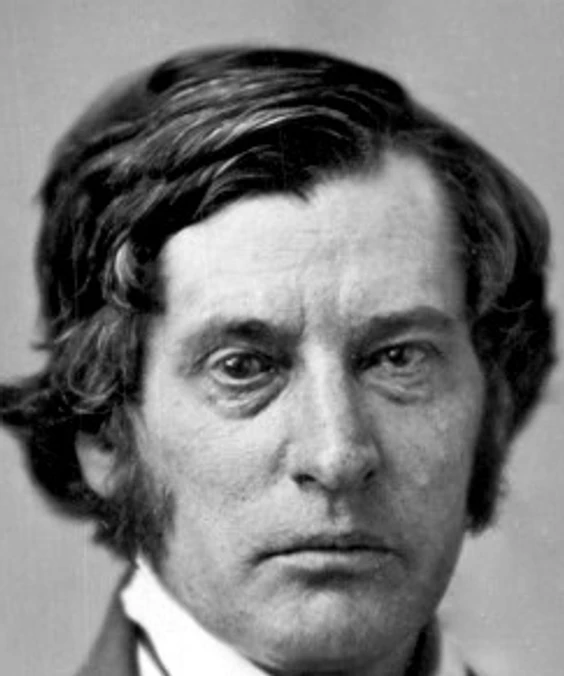
But he knew what the farmer and the mechanic and the workman at his bench were thinking of, and addressed himself always to their best and highest thought.
George F. Hoar
The Public Record
gutenberg.org
As you would expect from a man who raised himself from the humblest to the loftiest place in the republic, he was a believer in pure manhood, without respect of persons or conditions.
There was not a drop of bigotry, intolerance, or personal hatred in him.
He espoused the unpopular side when he started in life, and he stuck to it through all its unpopularity.
But they were always subordinate in him to the love of liberty and the love of country.
It will go down to immortality with its foot upon the dragon of Slavery, and with the sword of the spirit in its hand, but with a tender light in its eye, and a human love in its smile.
He contributed largely to the Government of his country, in the most trying period of our history, its motive and its direction.
He did the thing that most needed to be done, the thing most effective at the time, the thing that no other man did or could do.
He believed that the conscience of the people was a better guide than individual ambitions.
He accomplished wise public ends by wise means.
He caused sound principles of action to take effect in the Government of the State in great emergencies.
Yet the influence of one such man pressing and urging his companions forward in a Legislative body like the Senate of the United States, keeping ever before the people the highest ideals, inspired by the love of liberty, and ever speaking…
His example of absolute disregard of constitutional restraints will be followed by men of very different motives.
Unfortunately, humanity is so constituted that the benevolent despot is likely to work more mischief even than a malevolent despot.
We should be deaf and blind to all the lessons of history, if we were to declare it to be safe that men trusted with Executive or even with Legislative power should act on that principle.
Where duty seemed to him to utter its high commands he could see no obstacle in hostile majorities, and no restraint in the limitations of a written Constitution.
He subjected every measure to the inexorable test of the moral law.
But he was its dominant member and in a later Congress introduced the Bill for Reforming the Currency, a wise and salutary measure.
Charles Sumner was beyond all question the foremost figure on the National stage, save Grant alone.
When I took my seat on the 4th of March, 1869, the Commonwealth of Massachusetts had a position of power in both Houses of Congress never held by any other State before or since, unless we except that held for a short time in early days by…
The judgment of each was warped and clouded, until each looked with a blood-shotten eye at the conduct of the other.
Sumner did injustice to Grant; Grant did injustice to Sumner.
It sometimes seemed as if Sumner thought the Rebellion itself was put down by speeches in the Senate, and that the war was an unfortunate and most annoying, though trifling disturbance, as if a fire- engine had passed by.
The training, the mental characteristics, the field of service, the capacities, the virtues, the foibles of each tended to make him underestimate and misunderstand the other.
Yet never were two honest, fearless, patriotic, and brave men more unlike each other.
Politicians like George F. Hoar