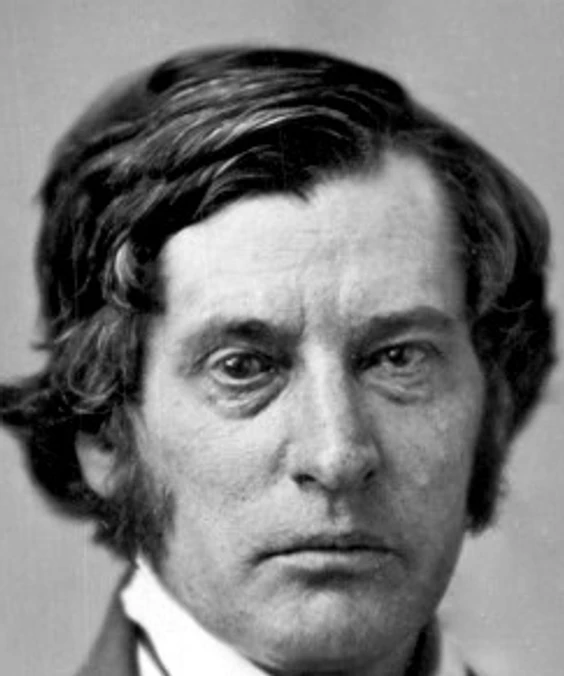
But no better Judge ever sat in a Massachusetts court-house.
George F. Hoar
The Public Record
gutenberg.org
Nothing shakes the authority of a court more than the frequent habit of individual dissent.
If he had any foible which affected at all his usefulness or success in life it was an impatience of authority, whether it were the authority of a great reputation, or of party, or of public sentiment, or of the established and settled…
He became a very profound lawyer, always mastering the learning of the case, but never leaning too much upon authorities.
He was a consummate advocate, a favorite alike with Judges and jurors, winning his causes wherever success was possible, and largely employed.
He was impulsive, somewhat passionate, but still with an affectionate, sunny, generous nature, and a large heart, to which malice, hatred, or uncharitableness were impossible.
He was one of the very greatest of American lawyers.
But he had little respect for any false notions of gentility, and had a habit of going straight at any difficulty himself.
He was public-spirited, wise, kind-hearted, always ready to give his service without hope of reward or return to any good cause, a pillar of the town, a pillar of the church.
It seemed as if a client no sooner put his head on the handle of Washburn's office-door than his heart warmed to him like that of a mother toward her first-born.
His mind was like a steel spring pressing on every part of the other side's case.
Yet he probably won more cases, year in and year out, than either of them.
It was a force before which Webster himself more than once recoiled.
He was in my judgment a greater intellectual force than any other man in his time, Daniel Webster not excepted.
The Governor was, as just said, an example of Emerson's famous saying that a Conservative is a Democrat grown old and gone to seed.
As vanish the mists of the morning before the rays of a sunbeam, so error withdrew from the inquiries of the understanding.
He did more, probably, than any other man to organize and bring to success the political revolution in New England which followed Jefferson's accession to the Presidency in 1801.
But the figure of John Davis deserves to stand by the side of these great men in imperishable memory as one of the foremost men of the State he loved so well and served so faithfully and wisely.
The majestic presence of Webster, the classic eloquence of Everett, the lofty zeal of Sumner have made them more conspicuous figures in the public eye, and it is likely will preserve their memeory longer in the public heart.
He was a great, strong, wise man, a champion and tower of strength.
Let nobody think that there was anything trifling or ludicrous about John Davis.
When he had inserted his wedge, he drove it home with a few sledge-hammer blows.
But he had a gift of driving his point home to the apprehension of juries and of the people which was rarely equalled.
They are brief, compact, written in excellent English, and precisely fit the case before him without any extraneous or superfluous matter.
Judge Metcalf's legal opinions will read, I think, in the future, as well as those of any Judge of his time.
Politicians like George F. Hoar