To set a peaceful example of freedom which mankind will be glad to follow, but never to force even freedom upon unwilling nations at the point of the bayonet or at the cannon's mouth.
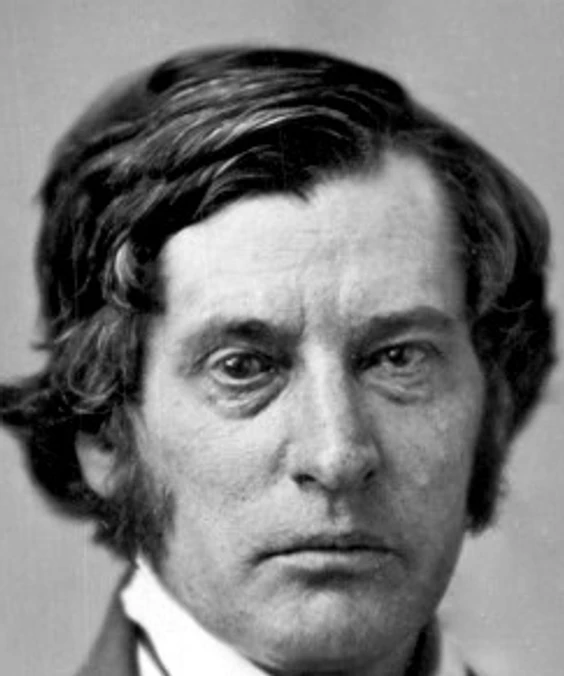
George F. Hoar
The Public Record
gutenberg.org
To grow and expand over the continent and over the islands of the sea just so fast, and no faster, as we can bring into equality and self-government under our Constitution peoples and races who will share these ideals and help to make them…
To secure for every workman and for every working woman wages enough to support a life of comfort and an old age of leisure and quiet, as befits those who have an equal share in a self-governing State.
To banish illiteracy and ignorance from the land.
To make the ballot box as pure as a sacramental vessel, and the election return as perfect in accord with the law and the truth as a judgment of the Supreme Court.
To enable great cities to govern themselves in freedom, in honor, and in purity.
Resolved, That this Republic adheres to the doctrines which were in the past set forth in the Declaration of Independence and in its National and State constitutions.
I close this book with a statement of the political principles which I think define the duty of the American people in the near future, and from which I hope the Republic will not depart until time shall be no more; and of the simple…
Everything that can make life honorable, everything that can make life happy-- honor, success, the consciousness of usefulness, the regard of his countrymen, and the supremest delight of family life-- all were his.
Judge Gray's opinions for the eighteen years during which he sat on the Bench of Massachusetts constitute an important body of jurisprudence, from which the student can learn the whole range of the law as it rests on principle and on…
He had the rare gift, especially rare in men whose training has been chiefly upon the Bench, of discerning the truth of the fact, in spite of the apparent weight of the evidence.
I think Judge Gray's fame, on the whole, would have been greater as a man of original power if he had resisted, sometimes, the temptation to marshal an array of cases, and had suffered his judgments to stand on his statement of legal…
I do not think of any Judge of his time anywhere, either here or in England, to whom the profession would ascribe a higher place if he be judged only by the correctness of his opinions in cases where there were no precedents on which to…
But while all his opinions are full of precedent and contain all the learning of the case, he was, I think, equally remarkable for the wisdom, good sense, and strength of his judgments.
The title, which the kindness of our countrymen has given to Massachusetts, that of Model Commonwealth, I think has been earned largely by the character of her Judiciary, and never could have been acquired without it.
He discovered the priceless Body of Liberties of 1641, which had remained unprinted from that time, although the source from which our Bill of Rights and constitutional provisions had been so largely drawn.
He liked to discuss difficult and profound questions of public policy, constitutional law, philosophy, and metaphysics.
He held on like a bull-dog to a case in the justice of which he believed.
Judge Nelson was a master of equity and bankruptcy.
I told him that I had lately been elected to the Senate after a considerable controversy, and that I did not think I could in justice to the people of the State make a vacancy in the office which would occasion a new strife.
His method of speech was clear, simple, spirited, without much pathos or emotion, but still calculated to stir and move his hearers.
He met his father with a clear, simple, modest, but extremely able statement of the other side; pointed out the harmlessness of such exhibitions when well conducted, and that the strictness which confounded innocence and purity with guilt…
He then warned his hearers against the young man who was to follow him, whom, he said, he loved as his life, but he was there employed as a lawyer with his fee in his hand, without the responsibility which rested upon them of protecting…
He stated the deplorable effect of attending such exhibitions on the character of the youth of our city of both sexes, cited the opinion and practice of our ancestors in such matters, and made a profound impression.
He made a most eloquent and powerful appeal to the aldermen to refuse the petition, in the name of morality and good order.
Politicians like George F. Hoar