In my opinion it saved the Presidential election, and, in my opinion, in saving the Presidential election, it saved the country from the incalculable evil of the free coinage of silver.
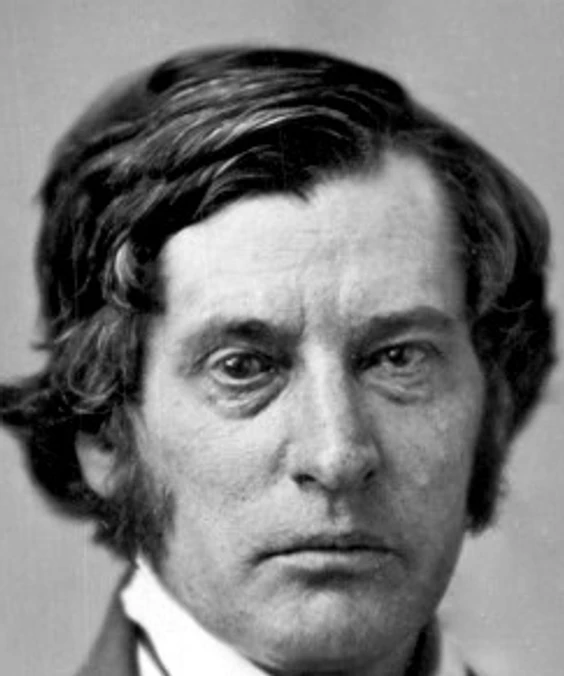
George F. Hoar
The Public Record
gutenberg.org
This contribution, I thought, if Great Britain went no farther, would give great support to silver, and would ensure the success of the concerted attempt of the other commercial nations to restore silver to its old place.
It occurred to me that I could render a very great service to my country, during my absence, if I could be instrumental in getting a declaration from England and France that those countries would join with the United States in an attempt…
It was the doctrine on which the Republicans of Massachusetts, a community noted for its conservatism and business sagacity, had planted the Commonwealth, and it was the doctrine on which the American people planted itself and which…
So, when the nations of the world joined in depriving silver of one of its chief uses--that of serving the function of a tender for the payment of debts, the value of silver diminished because one large use which it had served before was…
But you can, by legislation, compel the use of an article, which use will create a demand for it, and the demand will then increase its price.
The value of every article, whether gold or silver, whether used as money or as merchandise, must depend upon the inexorable law of demand and supply.
You cannot increase the price of a hat, or a coat, or a farm, by act of Congress.
It is as idle to attempt to make an ounce of silver worth as much as an ounce of gold by legislation, as it is to try to make one pound weigh two pounds, or one yard measure two yards.
It is true that you cannot give value to any commodity by law.
I believed then, and I believe now, that we were right in demanding that the Republican Party should go into the campaign with the declaration I have stated.
It should denounce and condemn the attempt to establish the free coinage of silver by the power of the United States alone, and declare that to be practical repudiation and national ruin.
I was, therefore, eager that the Republican Party should state frankly in its platform what I, myself, deemed the sound doctrine.
While gold may be the standard of value, it is too precious to be a convenient medium of payment for small sums, such as enter into the daily transactions of ordinary life.
I believed they were right in themselves, and thought the reasons by which they were supported, although the subject is complex and difficult, likely to find favor with the American people.
But I made as thorough and faithful a study as I could of this great question, and accepted Hamilton's conclusions.
The above, in substance, was the doctrine of Alexander Hamilton, the ablest practical financier and economist that ever lived, certainly without a rival in this country.
If, however, the nations of the world were to agree on one metal alone, it was best that the most precious metal should be taken for that purpose.
It was best, if the nations would consent to it, to have two metals instead of one made legal tender, at a ratio to be agreed upon by all mankind, establishing what was called Bimetallism.
No nation could, without infinite suffering and mischief, undertake to set itself against the rule adopted by the rest of mankind.
They, therefore, demanded that the Republican Party should plant itself squarely on the gold standard; should announce its purpose to make gold the exclusive legal tender for the country, and appeal to the people for support in the…
They insisted that every attempt to restore silver to its old place would be futile, and that the promise to make the attempt, under any circumstances, was juggling with the people, from which nothing but disaster and shame would follow.
They said that nothing could restore silver to its old value as compared with gold; that its fall was owing to natural causes, chiefly to the increased production.
Several eminent Republicans, both in the Senate and in the House, as well as many others in private station, left the Republican Party on that issue.
Bryan's theories, and those of his followers in many parts of the country, had thoroughly alarmed the business men of the Northern and Eastern States.
Politicians like George F. Hoar