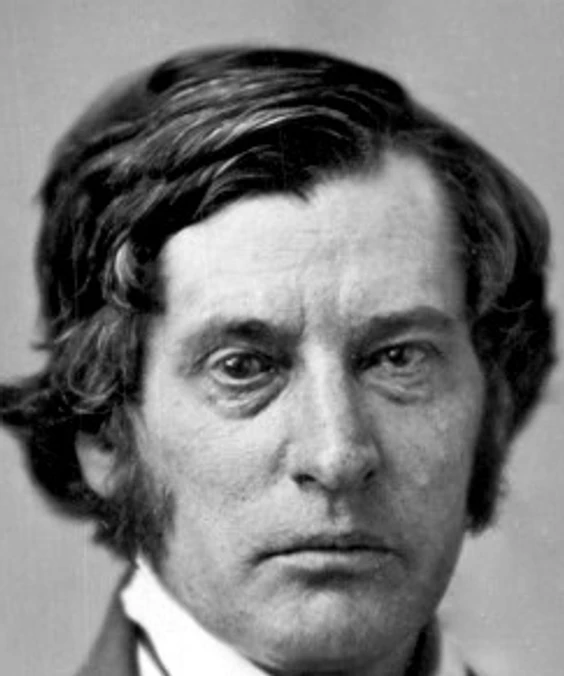
He expressed the personal, individual opinion, that tax laws passed in the absence of representatives from the seceded States would be unconstitutional.
George Boutwell
The Public Record
United States politician (1818–1905)
gutenberg.org
Stephens did not disguise his opinions: "When the State seceded against my judgment and vote, I thought my ultimate allegiance was due to her, and I prepared to cast my fortunes and destinies with hers and her people rather than take any…
Lincoln sought to place the responsibility of war upon the seceding States.
It is not in the public interest that the papers should become the possession of the public.
For my country I have given up all that makes life sweet and holy, brought misery upon my family, and am sure there is no pardon for me in Heaven since man so condemns me.
God cannot pardon me if I have done wrong, yet I cannot see my wrong except in serving a degenerate people.
A country that groaned beneath this tyranny, and prayed for the end, and yet now behold the cold hand they extend to me.
And yet I for striking down a greater tyrant than they ever knew, am looked upon as a common cut-throat.
Our country owed all our troubles to him, and God simply made me the instrument of his punishment.
I can never repent it, though we hated to kill.
Finally he had become maddened by an ambition to rival, or to excel Brutus.
If Booth's diary can be accepted as a faithful representation of his mental condition it will appear that he had on that fatal Friday submitted himself to the influence of three strong passions.
The purpose of the North would have been strengthened, the public feeling would have been embittered and the friendship of England and of the Continental states would have been suppressed.
Lincoln was a wild scheme, born of desperation, and its success would have worked only evil to the Confederacy.
But its failure was owing to others who did not strike for their country with a heart.
But our cause being almost lost something decisive and great must be done.
In no other situation in life is the character of a man more fully and truthfully brought into view than when he is placed upon the witness- stand and subjected to an examination by counsel or others who aim to support opposite opinions…
The injustice and unwisdom of the restrictive legislation in which the Southern States are indulging, are subject of concern for the whole country, but the negro populations have no ground for the complaint that their rights have been…
They were placed upon an equality with other citizens and in the forms of law all discriminations affecting unfavorably the right of suffrage must apply equally to all citizens.
They were relived from the disparaging distinctions that came into existence with the system of slavery.
The public mind seems to be misled in regard to the scope and legal value of the Fourteenth and Fifteenth Amendments.
For the first time in our lives we beseech them to be a little more politicians--and a little less reformers-- as those functions are usually understood.
That is the lesson the war has burned in on the brain and conscience of the Nation.
Whoever, in either House, gratifies some personal whim to the extent of defeating or even postponing this measure will incur the gravest responsibility.
Thus our Government will be made to rest upon the wisest and safest foundation yet devised by man: The Equality of Men in the States, and the Equality of States in the Union.
Politicians like George Boutwell