It is not improbable that a majority of the people now entertain the opinion that the action of the House of Representatives in the attempt that was made to impeach President Johnson was an error.
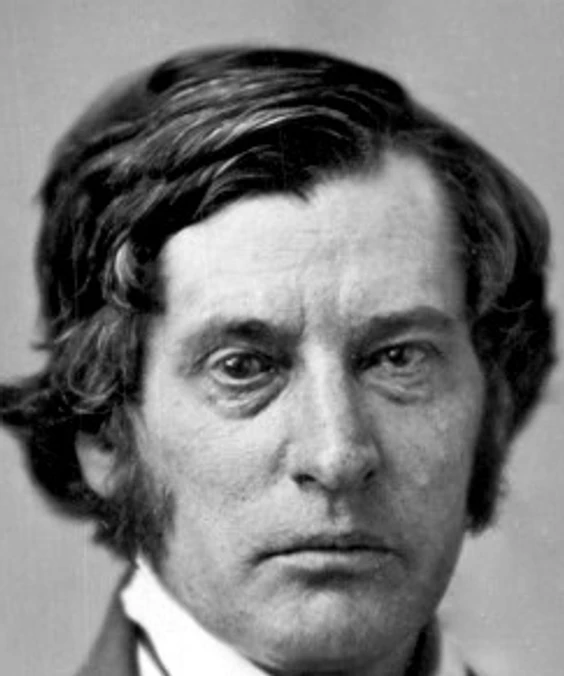
George Boutwell
The Public Record
United States politician (1818–1905)
gutenberg.org
That investigation established the fact that money had been in the possession of persons who had been engaged in efforts to secure the acquittal of the President.
Having reference to the nature of the contest and the condition of public sentiment, I thought it important that the managers should avoid any controversy before the public, especially as to a matter of premiership in the conduct of the…
I cannot doubt the soundness of the opinion that the President, even when impeached by the House, is entitled to his office until he has been convicted by the Senate.
By the Constitution the Chief Justice of the Supreme Court is made the presiding officer in the Senate when the President is put upon trial on articles of impeachment.
It was claimed by the managers that the sole object of the proviso was the relief of an incoming President from the continuance of a Secretary in office beyond thirty days after the commencement of his term, and that it had no reference…
He cannot do any act which impairs his standing in the place which he holds, or which may bring discredit upon the public, and especially he may not do any act in disregard of his oath to obey the laws and to support the Constitution of…
With stronger reason it may be said that every other civil officer is bound to behave himself well in his office.
The House decided that the President was impeachable for misdemeanors in office.
It is to be observed that in the eleventh article there is no allegation that the President had committed an offence that was indictable under any statute of the United States or that would have been indictable at common law.
In the opinion of the majority, it was the necessity of the situation that the power of impeachment should extend to acts and offences that were not indictable by statute nor at common law.
The President, Vice-President, and all Civil Officers of the United States shall be removed from office on impeachment for, and conviction of, treason, bribery, or other high crimes and misdemeanors.
The charges were in substance these: That he had attacked the integrity and the lawful authority of the Congress of the United States in public speeches made in the presence of the country.
In a legal and constitutional view, that act on his part, although resting upon opinions which he had long entertained, and which were entertained by many others, must be treated as an act of usurpation.
This is not in conformity with the Constitution of the United States, that makes me commander-in-chief, or with the terms of your commission.
There is no power that can turn me, except you and the God who put me into existence." He charged, also, that Congress had taken great pains to poison their constituents against him.
The nature of the issue explains the character and violence of his speeches, especially that of the twenty-second day of February, 1866, when he spoke of Congress as a "body hanging on the verge of the Government.
Whatever view may be taken of his moral qualities, it is to be said that he was not deficient in intellectual ability, that his courage passed far beyond the line of obstinacy, and that from the first to last he was prepared to resist the…
This action led to a division of the party and to its subsequent reorganization against the President's policy.
Upon that I said in substance that the Republican Party might accept the proclamation as an experiment, but that it was contrary to the ideas of the party, and that a continuance of the policy would work a disruption of the party.
Lincoln's policy in regard to the question of slavery was controlled, up to the month of July, 1862, by the purpose to conciliate Union slave-holders in the States mentioned.
Johnson was not a Republican: he was a Union Democrat.
The present deplorable war has been forced upon the country by the disunionists of the Southern States.
Of these I mention the election of President, Vice-President, Senators, and Judges of the Supreme Court by the people, coupled with a limitation of the terms of judges to twelve years.
Slavery was to be abolished in the District of Columbia with the consent of Maryland and upon payment of the full value of the slaves emancipated.
Politicians like George Boutwell