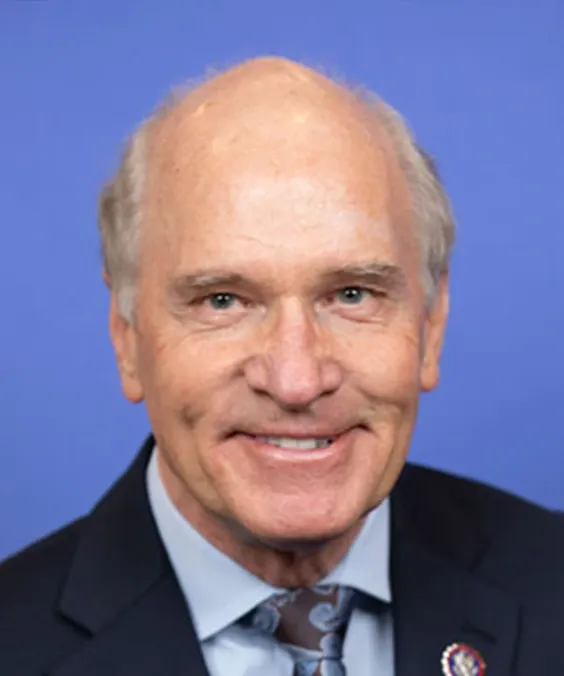
May 16, 2023
Twenty years ago the GAO came to Congress, long before I was here, long before Senator Kennedy was here, and said, 'Change it because it is a mistake.'
The Public Record
Elizabeth Ann Warren is an American attorney, academic, and politician serving as the senior United States senator from Massachusetts since 2013. A member of the Democratic Party, she has been a prominent advocate for consumer protection, economic equality, and corporate regulation. Warren gained national recognition for her work in establishing the Consumer Financial Protection Bureau and has focused on issues such as student debt relief and healthcare reform during her tenure in the Senate.
Twenty years ago the GAO came to Congress, long before I was here, long before Senator Kennedy was here, and said, 'Change it because it is a mistake.'
Now I think it is long past time that Congress finally acts, and I have bipartisan legislation with Senator Scott to do that.
The Fed touches the lives of nearly every family in America, from influencing whether or not they can afford to buy a home...
Right. OK. So this chummy little group is making a lot of policy here, and nobody else gets to see it.
The Fed should have used its authority to apply stronger rules to banks with more than $100 billion in assets.
The Fed heard that message loud and clear, and then it used that message to open up and start to deregulate even further.
What it does is create a system that was in place under Dodd-Frank, that for a bank to grow above $50 billion, or above $100 billion, they knew that there would be significant regulatory and supervisory costs.
I have got an idea, a bipartisan idea that I am introducing with Senator Rick Scott today: get the big bankers off the Federal Reserve boards of directors.
I opposed Powell's nomination as Fed Chair and again in 2021, when I said that he was a dangerous man to keep at the Fed.
Welcome to the hearing of the Senate Banking, Housing, and Urban Affairs Subcommittee on Economic Policy.
I'm working on bipartisan legislation to claw back money when executives take big bonuses for blowing up their banks.
S. 2155 weakened the rules and the supervision for these banks like SVB and opened the deregulatory door for the Fed to drive a truck through.
The loosening ends up having multiplier effects, that once you loosen a little bit you lose other discipline in the system.
This law severely weakened the guardrails that Congress put in place after the 2008 financial crisis.
The Fed continues to stonewall Congress, stonewall the public, on the underlying information about these trades.
I absolutely agree that the allegations of improper trading and ethics violations are disturbing, and they are alarming.
The actions of the Chair of the Federal Reserve and a Governor of the Federal Reserve were unambiguously inconsistent with the Fed's rules.
This is the most severe ethics scandal in the Fed's 110-year history, yet other than a few officials taking an early retirement we have seen no accountability.
To restore public confidence in the Fed, we need a strong, Senate-confirmed inspector general to conduct rigorous, independent oversight.
Independence should not be conflated, however, with a total lack of accountability when the Fed and its leadership make serious mistakes.
Politicians like Elizabeth Warren