Oct 31, 2010
I think the Republican establishment thinks there are a lot of people in Washington who think they're on the brink of taking -- they're going to take the House tomorrow and they're going to -- got a good chance of taking the Senate two…
The Public Record
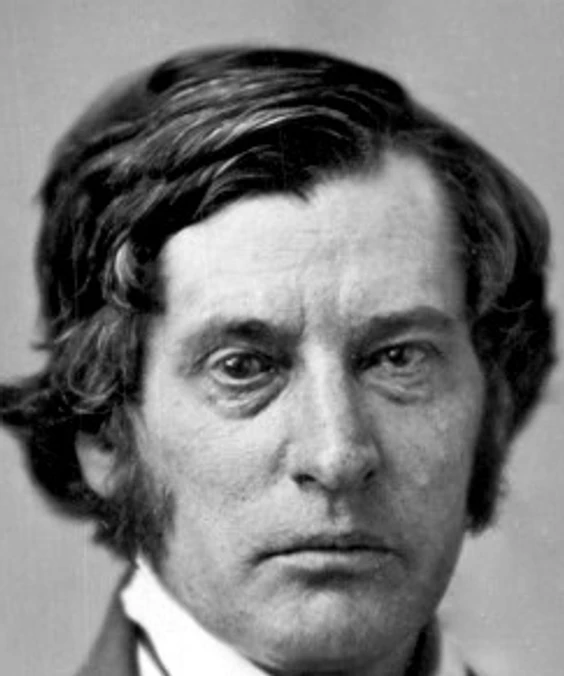
David Gergen was an American political commentator and advisor who served in the administrations of four U.S. presidents, providing insights and guidance on various political matters. Born on May 9, 1942, in Massachusetts, Gergen held significant roles in both Republican and Democratic administrations, showcasing his ability to navigate the political landscape across party lines. He was also a professor of public service at Harvard University, where he influenced a new generation of leaders. In addition to his academic work, Gergen was a senior political analyst for CNN, contributing to public discourse on current events until his passing on July 10, 2025.
I think the Republican establishment thinks there are a lot of people in Washington who think they're on the brink of taking -- they're going to take the House tomorrow and they're going to -- got a good chance of taking the Senate two…
He will only survive if -- he will only survive if he's got to pivot towards the center. He's got to do what Bill Clinton did back in '94 and '95. After that election he rebuilt a more centrist coalition and it worked pretty well.
I think the first big test of the leadership, the establishment leadership is to make sure that they're fully represented on the key committees and make sure the committees, especially in the House, are not just taken over by people who…
They're really serious about cutting spending. They're really serious about trying to tackle some of the substantive issues.
It is such a bellwether for presidential politics and for power in this country. And it's a Republican sweep, not only the Senate race but the governorship and pick up three or four of the House seats, I think that has real implications…
I think we don't understand just how conservative Nevada is and how unpopular Harry Reid is.
This election with her, you know, is probably going to drive or draw a lot of the Republican candidates for president -- you know this -- draw them to the right.
I think the reason why she's now -- she's burst into the spotlight as the woman who's probably cost the Republicans their chance at winning the Senate.
There is no way we're going to get from here to some sort of solution to that without the two parties joining forces.
But, Anderson, I do disagree with one point about what Paul said, and that is that if -- in Massachusetts, Scott Brown won that election for the Senate in part because he had so much support from the Tea Party.
And I do think there are very large questions now that are going to hang over us as -- after the elections, about how we govern the country, how decisions are reached in Washington, whether you can reach bipartisan agreement, say, on the…
When Mike Castle goes down to a Tea Party candidate, you've got a real insurgency going on in the party.
The chances of Republicans now gaining the Senate have gone down significantly.
If you're a Republican incumbent coming to Washington after the election, one of the clear messages out of this, these primaries is that if you work across the aisle and work with Democrats, you do so at risk to your political life.
I think it's the clearest rebellion we've had all season, the biggest anti-establishment vote that's occurring against Republican candidates.
I think it was unwise for the president to get as deeply involved as he has.
He is the man who is inciting hate and he's the man who ought to be held accountable for it.
I don't think he knows what the hell he's doing, Anderson. He just wants to be on the air, you know, and I don't think he's a -- he is not a rational human being.
I would hope, as we get copycats, they get less attention. I do think that he got to a place where he was getting a lot of interviews, and people were sort of putting him on.
Well, I think it certainly has become a political football. And there's no question that there were people in the political arena who did want to whip this up, and I think we all know that many of them are conservatives.
When you get 67 to 71 percent of people in polls saying they have real problems with this, you have to have some sensitivity to what the American public wants.
I did not think he offered a lot of alternatives, nor did I think he truly had heard the voices of a Rosaleen or of an Andy when he sort of lumps people together who are opposing this as extremists.
But at the same time, the fact that two-thirds of New Yorkers, people who live in the city, told 'The New York Times' that they oppose it, and we see opposition in the country. The people opposing it are not bigots.
Politicians like David Gergen