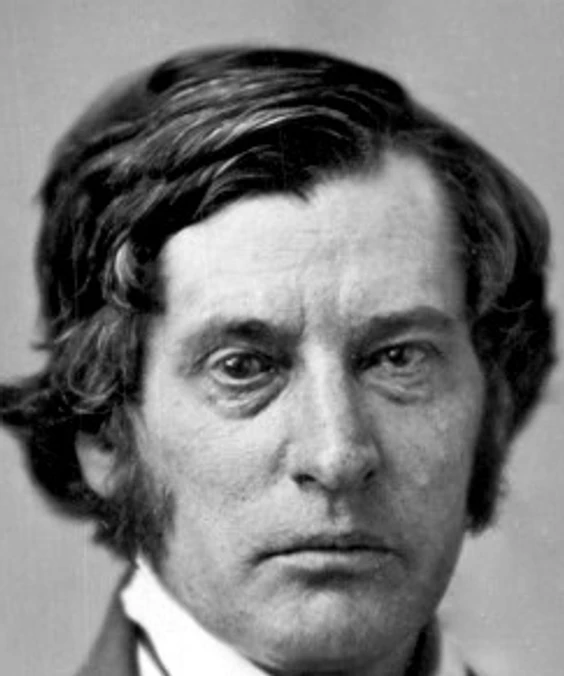
David Gergen
The Public Record
David Gergen was an American political commentator and advisor who served in the administrations of four U.S. presidents, providing insights and guidance on various political matters. Born on May 9, 1942, in Massachusetts, Gergen held significant roles in both Republican and Democratic administrations, showcasing his ability to navigate the political landscape across party lines. He was also a professor of public service at Harvard University, where he influenced a new generation of leaders. In addition to his academic work, Gergen was a senior political analyst for CNN, contributing to public discourse on current events until his passing on July 10, 2025.
Mar 21, 2006
But it does not solve their problem about having a message about where we grow from here, not only in Iraq, but in Iran and the Middle East, more generally.
Mar 19, 2006
It is falling darn short of what the administration thought it was going to be, where we thought we were going to be, three years on.
Mar 15, 2006
You've got to get a government formed and you've got to get American troops out of there fairly soon.
Mar 15, 2006
I think that's exactly right. So that's why I don't think this is for PR purposes. What I do think it raises a question of -- as Iraq gets deeper into what looks like a civil war, and we then go in with a lot of air power against one side…
Mar 15, 2006
The president's honesty numbers are down. That is his trump card, is, people think he's honest.
Mar 14, 2006
If I were in the White House, I would be more concerned about the independent, who have dropped some 20 points over the last 18 months.
Mar 14, 2006
One is struck, Anderson, by the fact that, over the last few months, as this pressure has come from the outside to shake up his staff, change his policies, which are just as important as changing personnel, how much resistance there has…
Mar 14, 2006
It is extremely disturbing, from the White House point of view, that he -- there has been such an erosion in the number of people who think of -- think of George W. Bush as honest.
Mar 13, 2006
But, you know, from the country's point of view, it's really important that we focus on Iran and deal with that wisely.
Mar 13, 2006
They don't. And, of course, the best thing the Republicans have going for them is the Democrats.
Mar 13, 2006
And the second thing is that there's a high degree of denial that seems to start at the top, and a -- and a reluctance to tell the president, 'Mr. President, you know, as much as we might like to think things are going well in Iraq, or as…
Mar 13, 2006
Well, Iraq is certainly the largest part of it, because there has been unrelieved bad news from Iraq, except for an occasional election.
Mar 13, 2006
Well, they could continue indefinitely. And that's the problem, and because I -- it -- it -- two veterans of Washington each told me individually today they had never seen an administration collapse as completely and as quickly as this one…
Jan 30, 2006
I thought tonight that Tim Kaine gave a surprisingly effective response.
Jan 30, 2006
They have to come up with their own policy? Absolutely. And Paul Begala is right. They have many policies; they don't have unity.
Nov 29, 2005
The speech was like the Sherlock Holmes dog that didn't bark. It didn't say a lot of new things. He did not lay out an aggressive or bold new plan for Iraq.
Oct 25, 2005
He's got three long years ahead of him as president of the United States. This is not some sort of TV show that runs out of its ratings and suddenly is canceled.
Jul 18, 2005
This is a very important nomination because he is -- the president is now replacing Justice O'Connor, who has been a swing vote -- vote on many abortion cases -- he's replacing a moderate conservative with a strong conservative.
Jul 17, 2005
I think it has a credibility problem, but that goes to the issue of governance.
Jul 17, 2005
I see no evidence that Karl Rove has committed a crime. But he certainly was involved in the effort to discredit Mrs. Wilson.
Politicians like David Gergen