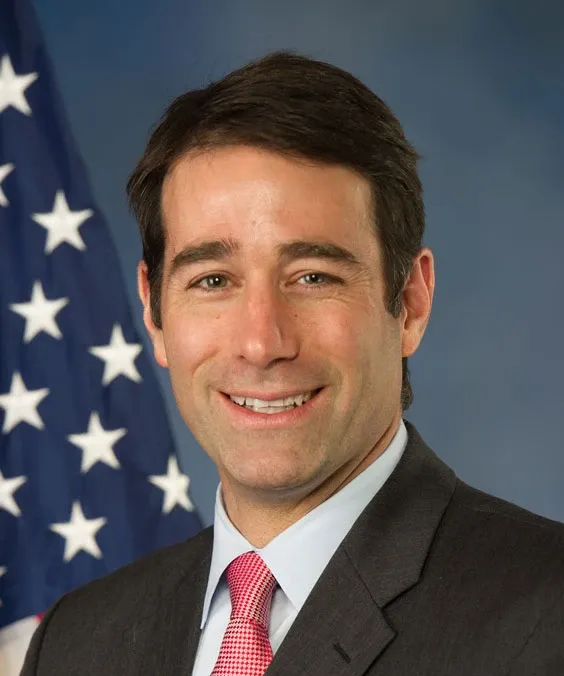
John Fleming
The Public Record
John Fleming is a Republican politician from Louisiana who served as a member of the U.S. House of Representatives from 2011 to 2017. During his time in Congress, he represented Louisiana's 4th congressional district, where he focused on issues such as healthcare, fiscal responsibility, and veterans' affairs. Fleming, a physician by profession, has been an advocate for conservative healthcare reforms and has emphasized the importance of reducing government spending. After leaving Congress, he has remained active in political circles and has been involved in various initiatives related to healthcare and public policy.
Sep 22, 2011
I recently saw a MSNBC interview with Chairman Fleming regarding the taxes and the costs of doing business...
Sep 22, 2011
I am interested to hear from today's witnesses on how mandatory minimum wage increases affected the economies in the Territories and hurt revenue sources on the islands.
Sep 22, 2011
Congress required the Department of Labor and the Government Accountability Office to report on how minimum wage increases were affecting living standards and employment in the Territories.
Sep 22, 2011
The practice of allowing wage rate flexibility in American Samoa and the Northern Mariana Islands ended in 2007.
Jul 27, 2011
There are plenty of private sector oversight organizations. And again, UL: No appliance ever goes to market now without a UL stamp, and again, that's done through a private entity. So, again, it's a great program. Don't get me wrong. I…
Jul 27, 2011
I don't disagree with the gentleman's comments. It's a good program, although it has been a flawed program. Hopefully, it's been improved. My point is that this could be better done in the private sector, a fee or whatever paid directly to…
Jul 27, 2011
I have an amendment at the desk. The Acting CHAIR. The Clerk will report the amendment. The Clerk read as follows: Page 65, line 19, after the dollar amount, insert ``(reduced by $48,206,000)''. Page 158, line 25, after the dollar amount…
Jul 27, 2011
Reclaiming my time, I would just suggest that we're still well off pace. And accountability is not going to be a factor in that. I yield back the balance of my time.
Jul 7, 2011
Well, yes, but the type of shale formations that we have today you are going to get very little yield out of vertical wells. We have to go horizontal, and we are horizontal at two miles down so you are already below the water table.
Jul 7, 2011
But we have been doing it for 60 years, sir, and we have no evidence that there is a problem. Why do we want to ban it first and then ask questions later when we have 60 years of experience?
Jul 7, 2011
Only three short years ago we had no idea really what the Haynesville shale is, was or would be in the future, and it has turned out that it has had a tremendous impact on our economy.
May 10, 2011
Now, it's also been suggested, Well, perhaps we should punish these evil oil companies by taxing them. Mr. Chairman, who pays the taxes? It's the consumers. It's the American people. You add a 10 percent tax to oil exploration or gasoline…
May 10, 2011
I thank the gentleman. We have lost 12 rigs so far to such countries as Nigeria, Egypt, the Congo, and Brazil, and guess who we just gave $2 billion to drill oil? Brazil, of all places. So we gave them the rig, we gave them the money so…
May 5, 2011
I thank the gentleman. I will say in summary, I am from the Fourth District of Louisiana where we have a veritable Saudi Arabia of natural gas in my district, the most natural gas in North America and the fourth largest deposit in the…
Mar 30, 2011
How do you set that priority in terms of fisheries? Who gets the attention first?
Mar 30, 2011
Now, I understand that the NOAA fleet will be able to spend about half of the amount of time in Fiscal year 2011 as it did in Fiscal Year 2010 for fisheries stock assessments.
Mar 30, 2011
And would you acknowledge that that has an economic impact, certainly to the commercial fishermen out there who have a smaller and smaller window if you will of fishing opportunities?
Mar 30, 2011
Is it fair to say that if stock surveys and assessments are not done in a timely manner by your agency, fishermen pay the price because of the scientists and managers having to build several layers of precaution into the models in order to…
Mar 30, 2011
So if you really wanted to create jobs, you would have abandoned these global warming fairy tales and shifted your efforts to ending the drilling moratorium in the Gulf of Mexico.
Mar 30, 2011
Some of the data is as old as 10 years, and so are you putting that at a priority as well, going back to those that are maybe the most overdue?
Mar 30, 2011
What I am trying to understand though is that if you have less fleet days, and yet you feel that you are going to actually catch up on the surveys, how do you recognize that?
Politicians like John Fleming