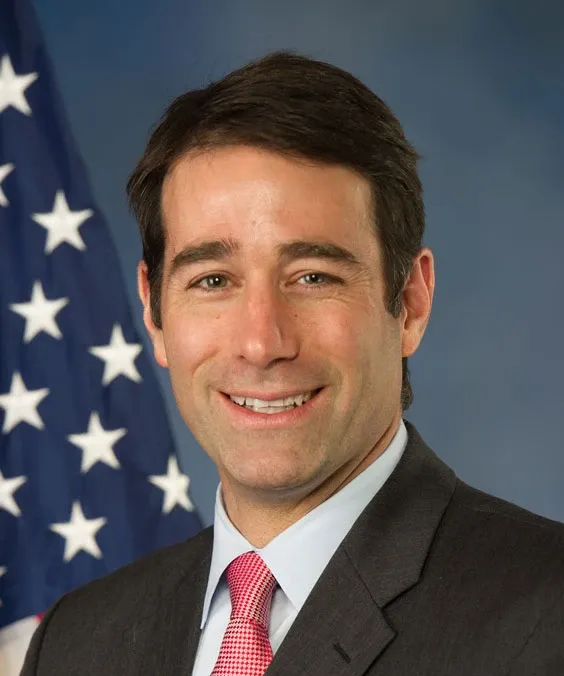
John Fleming
The Public Record
John Fleming is a Republican politician from Louisiana who served as a member of the U.S. House of Representatives from 2011 to 2017. During his time in Congress, he represented Louisiana's 4th congressional district, where he focused on issues such as healthcare, fiscal responsibility, and veterans' affairs. Fleming, a physician by profession, has been an advocate for conservative healthcare reforms and has emphasized the importance of reducing government spending. After leaving Congress, he has remained active in political circles and has been involved in various initiatives related to healthcare and public policy.
Dec 14, 2011
I really see--I have to tell you, I am a bit of a skeptic, in many ways, about some of the recycling ideas and some of the alternative energy things.
Dec 14, 2011
But that is not my question. And I am not trying to be confrontational; I am just trying to make sure we have a clear answer.
Dec 14, 2011
So you feel that the information has been adequate to come to the conclusion that there is no further remedy.
Dec 14, 2011
So you feel--I understand from your answer that you do not feel any further remedy is necessary. Is that correct, yes or no?
Dec 14, 2011
While we are not going to solve this controversy today, I am holding this hearing at the request of Congressman Jack Kingston.
Dec 14, 2011
I hope we can get a markup and get it to the Floor so that we can get it reauthorized.
Dec 1, 2011
I thank the gentleman, Dr. Gosar. I'm just going to make a couple of closing comments; and in the few moments we have left, I'm going to allow some of our other physicians to give closing comments. One of the important things we have…
Dec 1, 2011
I thank the gentleman from Michigan. Again, we're getting a world of experience here tonight, all the way from OB-GYNs, ophthalmologists, family physicians, nurses, so much in the way of words of wisdom, and we have so much on our side of…
Dec 1, 2011
I thank the gentlelady for a very compelling discussion, both as a health care provider and nurse, but also as a daughter of an elderly mother. Those words are very heartfelt, and obviously it means as much to you that we protect Medicare…
Dec 1, 2011
Since we are beginning to run a little short on time-- and I want to make sure we get to all of our doctors and nurses--I'm going to recognize Ms. Buerkle, a very excellent nurse and a wonderful addition to our freshman class.
Dec 1, 2011
If the gentlelady would yield, I think Dr. Gingrey has something he would like to add.
Dec 1, 2011
I thank the gentleman. Dr. Gingrey serves on the House Energy and Commerce Committee, a committee that has oversight and jurisdiction in this area, very important, looking at a lot of legislation. Next, I want to turn to another of our…
Nov 18, 2011
In conclusion, let me say, when I talk about our being addicted to spending, I'm talking about everyone in Congress and the executive branch. I am not pointing fingers at any one group of people. I will say that those who are unwilling to…
Nov 18, 2011
Just in closing, I would like to say that it does some wonderful things. It prohibits a debt increase without a three-fourths vote, and it requires the President to submit a balanced budget each year. Our Senate over there has yet to pass…
Nov 15, 2011
Sir, you don't even know how many layers of casing go around a typical drill, so if the very top level doesn't know the very basics of the technology, why is it that you somehow feel you can insinuate yourself into the process?
Nov 15, 2011
The point being that the aquifer, the water supply itself, is way up at the surface of the earth and all the activity where the hydrofracking fluid is, which, by the way, is 99.5 percent water and sand, is below the surface by about two…
Nov 15, 2011
Hydrofracking has been around for 60 years. The EPA took a look at it in 2005, found absolutely no problems with it.
Nov 15, 2011
Just to give you an idea of the impact that has had on us, we have had an increase of close to 58,000 jobs just in 2009 alone.
Nov 2, 2011
It seems that despite the fact that the involved federal agencies have a two-decade track record of over 60 uncompleted projects, they have an insatiable appetite to acquire more land, and to restrict recreational access to the public.
Nov 2, 2011
I would use a scalpel--I wouldn't use a meat-ax with that--because you want an agency to be able to move quickly.
Nov 2, 2011
So the question is why can't we divert these kind of funds towards a restoration and access rather than running out there and stuffing money in people's pockets, which seems to me to be significantly unnecessary?
Politicians like John Fleming