May 19, 2009
I do not mean to interrupt. But the best capable. What is the possibility of falling short of what is our expectation and defining a gap as anything short of that?
The Public Record
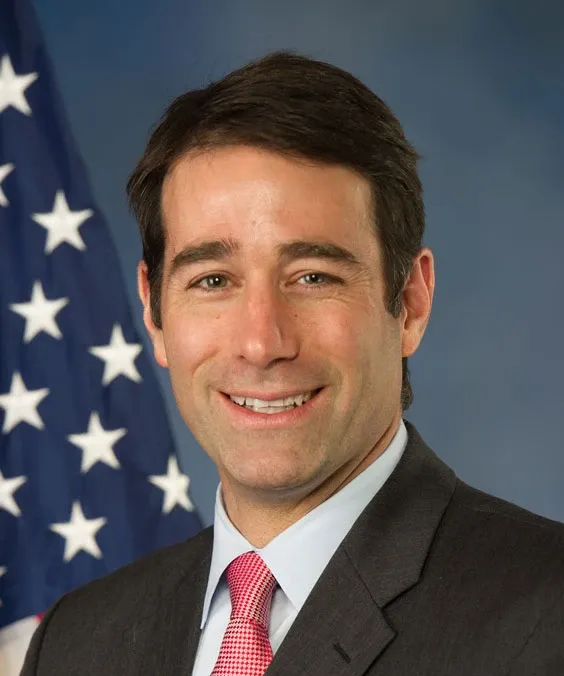
David Vitter is a former United States Senator from Louisiana, serving from 2005 to 2017. A member of the Republican Party, Vitter was known for his focus on issues such as transportation, infrastructure, and environmental policy. During his tenure, he served on various Senate committees, including the Environment and Public Works Committee, where he addressed topics like water quality and pharmaceuticals in the nation's waters.
I do not mean to interrupt. But the best capable. What is the possibility of falling short of what is our expectation and defining a gap as anything short of that?
Just to follow up directly on that, Mr. Secretary, in general, what would be your bottom line on this in terms of, what do you think the probability is of any sort of gap, however broadly defined developing?
GAO has found that because the Department of Defense (DOD) starts more weapon programs that it can afford.
I look forward to hearing from our witnesses today how this money will be spent wisely.
I look forward to working with you and all the other members on these significant issues.
I want to thank Chairman Levin and Ranking Member McCain for their acquisition reform bill.
I am also encouraged with many--not all, but certainly many--of Secretary Gates' strong recommendations.
Generally, they have said that competition for dollars leads to low-cost estimation and unrealistic scheduling.
Under the leadership of Chairman Levin and Ranking Member McCain, this committee broadly recognized those problems.
I look forward to working with you on the many important issues under this subcommittee's jurisdiction.
I think the political rationale behind it is to avoid coming back to us for anything.
The common understanding on Capitol Hill--I think this is very fair to say--is that that would be paid to reduce the Federal debt and would be a permanent reduction of the initial $700 billion.
I think we all agree on the need for certainty and predictability and the benefit of that.
I applaud you and the Administration for setting out as a stated goal transparency in all sorts of ways.
There exists no legitimate economic argument that regulating CO2 would not increase the cost of energy.
I think he can find that extra $100 million in EPA's bloated budget request alone.
Will you recommend that the Agency permanently return to the old rules from prior decades or will you support a new attempt at reforming those rules?
Thank you very much, Madam Chairman, for the opportunity to discuss this proposed budget and delve into some of the major items facing the Agency and the Country...
It really reminds me of something going on in your State, which is the actions of the California Air Resources Board.
The Administration asked us earlier this year to support borrowing $800 billion on our children's credit card to 'stimulate' the economy.
Thank you all very much and we will bring this Committee hearing to a close.
In the words of Harvard Economics Professor Robert Stavins, we have come to the inescapable conclusion that the economic analysis is terribly deficient in critical ways.
It is possible to abuse environmental laws and issue regulations in a manner that puts families out of work and makes doing business in the United States wholly uncompetitive.
Essentially, it really seems that you are telling Congress that, unless we pass legislation that will increase the cost of energy, including on low-income families and businesses and schools, then you will be forced, as an agency, to…
Politicians like David Vitter