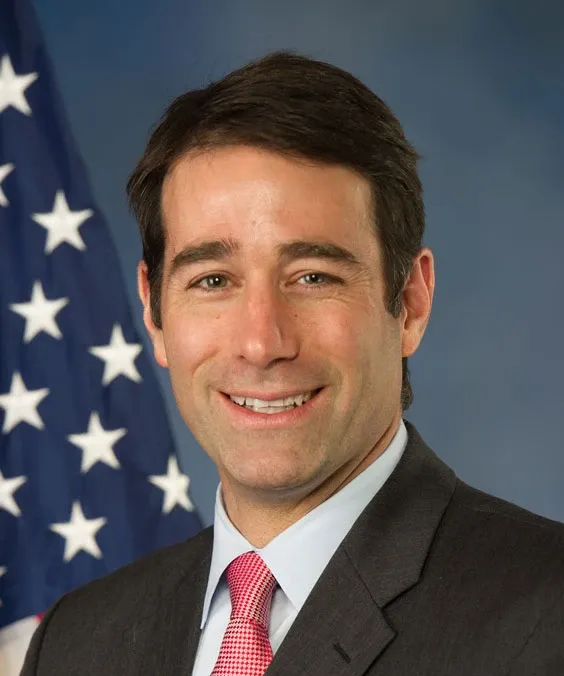
David Vitter
The Public Record
David Vitter is a former United States Senator from Louisiana, serving from 2005 to 2017. A member of the Republican Party, Vitter was known for his focus on issues such as transportation, infrastructure, and environmental policy. During his tenure, he served on various Senate committees, including the Environment and Public Works Committee, where he addressed topics like water quality and pharmaceuticals in the nation's waters.
Apr 6, 2009
A longstanding battle cry for al Qaeda and other Islamic extremists is that the United States has not been a true neutral partner in the Arab and Israeli conflict.
Mar 31, 2009
Yes. For the record, let me just articulate, since the stenographer cannot take down either nods or blank stares, that that seems to be a consensus of the witnesses.
Mar 31, 2009
I'd first like to thank the Chairman, Senator Carper, for holding this hearing as an opportunity discuss the latest issues facing the Renewable Fuels Industry.
Mar 31, 2009
Gasoline consumption is down 2 billion gallons per day, and that is a good thing.
Mar 31, 2009
We required 9 billion gallons of renewable fuels to be blended into our gasoline starting in 2008, last year.
Mar 31, 2009
We passed bipartisan energy legislation in 2007 that reduced our dependence, or seeks to reduce our dependence on foreign oil and to reduce at the same time harmful emissions into our air.
Mar 23, 2009
We need to pursue that aggressively and effectively to meet all of our energy and related environmental goals.
Mar 23, 2009
I believe there is an excellent opportunity on this subcommittee to work in a bipartisan manner to get some good things done.
Mar 23, 2009
Could you give any specific examples since Three Mile Island, not so much Three Mile Island, but since then, of how operating experience has improved plant operations today, including your guidelines for that?
Mar 16, 2009
I'm very glad you confirmed that our missile defense system is 'an effective system' able to defend against a North Korea missile threat, and I strongly agree with you.
Mar 2, 2009
Mr. Sullivan, is there any credence to the concern that program managers have 'too many' reports to file and are not focusing on managing their programs?
Mar 2, 2009
Mr. Sullivan, with the annual Selected Acquisition Reports and current Nunn-McCurdy reporting requirements, is Congress suffering from a lack of oversight and reports from DOD?
Feb 9, 2009
I am very glad one of the four key pillars you outlined is housing. With a lot of folks I have been pushing to fix housing first and I think we need to that.
Feb 9, 2009
I appreciate efforts at consultation, getting out input. However, having said that I think having a major announcement and a major committee hearing today with the complete lack of detail that we have quite frankly was a big mistake.
Feb 4, 2009
There is no overarching strategy or model that we are using with this huge amount of taxpayer funds.
Feb 4, 2009
It is important in terms of how firms that get this money use it, whether they use it properly, whether they abuse it in any way.
Feb 4, 2009
The program itself within Government, within Treasury and elsewhere, really has no clear rationale or clearly defined mission.
Feb 4, 2009
To the casual observer, it really seems like decisions are made on the fly about giving particular companies particular amounts of money.
Jan 26, 2009
Secretary Gates, I understand that Eighth Air Force and ACC have made a number of changes as a result of the transfer of nuclear-armed cruise missiles from Minot, SD, to Barksdale, AZ.
Jan 26, 2009
The establishment of AFGSC will clearly align nuclear operational units under a single command and demonstrates an Air Force commitment to the nuclear deterrence and global strike missions.
Jan 13, 2009
I was delighted to visit with Lisa recently, talk about many challenges she will confront in EPA.
Politicians like David Vitter