Apr 13, 2010
The administration has seemingly put the Dodd-Shelby Comprehensive Iran Sanctions, Accountability, and Divestment Act (S. 2799) on hold in Congress.
The Public Record
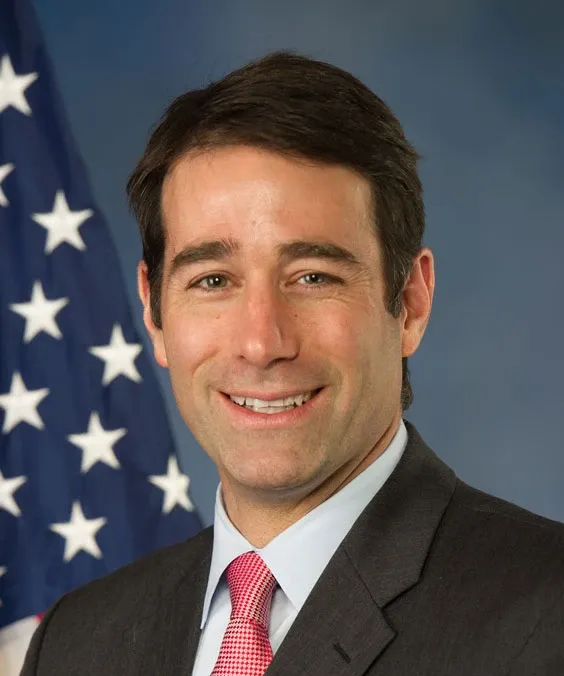
David Vitter is a former United States Senator from Louisiana, serving from 2005 to 2017. A member of the Republican Party, Vitter was known for his focus on issues such as transportation, infrastructure, and environmental policy. During his tenure, he served on various Senate committees, including the Environment and Public Works Committee, where he addressed topics like water quality and pharmaceuticals in the nation's waters.
The administration has seemingly put the Dodd-Shelby Comprehensive Iran Sanctions, Accountability, and Divestment Act (S. 2799) on hold in Congress.
I was very happy to hear the distinguished chairman of the Finance Committee absolutely promise that the ObamaCare bill will reduce the deficit, and the CBO projects that. The problem is, I think the American people have a very different…
This amendment would pass my Mobile Mammography Act, S. 2051. This amendment would allow mobile mammography units to purchase fuel without the Federal excise tax. This is exactly similar to an existing exemption for blood centers. These…
This amendment is very straightforward. It would repeal the ObamaCare bill. That bill is fatally flawed in terms of its core, and we do need to repeal and replace it with a very different, more targeted, focused, step-by-step approach…
I stand to talk about health care on this significant day, the day after the House passed the ObamaCare bill and the day before the reconciliation bill comes here to the Senate. Needless to say, I am deeply disappointed by the House's…
The men and women serving this country deserve the very best facilities and care
As the President stated in his December 1 West Point address, our core goal remains the same: to disrupt, dismantle, and defeat al Qaeda in Afghanistan and Pakistan, and to prevent it from threatening America and our allies in the future.
In 2005 we passed the CF program, which is revenue sharing for States, for coastal conservation and other purposes. Unfortunately, that money has been very slow to get to States. Only 15 percent that was supposed to have been distributed…
I am very concerned about the dramatic change in course proposed at NASA and what it would do to our solid rocket industrial base.
We remain concerned about the Air Force's ability to deliver GPS IIIA satellites as promised, given that the Air Force aims to deliver them 3 years faster than the IIF satellites.
In addition, General Chilton, the Commander of STRATCOM, has been quite vocal in increasing the responsiveness of our space recapitalization abilities.
What is the appropriate mix between DOD-provided and commercially-provided bandwidth?
As the number of warheads decreases, the importance of our triad of strategic delivery systems dramatically increases.
Given assured access to space is a national interest, do you believe NASA should be partially responsible for addressing the cost increases?
I do believe we're at a particularly critical time and a turning point for the DOD nuclear enterprise.
During that hearing you explained that that if both the GPS IIF and the GPS IIIA programs are executed on schedule, there is only a 80 to 90 percent probability that the constellation will stay above 24 satellites.
This proposed multi-billion dollar program must be thoughtfully planned across the Department and every effort should be taken to ensure that the appropriate acquisition management assessments take place for program execution.
Was the route that was taken--did it, in part, come from you, or was it enforced on the Air Force?
Did the Air Force have a fundamental opinion whether its interests would best be served with a divorce, or not?
This administration wants to cancel the Constellation program. Does that have an impact on you all, and, if so, what is it?
Was the Air Force explicitly asked the impact on you of canceling Constellation before the decision was made?
What steps are being taken to ensure that Defense recoups the technologies it has already funded?
Politicians like David Vitter