Jul 16, 2012
the President is committed to an all-of-the-above energy policy, which he frequently does state wherever he goes.
The Public Record
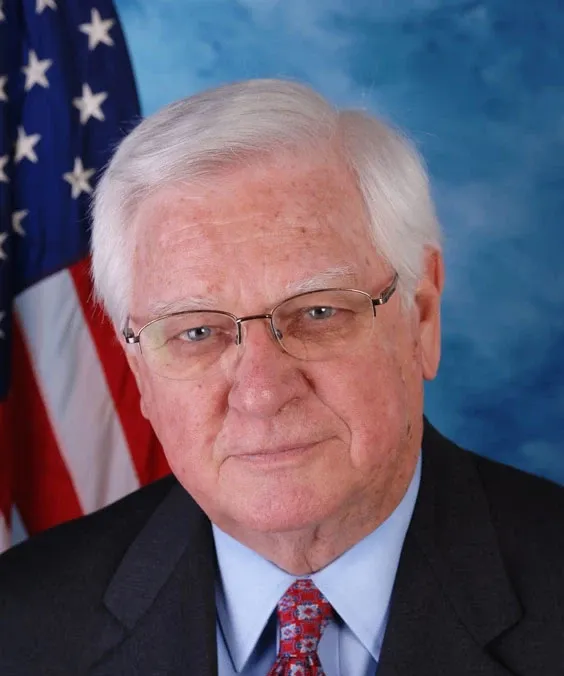
Ed Whitfield is a former Republican member of the United States House of Representatives, who served Kentucky's 1st congressional district from 1995 to 2017. During his tenure, he was known for his work on energy and commerce issues, particularly in relation to the energy sector and healthcare. Whitfield played a significant role in various legislative efforts, including those aimed at reforming the Affordable Care Act and addressing energy policy in the United States. He was also involved in initiatives related to veterans' affairs and agriculture, reflecting the interests of his constituents in rural Kentucky.
the President is committed to an all-of-the-above energy policy, which he frequently does state wherever he goes.
Preventing Americans from saving money at the pump certainly isn't going to help our economy.
When they first came out with utility MACT or finalized that rule, they said that less than 5,000 megawatts of electric generating capacity would be retired and so far over 25,000 megawatts has been retired.
So this administration, in my view, even though they talk about middle class America, they are not nearly as interested in middle class America as they say.
It is my understanding, we talked about carbon capture and sequestration, there is no commercially viable carbon capture and sequestration that you could use to meet this standard, if you are a coal plant.
And if they do make this apply to existing plants; today, you would not be able to meet it.
You must remember if you go to West Virginia, Pennsylvania, Virginia, Kentucky and other states where communities depend upon coal, you say to those communities, you should go away.
I do not know how you can walk away with any other conclusion except that EPA wants to put the coal business out of business.
It is important that we all be aware of precisely what is going on in Washington and the impact of decisions being made there.
they never look at the cost to the communities where the jobs are being lost.
These proposed regulations if adopted, in my view, will definitely penalize America and make it more difficult for us to compete in the global marketplace.
Actually that is true. As a matter of fact, when they had a conference between the Senate and the House, when the Clean Air Act was last amended in 1990, one of the members, I was told, introduced an amendment to allow greenhouse gases to…
The fact that George Kaiser, a major investor in Solyndra, was also a major fundraiser for President Obama casts a questioning motivation of this loan.
The Federal Government chose to give a $.5 billion loan guarantee to a company so inept that it has gone bankrupt and left the American taxpayer holding the bag.
At this time, I would like to recognize the gentleman from California, Mr. Bilbray, for 5 minutes.
this tool would only be used in in extremis situations where we have a very distressed project.
if we were voting on that today, because of today's current financial situation in America, I do not believe the results would be the same.
when they find out that I am involved in the energy policies of the United States Government, inevitably this question comes up about Solyndra.
Everyone in America is very much aware of Solyndra, and Solyndra is troublesome for many reasons.
All things considered, there is more than enough evidence to declare this program a failure.
why would we be making loan guarantees to companies that strong financially?
the government claims should not be subordinated to the claims of other creditors because subordination increases the risk of loss to the government and to taxpayers.
I spoke with my Congressman Mr. Whitfield to try to get an audience with EPA to discuss this problem.
Politicians like Ed Whitfield