Jan 22, 2018
Every country that ever developed an offensive bioweapons program also targeted agriculture.
The Public Record
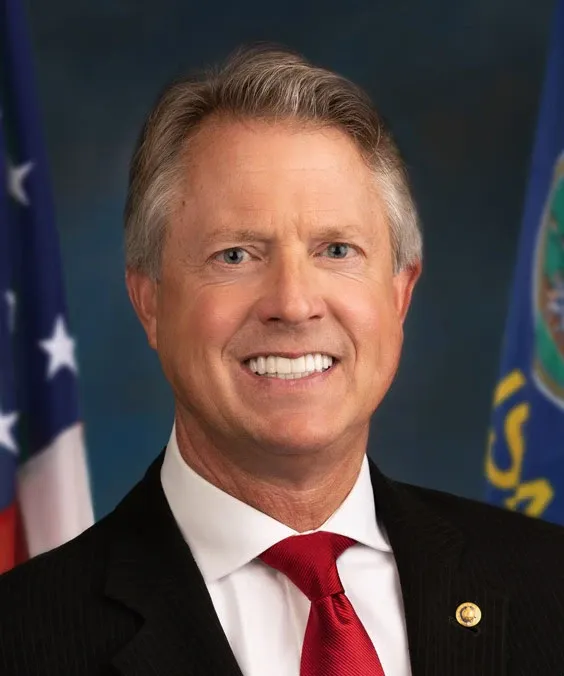
Pat Roberts is a former United States Senator from Kansas, serving from 1997 to 2021. A member of the Republican Party, he was known for his work on agricultural policy and national security issues during his tenure. Before his time in the Senate, Roberts served in the U.S. House of Representatives from 1981 to 1997. Throughout his political career, he focused on issues important to Kansas, including farming and rural development. Roberts was also involved in various committees, including the Senate Committee on Agriculture, Nutrition, and Forestry, where he played a significant role in shaping agricultural legislation.
Every country that ever developed an offensive bioweapons program also targeted agriculture.
Some years back on the Intelligence Committee, of which my distinguished friend is the Chairman, we were able to determine that what keeps you up at night that at least in the top ten was an attack on our food supply.
I would like to thank Members of this Committee, and in particular Senator Burr, for their commitment to reauthorizing PAHPA in a timely manner.
I am talking with our CIA Director Mike Pompeo, who happens to be from Kansas. And so, we are trying to, at least, reassess that threat and I think it is a very real one.
One of our witnesses was General Richard Myers, four-star, President of Kansas State University, home of the now under construction National Bio and Agro-Defense Facility.
I have the honor of introducing C.J. Mahoney, the nominee to be a Deputy United States Trade Representative.
This facility in Manhattan, Kansas, will be a critical part of keeping U.S. agriculture, our food supply, the economy, and, most importantly, our people safe.
The drug industry has spent more time finger pointing on who is responsible for high prices instead of taking action.
The 340B program helps community health centers and safety net hospitals care for those who can least afford it by providing lower cost drugs.
One new requirement under the Cures Act is for manufacturers of an investigational drug to make its policies on evaluating and responding to compassionate use requests publicly available.
We're living in a new digital age... we have to make sure they work and their claims are backed up by hard evidence.
In November 2016, people started emailing me and calling, coming up to me in the grocery store and everywhere else with tears in their eyes wondering what the future held, especially for their healthcare, and it has not stopped.
Kristina from Marysville said that before going to Planned Parenthood, she struggled to get birth control regularly given her unpredictable schedule in the fast food industry.
Kim from Ellensburg shared her story about her addiction to opioids and her ability to overcome it with the right comprehensive treatment.
My constituent Julie, from Mercer Island, is a four time cancer survivor. She has said she would not be able to afford her medical expenses, or even stay alive, without Affordable Care Act protection.
the work we did most recently on the Alexander-Murray legislation, which has growing support in both the Democratic and Republican sides of the Senate
the work we did on Alexander-Murray can't be considered as a part of the Tax Reform Bill under the rules of the Senate.
if the individual mandate is repealed in 2019, the Congressional Budget Office has said that rates could go up 10 percent in that year
the Tax Reform Bill is moving through committee. It's being amended this week, or amendments are being offered.
our bill was never designed--we did not have hearings, we did not have input, we did not have any discussion about what the marketplace would look like if the individual mandate was repealed.
I think this is a really important discussion. We have to focus on this if we want our health care system to work better.
Politicians like Pat Roberts