Apr 25, 2012
I do not predict the doom and gloom for the wind energy that these folks speak of.
The Public Record
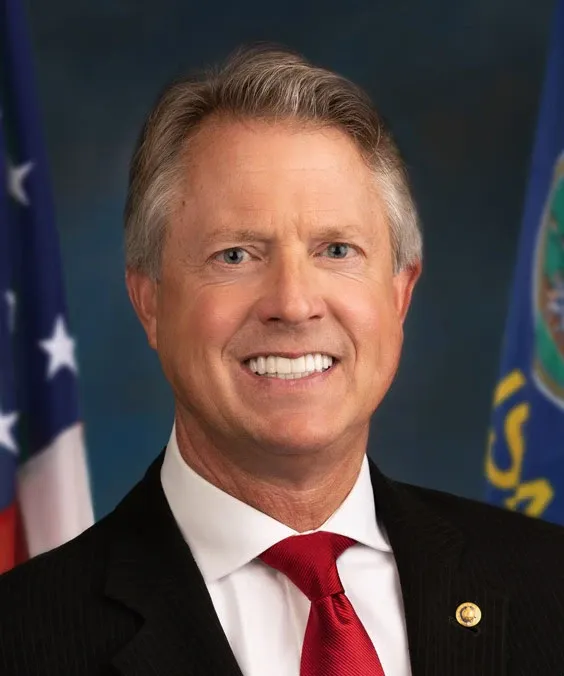
Mike Pompeo is a Republican politician from Kansas who served as the 70th United States Secretary of State from April 2018 to January 2021 under President Donald Trump. Prior to his role as Secretary of State, he was the Director of the Central Intelligence Agency (CIA) from January 2017 to April 2018. Pompeo has also served as a U.S. Representative for Kansas's 4th congressional district from 2011 to 2017, where he was known for his strong stance on national security and foreign policy issues. Throughout his career, he has emphasized a robust approach to counterterrorism and has been an advocate for American energy independence.
I do not predict the doom and gloom for the wind energy that these folks speak of.
I think it is common sense and it is being actively supported by small Government conservative organizations like Americans for Tax Reform, the National Taxpayers Union, Heritage Action, the Club for Growth, Freedom Actions, Americans for…
I would argue that one of the most if not the most egregious example of our Tax Code failures lies in these energy tax credits.
I am proud to be a co-sponsor of legislation introduced by Chairman Tiberi and Ranking Member Neal to make the AFE Rule permanent.
I want to applaud you all and Chairman Camp for efforts to get rid of particular tax credits and deductions and flatten our Tax Code.
The President has more times than we have minutes remaining in our day talked about corporate fat cat jet owners.
I will tell you compared to solar, compared to wind, compared to all the things that you are taking taxpayer money to throw resources at, I will promise you that coal is intensely competitive.
You know, you can see on this side it is--there are a lot of folks who just don't get how the--we come to these hearing and hear folks try to repeal the law of supply and demand.
Indeed, another way to look at Mr. Bivens's economic error is if I sell something for $5, it is not a zero sum gained, right?
So where did this money go? This regulation required them to--that was a compliance cost. They were forced to burn the million dollars.
So if we had a regulation that costs someone to take a stack of dollar bills, a million bucks, and burn them, that would be a cost to that business, correct?
We talked about Logan 1. In fact, there is really no power plant in existence today that can consistently meet the requirements that the new rule would require.
Isn't it fair to say that this new rule is a ban on new coal-fired power plants, in effect?
If there are no new coal-fired power plants built in America following this rule, would you be willing to at least consider the possibility that it was a direct result of this rule?
Do you think that there will be new coal-fired power plants built in the United States following the implementation of this rule?
Did you consider the economic impacts to all of those businesses that will be affected by the cost increase for electricity?
In Kansas, we have got a plant we have been trying to build that has an existing air permit.
Is this Logan 1? So there is a single--of all the plants in the United States today, there is a single existing plant that meets these new requirements.
I think the Utility MACT rule is designed to create costs which prohibit that, and isn't about a good environmental policy but instead is about energy policy, trying to drive coal out as an affordable source for manufacturers and consumers…
Politicians like Mike Pompeo