Mar 11, 2015
Again, thank you for your testimony. Thank you for the way that you have answered questions today and have presented testimony.
The Public Record
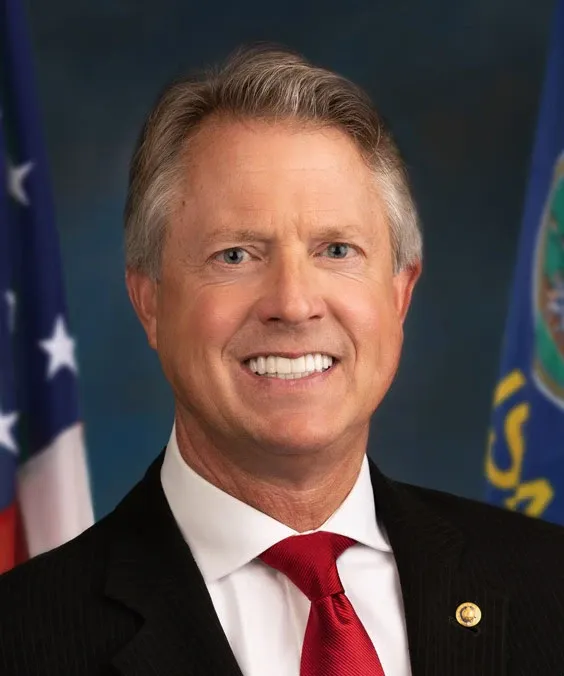
Jerry Wesley Moran is an American politician serving as the senior United States senator from Kansas since January 3, 2011. A member of the Republican Party, Moran has focused on various issues during his tenure, including veterans' affairs, agriculture, and economic development. He has been an advocate for ensuring veterans have access to quality healthcare and has worked on legislation to improve the services provided by the Department of Veterans Affairs.
Again, thank you for your testimony. Thank you for the way that you have answered questions today and have presented testimony.
This will continue to be a priority certainly of mine and I think of this subcommittee.
I am certainly not opposed to strictly strongly enforcing penalties and putting bad actors out of business because they have a huge consequence certainly to the consumer and the safety of our food supply.
I co-chair a caucus in the Senate with one of my Democrat colleagues. It is about competitiveness.
I appreciate your comments in regard to the nature of Congress working in a bipartisan effort.
I cannot understand the public policy of that. It does not benefit the utility. It does not impact the end-user.
I know the National Rural Water Association well enough to know that I assume that your request would be additional dollars put into those programs.
They cannot raise the rates on 99 people to get the money necessary to accomplish the requirements.
I suppose, in a broad sense, today's hearing is about rural development. I would suggest that our ability to attract and retain business, manufacturing and others, to rural America is in part determined by utility rates.
There has always been an excess, Mr. Boisvert, in the demand for RUS telecommunication loan programs.
I would just ask any of the witnesses if they have a point, an issue, that they wanted to make certain that they clarify.
We do have some concerns about the public policy benefit of an action like a partial prepaid loan.
If you can provide the utility structure, including water, at a rate that is more affordable, the chances of manufacturing returning to the U.S. from someplace abroad is enhanced.
Without that predictable and sufficient and sustainable universal service, that demand may not materialize in the form of taking our infrastructure loans to bring broadband to rural Kansans.
It is absolutely unacceptable that the tenants be on the receiving end of these missteps.
The point I would make, and ask you to agree or disagree, is I often think of this issue of the order of 2011 as an impediment toward a telephone company's ability to repay loans that already are in existence to RUS.
If a question is directed to you or to Rural Development, we would appreciate if we could have a response back within 4 weeks.
There are lots of rules and regulations involving the quality of water, rightfully so. We want clean water.
A utility company cannot renegotiate their loan with RUS based upon changing circumstances of a new clean power plan.
I just want to make sure that we were not out-Kansaned the gentleman from Oregon.
Politicians like Jerry Moran