Apr 22, 2009
What we are asking in this request is for the Bureau of Indian Affairs to receive some funding to redress some of those rehabilitation areas within that region.
The Public Record
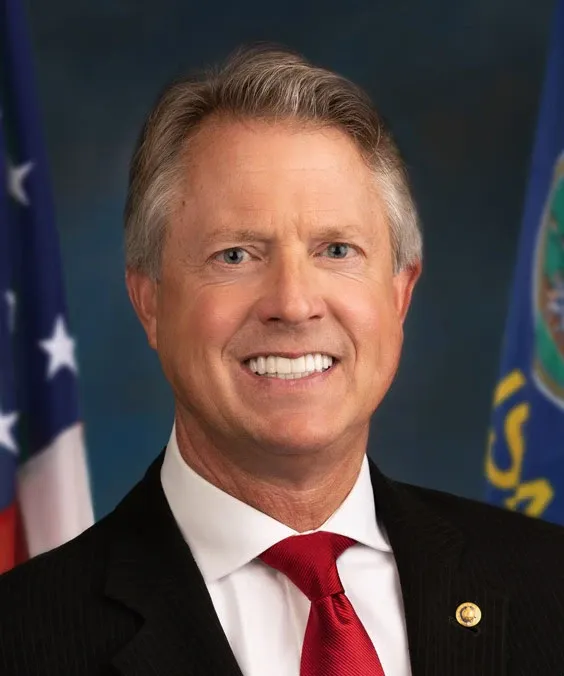
Jerry Wesley Moran is an American politician serving as the senior United States senator from Kansas since January 3, 2011. A member of the Republican Party, Moran has focused on various issues during his tenure, including veterans' affairs, agriculture, and economic development. He has been an advocate for ensuring veterans have access to quality healthcare and has worked on legislation to improve the services provided by the Department of Veterans Affairs.
What we are asking in this request is for the Bureau of Indian Affairs to receive some funding to redress some of those rehabilitation areas within that region.
That is crazy if you have got that much land set aside, and you can not do anything with it.
I think this is a very insightful panel. I appreciate very much the testimony of each of you.
Mr. Moran. Mr. Chairman, if you would yield, I appreciate that suggestion. I would be happy to join with you, Mr. Boswell or anybody else on the Subcommittee in a letter to RMA asking them to respond specifically to that fact and learn…
if all commodity programs were gone tomorrow we could probably make it as long as we had crop insurance.
This program is of significant importance to the farmers I represent in Kansas and farmers across the nation.
However, if all the commodity programs were gone tomorrow, we could probably make it as long as we have crop insurance.
I think that is still an issue that while maybe there is some evidence that what ultimately may occur in the farm bill may be helpful in shallow losses, I am still at a loss to understand why we can't in an actuarially sound way address…
Unfortunately, some of the testimony is testimony that we have heard in previous years and it is discouraging to me.
I am embarrassed to again raise this topic because it should have been solved years ago.
I appreciate your testimony, and what Mr. Spillman was indicating is that most farmers in his neighborhood and in Kansas are older than he is, and we are glad to see that there is a young farmer making it work in Sheridan County, Kansas.
This program does not insure cost of production. It is a market-based program that ensures a revenue stream based on historical growing conditions on a farm and prevailing market prices.
We need to make certain we get RMA's attention today and in the future that Congress has told them to act and they need to respond.
But if we had to give up something, make sure we still have crop insurance because our risks are so great.
I think it is appropriate that as we approach the end of the first year of the 2008 Farm Bill we begin the process of reviewing how farm programs are working.
I would again encourage the Department of Agriculture to change its definition for its economic analysis, because I think it so poorly reflects the reality.
We will eventually face enormous inflationary pressures. We will eventually face higher interest rates.
Those direct payments are a very important safety net at the moment, when fertilizer, fuel, and natural gas matter.
I am particularly interested in issues that, I hope, will be discussed in regard to budget implications in the farm bill.
I don't know that anybody mentioned this, but I am interested in the percentage of farm income that is based upon exports.
I describe that as trade is always good in the macro sense, but difficult to explain in the micro sense.
I certainly would encourage you to make the case, based upon what you said subsequent to that, about the role that the market should play in making decisions.
I believe that American agriculture is one of the bright spots in our economy, but producers are not immune to the economic crisis going on.
Politicians like Jerry Moran