Jan 20, 2009
I hope you will take my selection as a signal of the President's commitment to focusing his energies on policy rather than partisanship.
The Public Record
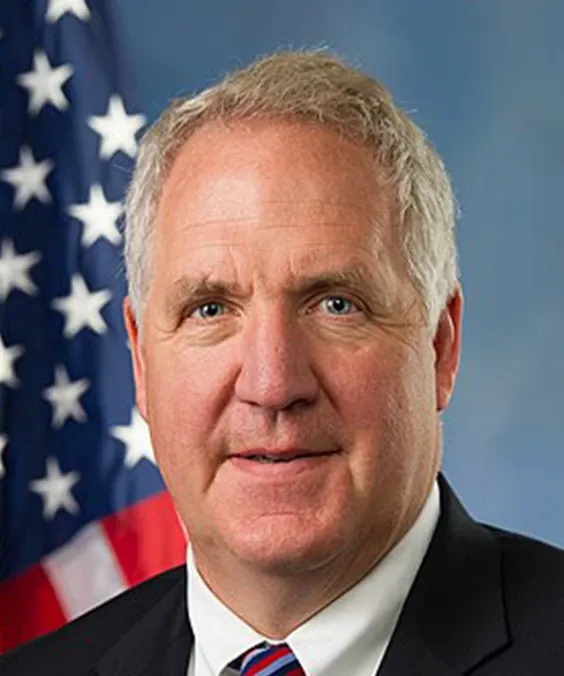
Ray LaHood is a former Republican member of the U.S. House of Representatives, representing Illinois's 18th congressional district from 1995 to 2009. During his tenure, he served on several committees and was known for his work on transportation and infrastructure issues. LaHood was a strong advocate for reforming the Electoral College, emphasizing the importance of direct elections for public offices. He also played a role in various bipartisan efforts during his time in Congress.
I hope you will take my selection as a signal of the President's commitment to focusing his energies on policy rather than partisanship.
If I'm confirmed I will have the unusual perspective of being a Republican in a Democratic Administration.
It's an honor for me to appear before you as President Obama's candidate for the United States Secretary of Transportation.
These four areas--economic health, sustainability, a focus on people and communities, and safety--will be major priorities for me if I am confirmed.
I will do so always with a commitment to fairness, across regional lines, across party lines.
I think it kind of defeats the purpose then to go back and say that you're going to auction those off.
I will want to hear what people have to say before policy is set or decisions are made.
I do not need to tell anyone here about the severe economic challenges we face.
First is openness. That means an open door to you, to your Senate colleagues, to my former colleagues in the House and to all Americans.
The failure to move the Passenger Bill of Rights legislation introduced by Senator Boxer and I is even more troubling because enhanced safety is at stake.
I said that it was, and that people already dread getting stuck in their cars in traffic for hours.
So, there are big divisions within our own party and, in some cases, within the leadership of the House and Senate that are both governed by Republican leaders.
I urge all members who are interested in real campaign finance reform to carefully consider cosponsoring this bill.
The problem that needs to be addressed is the use of the frank as a campaign tool whose real 'informational' purpose is to make constituents aware of how deserving we are of reelection.
The legislation I am reintroducing would simply strike mailings of this type from the code, thereby disallowing future use of the frank for these purposes.
My bill specifically targets franking abuse by cracking down on the use of mass mailings.
Last year I introduced H.R. 642, a bill that ends the most pervasive abuse of the frank--sending out unsolicited, self-promotional mass mailings.
I am hopeful that our fellow members on both sides of the aisle will stand with us by cosponsoring this important piece of legislation.
Such an occurrence would clearly not be in the best interest of the people, for they would be denied the ability to directly elect those who serve in our highest offices.
Politicians like Ray LaHood