Jan 23, 2017
The Affordable Care Act has greatly improved access to care for tens of millions of Americans.
The Public Record
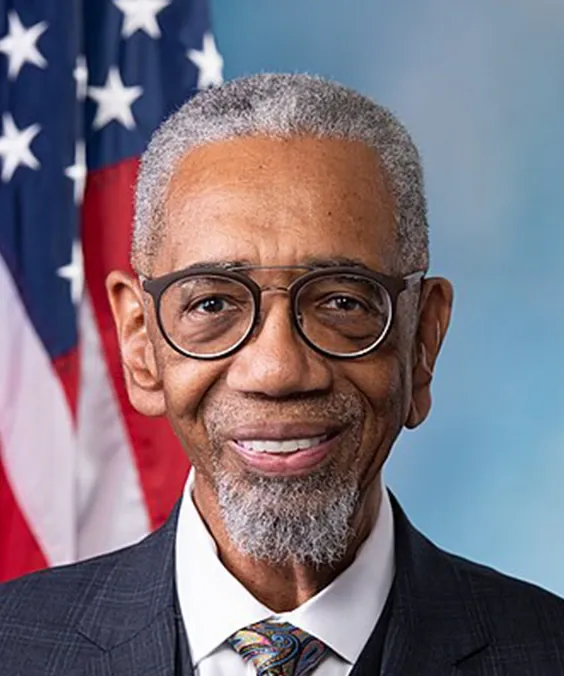
Danny K. Davis is an American politician serving as the U.S. Representative for Illinois's 7th congressional district since 1997. A member of the Democratic Party, he has focused on issues such as consumer protection and social justice throughout his tenure. Davis has been an advocate for legislation aimed at addressing telemarketing fraud and ensuring honesty in sweepstakes, highlighting his commitment to protecting consumers.
The Affordable Care Act has greatly improved access to care for tens of millions of Americans.
I feel very strongly that our laws should incentivize colleges and universities to do more for their low-income students.
I have looked at this for a long time. So thank you very much for your testimony.
I am concerned about the unemployment safety net. Certain groups of Americans continue to struggle.
I think the reality is that it is working much better than many people would have us believe.
Many of our minorities are disproportionately more likely to suffer deleterious health just because they are low-income wage owners, poor in health, and suffer worse health outcomes, and are more likely to die prematurely and often from…
Clearly, today more than ever, Congress should maintain and enhance our nation's investment in training tomorrow's physician workforce.
Those individuals are still going to feel that their money was taken from them without just cause.
We are hoping that, with this policy change, individuals who fit that category will no longer have this problem.
The policy was changed because of recognition that there were individuals who might be unduly penalized.
I certainly empathize with you in terms of just the feeling, and I am sure there are others who have had that feeling, that somehow or another you have been unjustifiably treated.
If she has concerns, then I think our Subcommittee should give serious consideration to them.
I must raise concern from experts about whether we have the data infrastructure and research base necessary for large-scale implementation of predictive analytics.
I will introduce this evidence-based approach this month in honor of National Foster Care Month.
One of my top priorities on this Subcommittee is modernizing our approach to families and child welfare affected by parental substance abuse.
The earned income tax credit is an amazing pro-work success story, and it currently excludes millions of low-income young men who face low and falling labor force participation.
I am troubled a bit by the policy of using private tax collectors who could earn up to 25 percent of what they collect.
Thanks to the Affordable Care Act an estimated 20 million people have gained health insurance, and for the first time in history nine of ten Americans have health insurance.
Since we have not seen any alternative to what is often called Obamacare, except a national health plan, preferably single payer, let me mention a few of the accomplishments and benefits our country has experienced from the Affordable Care…
I wish to raise a serious concern about the possible misuse of 501(c)(3) status by certain for-profit colleges.
I am delighted to know that we are advocating for expanding the earned income tax credit to help single parents.
It is my feeling that being prepared and having the opportunity to work, to get a job with adequate wages, that these are excellent approaches to moving people out of poverty.
I must confess that what we are calling 'welfare programs' gives me a bit of consternation.
I think in general, following the mantra I shared earlier about to maximize effectiveness you have to minimize complexity.
Politicians like Danny Davis