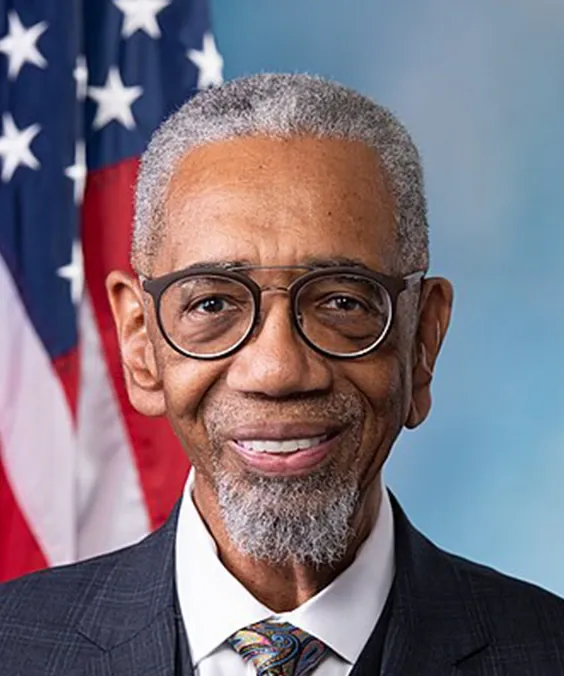
Mar 12, 2013
STEM education and educating the next generation is probably one of the most important things that we can do as a Nation.
The Public Record
Dan Lipinski is a former Democratic member of the United States House of Representatives, representing Illinois's 3rd congressional district from 2005 to 2021. He is known for his centrist positions and focus on issues such as transportation, healthcare, and education. Lipinski served on several committees during his tenure, including the House Committee on Transportation and Infrastructure, where he played a role in shaping transportation policy. He was also involved in various bipartisan efforts, particularly in areas affecting his constituents in Illinois. In 2020, Lipinski faced a significant primary challenge from progressive candidate Marie Newman, which he ultimately lost, leading to his departure from Congress in January 2021.
STEM education and educating the next generation is probably one of the most important things that we can do as a Nation.
We must continue to address this challenge, so I hope this first hearing on STEM education is one of many during this Congress.
I can personally vouch for the importance of educating our students in the STEM fields at all levels.
If the U.S. wants to remain the global leader in innovation and technology, we have to tackle these challenges with an 'all hands on deck' approach.
I have heard from many manufacturers that they are having a difficult time finding workers who have basic STEM knowledge.
One of the reasons I joined this Committee is because of my strong interest in working to improve STEM education.
The more data are open, the faster we will validate new theories and overturn old ones.
The movement toward open data is not primarily about scientific integrity; it is mostly about speeding up the process of scientific discovery and innovation.
The bigger challenge to the progress of science is not misconduct, but rather poor methodology and bad statistical analysis that take a long time to uncover.
The United States has for decades represented the world's gold standard for scientific integrity. But no one should mistake this observation as an argument for complacency.
The U.S. has for decades represented the world's gold standard for scientific integrity.
It is vital that we translate as much federal research as possible to new products and new companies.
I am also concerned that top-line cuts to our federal R&D budgets will have a negative impact on any long-term cybersecurity strategy.
I am hopeful that our R&D bill will be part of a comprehensive bipartisan cybersecurity bill.
Today, it remains difficult to imagine just how much more we will simultaneously benefit from and be made more vulnerable by information technology.
Cybercrime threatens our national security, our critical infrastructure, businesses of all sizes, and every single American.
In a Republican House, hopefully, this time we can get it all the way through because our country especially needs it as the threats grow every year.
The most problematic issues threatening the NITRD program right now are the cuts and uncertainty in top-line R&D budgets.
The most problematic issue threatening the NITRD program right now are the cuts and uncertainty in top-line R&D budgets.
``The number of Representatives shall not exceed one for every thirty-thousand, but each State shall have at least one Representative; and until such enumeration shall be made, the State of New Hampshire shall be entitled to choose three…
Thank you, Mr. Altmire. Next, I want to recognize the Democratic whip, the gentleman from Maryland (Mr. Hoyer).
Thank you, Ms. Johnson. Next, I want to recognize the gentleman from Pennsylvania (Mr. Altmire).
Thank you, Ms. Schakowsky, for your comments. Next I want to recognize the gentlelady from Texas, who Jerry and I both serve on Transportation and Infrastructure and Science, Space and Technology with, and who's also the ranking member of…
Thank you, Mr. Clay. Next I want to recognize the gentlewoman from Illinois (Ms. Schakowsky).
Politicians like Dan Lipinski