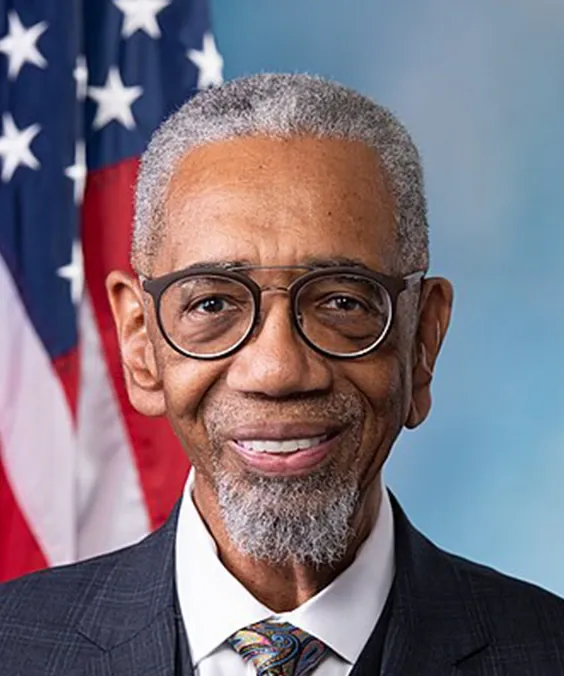
Apr 29, 2012
I believe we need to work together, and we showed here today we are Democrat and Republican, we are not fighting, we are working together.
The Public Record
Dan Lipinski is a former Democratic member of the United States House of Representatives, representing Illinois's 3rd congressional district from 2005 to 2021. He is known for his centrist positions and focus on issues such as transportation, healthcare, and education. Lipinski served on several committees during his tenure, including the House Committee on Transportation and Infrastructure, where he played a role in shaping transportation policy. He was also involved in various bipartisan efforts, particularly in areas affecting his constituents in Illinois. In 2020, Lipinski faced a significant primary challenge from progressive candidate Marie Newman, which he ultimately lost, leading to his departure from Congress in January 2021.
I believe we need to work together, and we showed here today we are Democrat and Republican, we are not fighting, we are working together.
I want to thank Mr. Partynski, first of all, for emphasizing the importance of federal funding for R&D.
As a former engineer, I understand all too well how much better we need to do in STEM education.
Just myself. I am ready to close. Mr. McCAUL. Then I reserve the balance of my time.
I'd like to yield to the gentleman from Rhode Island (Mr. Langevin) 5 minutes. (Mr. LANGEVIN asked and was given permission to revise and extend his remarks.)
If we fail to provide researchers with the skills needed to commercialize their research we are limiting the potential return that taxpayers receive on their investment.
Cutting edge research requires state-of-the-art research facilities, and we can no longer take it for granted that the best scientists want to live and work in the United States.
Ten years is probably too long a period between hearings on the important topic of how NSF manages and oversees its large facilities over their full lifecycle.
I think it is also important for me to urge everyone to be realistic about the notion of doubling the NSF's budget.
I feel strongly that we need to prioritize investments that deliver real returns to taxpayers and boost our economic competitiveness.
I feel strongly we need to prioritize investments that deliver real returns to taxpayers and boost our economic competitiveness.
I think the benefits for STEM education as one of the co-chairs of the STEM Ed Caucus, I think it is very important that we continue to do this work with the Webb Telescope.
I find that today's students are equally inspired and energized by the scientific and technological challenges we face in energy and the environment.
Students with these skill sets are not only needed to change our world with the next vaccine, energy source, or communications system, but also to help drive a thriving American economy.
In a world where nearly everything we do is built on math, science, and technology, these numbers should concern us for America's future.
Today, only one-third of the undergraduate degrees earned by American students are in a STEM field.
Ultimately I believe that trying to artificially incentivize domestic production will be of greater long-term detriment than benefit.
I firmly believe that along with education, the most important issue that our Committee can consider is how to turn our advantages in research and development into jobs and new businesses.
I am currently developing legislation to improve the Bayh-Dole Act. One of my goals is to make sure whenever possible that taxpayer-funded R&D turns into American-made products and American jobs.
I think the Common Core State Standards are going to help us ground our work in schools by saying that we are all focusing on the same thing.
I hope to hear from our witnesses about what we can do better to give students from all backgrounds access to a high-quality education.
In a global economy where nearly everything we do is based on math, science, and technology, these numbers are frightening.
I share his great concern about what is happening in America with STEM education and echo many of his concerns about what China is doing right now in threatening the United States and our economy.
Time and time again we hear about how poorly our students are doing on math and science tests.
Politicians like Dan Lipinski