Dec 14, 2011
You had over 30 candidates for President in 2006. If no one got over 50 percent, you went to a second round with the top two candidates.
The Public Record
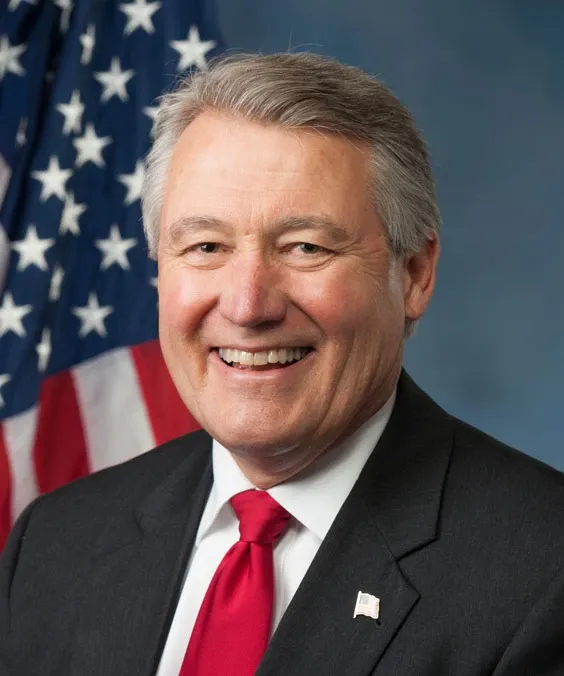
Johnny Isakson was a prominent Republican politician from Georgia who served as a United States Senator from 2005 until his resignation in 2019. Prior to his Senate tenure, he was a member of the U.S. House of Representatives from 1999 to 2005. Throughout his political career, Isakson was known for his focus on issues such as education, healthcare, and veterans' affairs, often advocating for policies that supported these areas. He played a significant role in various legislative efforts, including those related to nuclear energy and environmental regulations.
You had over 30 candidates for President in 2006. If no one got over 50 percent, you went to a second round with the top two candidates.
I think the Congolese themselves are going to have to think that through, with help from international actors, experts, and others to think through a way to get to a reasonable democratic outcome.
I think the successes of the last year have been quite remarkable if you look at the Comprehensive Peace Agreement in the Sudan.
I think the transparency that people look for in elections I think they are also going to be looking for in terms of this assignment of personnel.
I would encourage you and Secretary Clinton, in whatever way is appropriate given security, national security, and also the security of those personnel, to have a periodic reporting back to us over the progress of what they are doing in…
Were any of the 100 advisors that the President sent to Uganda positioned also in the DRC?
In your testimony, you talked about a lack of functioning authority in a good area of the DRC.
Yes, and I hope that as we go out and try to put together an effort to have a technical assessment made...
One of the things that they used, which was impressive to both of us, is cell technology to communicate from the polling place.
I was thinking, as I heard his opening statement, he and I traveled to Nigeria earlier this year where they had just completed their first really successful democratic election with the election of Goodluck Jonathan.
Well, thank you, Chairman Coons. First of all, I want to recognize my friend, Johnnie Carson, the Under Secretary of State.
Just to thank the Senator for his leadership; the Senator's leadership on this issue has been outstanding.
I respect the fact that both of you have a very difficult job and that diplomacy under any circumstances is tough, particularly when you are dealing with a dishonest broker like the Iranians have been.
There is no question that Ahmadinejad and the Iranians, if given the opportunity... probably would use fissionable material.
I think we ought to have an engagement with the VA on that very subject because if there are community-based free services, mental health services for veterans, with the number of veterans coming back from Iraq and from Afghanistan we can…
I am a little bit miffed with the fact that DOD is very engaged with your program and VA has been distant.
I think to the credit of the VA, the establishment of that program has begun to help.
I think it would be incumbent on Senator Coons and myself to engage Princeton or the State Department at a meeting to make sure we are following up on this because I think it is a very cogent point.
We need to do a better job as a government of facilitating United States competitive business investing in Africa.
I hope Goodluck Jonathan in Nigeria, who is the first successfully democratically elected Nigerian President with somewhat minimal violence taking place, will follow the role of President Mills and President Yayi in Cotonou.
Politicians like Johnny Isakson