Oct 20, 2015
I believe that our bill, with Representative Mulvaney providing the leadership, will do just that.
The Public Record
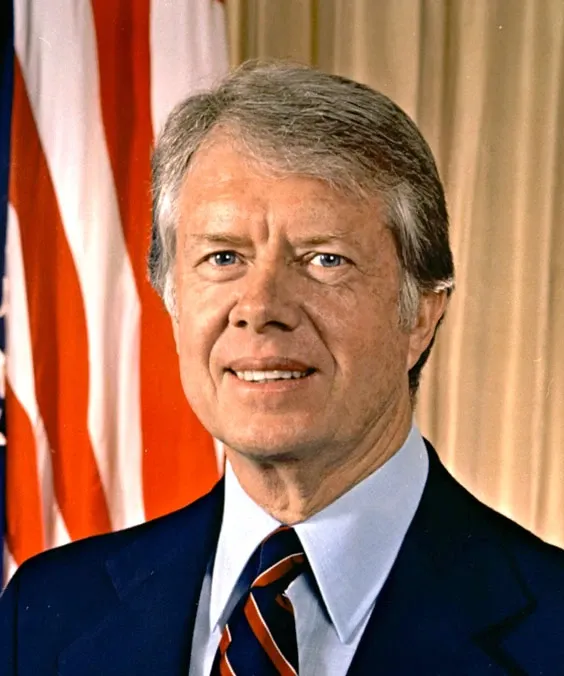
David Albert Scott is an American politician serving as a member of the United States House of Representatives from Georgia's 13th congressional district since 2003. He is a member of the Democratic Party. Throughout his tenure, Scott has focused on issues such as economic development, healthcare, and education, advocating for policies that benefit his constituents in Georgia. He has also been involved in various committees, contributing to discussions on national and local issues.
I believe that our bill, with Representative Mulvaney providing the leadership, will do just that.
I am particularly supportive of H.R. 2287, which would require the National Credit Union Administration Board to submit a detailed draft of their budget to the Federal Register for comment and hold public hearings.
These seven legislative proposals that we are considering today serve, in my opinion, as a positive step to help reduce many of the regulatory burdens.
This business about the best-interest contract is well-intended, but when you put the word 'contract' out there, that has legal sanctions and it will bring untold lawsuits.
To remove and to replace the compensation package for financial advisors from being commissioned to a fee for service will directly have a devastating impact on those folks at the low- and middle-income ends of our economic stream.
I see this rule as sort of like putting our financial system, our financial advisors in a straitjacket.
I think it would help you and help with the transparency if you did have hearings.
But, ma'am, you just agreed with me that the credit unions' fees provide your budget.
Do you think that is a very good way of holding yourself accountable to these stakeholders?
So it is safe to say the credit union members themselves bear the total cost of the agency's operations and expenses?
I want to compliment you working with my alma mater, Florida A&M University for that tremendous land in Florida will be the largest acquirement of land to help beginning farmers for any of the colleges.
We hope we are able to do is be able to tweak language in the farm bill that will allow these 1890s to be able to add the area of student scholarships and loan forgiveness.
I want you to also tell him how much we appreciate him providing that leadership to help us with getting funds to be able to help these students to be able to go into careers in agribusiness.
Whatever you can do to help get this misguided vision of us here in Congress, and to lay out and continue to stress the dire need of correcting this terrible imbalance on food stamps.
If we are not willing to do that for our soldiers, I mean, how does that speak of our nation?
The issue is, and you put your finger on it, we in Congress sit here. Many of those voices who want to cut this program come from Congress, comes from us.
Why? What in God's name is causing people to want to so drastically cut a program of food stamps when our soldiers need it to exist?
It is a very, very particular disgrace and shame of this nation that disabled veterans... are twice as likely to be a part of a food-insecure household.
What we can do to do, as I echo the words of George Washington Carver, what we can to better the condition of the American people.
You genuinely see the interest and the concern that Members of Congress have expressed, their knowledge, the work they did in getting their own research.
This has been a hearing of soaring magnitude and historical significance, and we have accomplished a lot.
Oh, well, thank you, Mr. Chairman. First, again, thank you very much for your leadership in providing this hearing.
To recruit, educate, and train more African-American students for careers in the very important, critical, and growing fields of agriculture, farming, and agribusiness.
I would also like to echo Dr. Bailey's remarks. Being situated in Tuskegee, Alabama, I do recommend that these funding lines remain separate.
Politicians like David Scott