Apr 13, 2016
We have done this through their two approaches. In the ginning program we were working on the CCC.
The Public Record
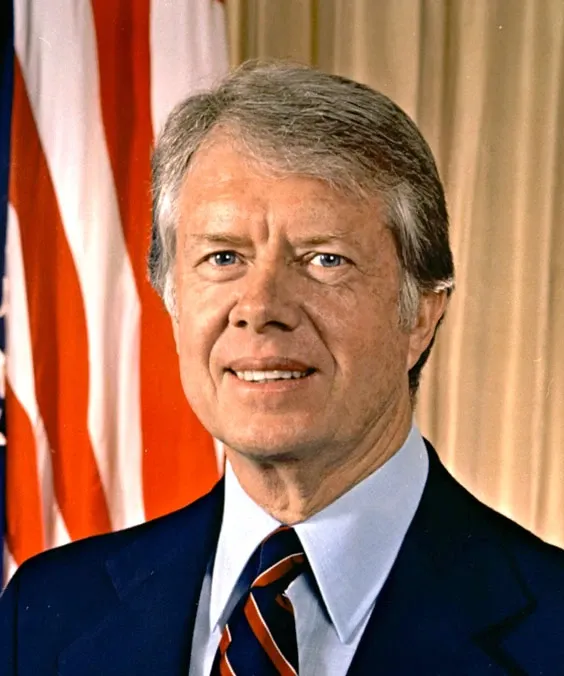
David Albert Scott is an American politician serving as a member of the United States House of Representatives from Georgia's 13th congressional district since 2003. He is a member of the Democratic Party. Throughout his tenure, Scott has focused on issues such as economic development, healthcare, and education, advocating for policies that benefit his constituents in Georgia. He has also been involved in various committees, contributing to discussions on national and local issues.
We have done this through their two approaches. In the ginning program we were working on the CCC.
Georgia is the number two cotton producing state in the nation, that is my state, next to Texas.
The CFTC has an important mission and will be unable to complete it without a data system that works.
As you know that we, Georgia, is the number two cotton producing state in the nation next to Texas, so we are very concerned about that, and I certainly appreciate the opportunity working as quickly as we can in assisting you in any kind…
My cotton farmers in Georgia this year are farming in 2015, 280,000 acres less, less than they did before, so there is a real crisis here.
Well, I would be very interested, and I know several Members on the Committee would be very interested in helping to speed the process along in getting that prohibition removed on the CCC.
It has been 2 years since the passage of the farm bill. This is something that I asked you about before.
There are a lot of folks that don't think that the EPA actually accounts for the economic consequences of some of your regulatory proposals.
I am disappointed that your staff once again did not have a prepared answer on this, knowing that I was going to ask for the fourth time.
I think that you, and the EPA, have drastically manhandled and violated the rights of our farmers, especially dealing with this water issue.
I am having a bit of trouble understanding why you are trying to destroy small dollar loans. They are much needed.
My whole point, Mr. Silberman, is that we as a government oftentimes tend to overextend our efforts in regulation and we wind up hurting the very people who need the help the most.
Why are you and other regulators, trying to make it even harder for consumers to make ends meet, to deal with some of these emergencies, by effectively regulating out of business those small dollar loans?
I want to register my deep concern and urge you not to lower it----because, from my own calculations, it would have a devastating effect on our banks' ability to be able to help their customers hedge, and on their ability to be able to…
It is very important for everyone to know that you have an equal mission. Part of that mission, one half of it, is to curb inflation. But the other half is unemployment.
Our Chairwoman and Ranking Member on the Subcommittee, Mrs. Walorski and Mr. McGovern, have been an integral part of all of that as well.
You deserve the recognition, because I know it has been a tough grind for you, but the nation appreciates it.
I just want to thank you, Mr. Chairman, for these series of hearings, because this is a very, very, very, very important subject that this Committee grapples with.
There is an old saying, which is pay the farmer or pay the doctor, and I promise you paying the farmer is way cheaper.
Now, there is also a growing movement and they use this term, healthy foods, right, we fight that battle, that limit the items that the food stamp recipient can get only to healthy foods.
My concern is, and I want to see if it is your concern, that the expansion of SNAP to be used online could make it easier to restrict and limit the amount of food, the types of food, and purchases that are bought with SNAP dollars.
Politicians like David Scott