Feb 1, 2022
I look forward to a productive conversation about programs, such as DMC, designed to give these farmers a safety net that works.
The Public Record
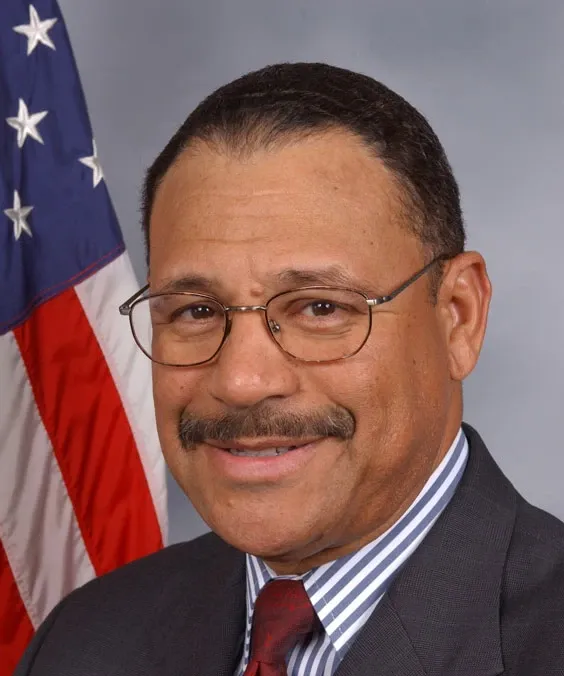
David Albert Scott is an American politician serving as a member of the United States House of Representatives from Georgia's 13th congressional district since 2003. He is a member of the Democratic Party. Throughout his tenure, Scott has focused on issues such as economic development, healthcare, and education, advocating for policies that benefit his constituents in Georgia. He has also been involved in various committees, contributing to discussions on national and local issues.
I look forward to a productive conversation about programs, such as DMC, designed to give these farmers a safety net that works.
Demand for food assistance is growing, and food banks need more Federal support to meet rising demand.
These critical anti-hunger and nutrition incentive programs work together, alongside SNAP, to tackle food insecurity from different angles.
Thanks to the 2018 Farm Bill, low-income Americans receiving SNAP benefits, on average, receive $36.24 more per person per month.
The 2018 Farm Bill, which passed with strong bipartisan support, included many important SNAP-related provisions.
Throughout the pandemic, SNAP has worked as it should, serving as an economic stabilizer for our nation.
I look forward to discussing how SNAP--as the nation's largest anti-hunger program--addresses the food insecurity of those most in need in this country.
She has introduced bipartisan legislation to make it easier for veterans with disabilities to access SNAP, the Feed Hungry Veterans Act of 2022 (H.R. 7272).
I am working closely with our Subcommittee Chairwoman on this, the gentlelady from Connecticut, who is spearheading excellent legislation to address this.
Research has found that veterans have a 7.4 percent greater risk for food insecurity than non-veterans.
The resulting 2021 Thrifty Food Plan was the first in 5 decades to not be held cost-neutral, allowing it to truly reflect the cost of an adequate diet.
SNAP will continue to be a critical lifeline for low-income Americans, ensuring they are able to purchase a nutritionally adequate diet.
One of the many lessons of this terrible genocide in the Ukraine is looking at how vulnerable food security can be.
I can assure you that the Food for Peace Program, both as authorized and as implemented, at its core is using U.S.-sourced food commodities.
In past farm bill debates, there have been efforts to reform the Food for Peace to shift more resources away from commodity food aid to cash assistance.
To bolster the American response to these crises, 36 bipartisan Members of the House Agriculture Committee, myself included, recently sent Administrator Power and Secretary Vilsack a letter encouraging them to tap the Bill Emerson…
I don't understand why this Administration has such an aversion to rural America, especially given the rising gas prices.
This Administration promised our ethanol and biofuels producers the world during the campaign and has failed on every single point.
Our rural communities need our help, and we are determined to get the help that is needed for our rural communities.
For the upcoming 2023 Farm Bill we need to consider what the needs are for our agriculture and forestry sectors.
We write to urge you to leverage the resources available in the Bill Emerson Humanitarian Trust...
There is no industry, there is no entity that relies on their existence from climate and weather than agriculture.
Thank you to the Honorable David Scott and Glenn ``G.T.'' Thompson for holding this important hearing.
We share the responsibility for governing and addressing the needs of rural America, and we can only meet that obligation if we work together.
Our partnership falters when the Department acts unilaterally and ignores the concerns of Members of this Committee.
Politicians like David Scott