Jan 19, 2010
Our relationship with the Islamic world is a huge foreign policy challenge, and will be for decades to come.
The Public Record
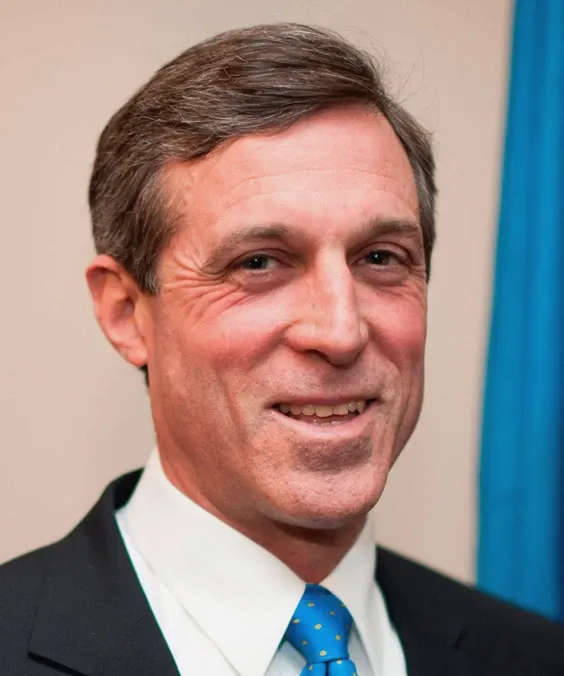
Tom Carper is an American politician currently serving as the senior United States senator from Delaware, a position he has held since January 3, 2001. A member of the Democratic Party, Carper has focused on various issues including healthcare, environmental protection, and fiscal responsibility throughout his career. He previously served as the Governor of Delaware from January 21, 1993, to January 2, 2001, and as a member of the U.S. House of Representatives from January 3, 1983, to January 21, 1993.
Our relationship with the Islamic world is a huge foreign policy challenge, and will be for decades to come.
You need somebody out here in the government that is checking everything that is done with regard to security.
I go back to 1982 Commission on Social Security which Congressman Hamilton, Senator McCain, and I voted for.
The reason Senator Gregg and I reached the conclusion of no amendments is because in watching the process here, we have concluded if there are amendments, the Republicans will put up an amendment that will say, we will address the deficit…
I know it is extraordinary. And to your staffs. Thank you for standing up and saying, all right, this is where we draw the line.
if we do not rein in the growth of health care costs as we go through this process, we may extend coverage to people who do not have it, but we will not be able to sustain that extension of coverage for very long.
Do you think it is fair to say that if S. 907 was to pass, then for the bill to survive judicial review the courts would have to address the constitutionality of both fast-track authority and the President's existing rescission authority?
Every year, as Senator Feingold has said, Congress passes a number of spending bills, and, not surprisingly, these bills sometimes include spending on items which many of us would consider of marginal value, some even wasteful, and which…
We need to begin easing off of the accelerator with one foot and start tapping the brakes with the other foot, as we begin to slow the growth in spending and again begin to grow revenues.
I thought maybe we are making better use of our rescission powers than the President.
I would rather, if this is as aggressive as you can get through the House and Senate, then I would support it because any small adjustment there that even on the margin helps control it I think is a good thing.
Mr. Chairman, successive Presidents have asked Congress to provide them with the line-item veto.
One of the findings that you presented in your testimony is that line-item veto authority is used much more frequently during periods of economic stress and hardship.
We need to find a better way to reduce wasteful spending without jeopardizing the funding for our top priorities.
Yet, the President says, we are going to have fiscal discipline. Members of Congress say, we are going to have fiscal discipline. Our question is when?
I am not sure I can say what the reasons are behind President Bush's decision.
I think speaking from the Concord Coalition's point of view, the value in enhanced rescission is the deterrent effect it would have.
the threat of voting on a rescission would at least help to deter legislators from trying to advance wasteful spending in the first place.
Senator Carper's bill also includes the same types that are in the Impoundment Control Act.
Can you identify any use for presidential rescission authority if the President cannot get a vote in Congress?
I have always said that if I cannot convince 50 of my colleagues to support a request that I have made, then I am in the wrong business, or at least I am picking the wrong projects.
Do you have any other additional concerns about S. 907 that were part of the 1996 line-item veto debate?
The Constitution does not give Congress a blank check to spend tax dollars on anything that it wants.
Politicians like Tom Carper