Jan 14, 2009
Under President-elect Obama, the United States will engage vigorously in UN-sponsored climate negotiations.
The Public Record
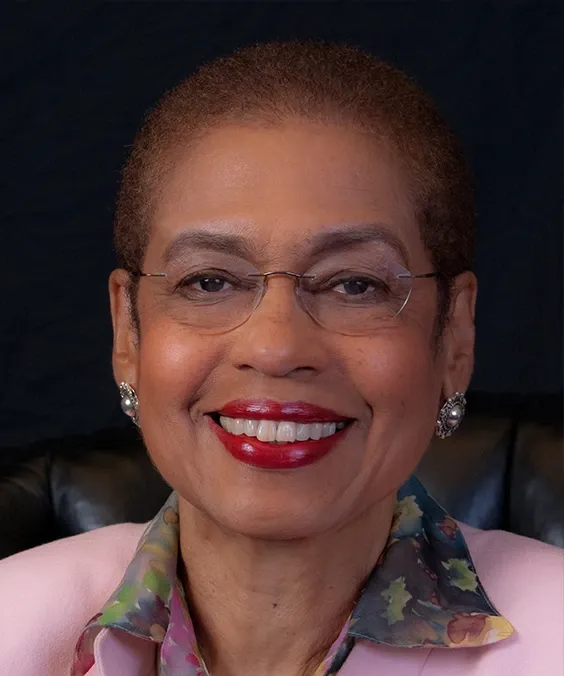
Susan Rice is an American diplomat and policy advisor who served as the 27th United States National Security Advisor from 2013 to 2017. In this role, she was a key figure in shaping U.S. foreign policy during the Obama administration, focusing on issues such as national security, international relations, and global health. Prior to her tenure as National Security Advisor, Rice served as the United States Ambassador to the United Nations from 2009 to 2013, where she advocated for U.S. interests on the global stage and addressed pressing international issues.
Under President-elect Obama, the United States will engage vigorously in UN-sponsored climate negotiations.
The fact that more than 1 year after the force was established the crucial U.N. mission in Darfur is only at half-strength is patently unacceptable.
If confirmed, Mr. Chairman, I will work to strengthen the U.N.'s effectiveness to fulfill its many important missions.
I know the U.N. sometimes deeply frustrates Americans, and I am acutely aware of its shortcomings.
The goal of our diplomacy at the United Nations must be to make it a more perfect forum to address the most pressing global challenges: to promote peace, to support democracy, and to strengthen respect for human rights.
I want to express my gratitude to Senator Susan Collins and Senator Evan Bayh for their very, very generous introductions of me.
You have been an ardent champion of a principled U.S. foreign policy to ensure this country's security and prosperity.
I am really deeply honored to appear before you as the President-elect's designee to be the United States Permanent Representative to the United Nations.
If we expect the United Nations to fulfill its important missions, we need to do better by upholding our end of the bargain.
It is important to use the United Nations as a vehicle to promote peace and stability.
We do not seek alliances because we are weak, but because acting with our friends and partners around the world makes us strong.
The United States will never ask permission to defend ourselves or our allies.
The President-elect has affirmed America's commitment to the United Nations as an indispensable, if imperfect, institution for advancing America's security and well-being in the 21st century.
There have been obvious, numerous contacts, public contacts, between the Iranian regime and both Hezbollah and the external elements of Hamas.
We have to recognize the reality that in many parts of the world what democracy will yield, at least in the short term, may not be what we would wish it to yield and may not be even constant with U.S. interests.
We thought that we knew that Iraq was the most pressing threat because it possessed weapons of mass destruction. It did not. We preempted. We're now in a long-term entanglement in Iraq.
What is his exit strategy for Iraq? How are we going to get out of the mess in Iraq?
Politicians like Susan Rice