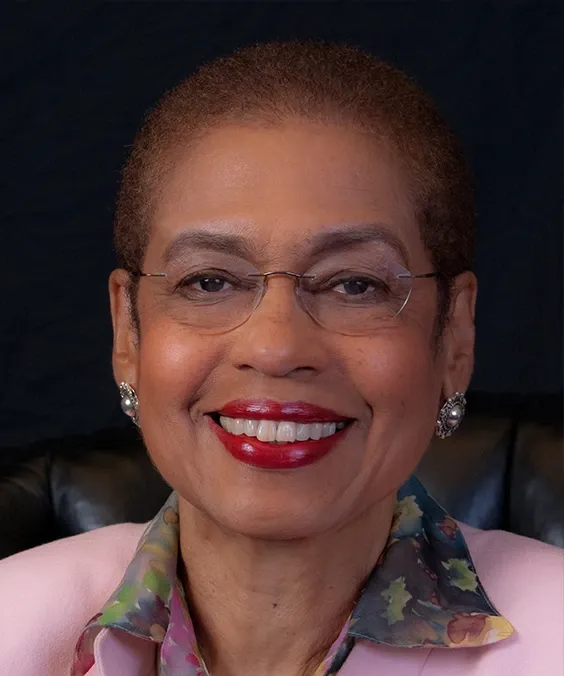
Susan Rice
The Public Record
Susan Rice is an American diplomat and policy advisor who served as the 27th United States National Security Advisor from 2013 to 2017. In this role, she was a key figure in shaping U.S. foreign policy during the Obama administration, focusing on issues such as national security, international relations, and global health. Prior to her tenure as National Security Advisor, Rice served as the United States Ambassador to the United Nations from 2009 to 2013, where she advocated for U.S. interests on the global stage and addressed pressing international issues.
Jan 14, 2009
The actions and decisions of an international body will never and do never override our own Constitution and national law.
Jan 14, 2009
The right to bear arms, as you know very well, is embedded in our Constitution.
Jan 14, 2009
It's a shame-- there's no other word for it--when the only country with which we're keeping company is Somalia.
Jan 14, 2009
The President-elect has also said that he is deeply committed and will act from the earliest days of his administration to support the diplomacy that's necessary to help to try to bring about a two-state solution.
Jan 14, 2009
There needs to be a durable cease fire, but a durable cease fire has to entail the halting of Hamas rocket attacks against Israel and the Israeli people.
Jan 14, 2009
Israel is a stalwart ally and friend of the United States, and we will, as we have in the past, act in our interests in recognition of and support of that relationship.
Jan 14, 2009
Our challenge now, and my commitment if I am confirmed as U.S. Ambassador to the United Nations, is to work with other member states to increase the efficiency, the management, and the accountability of the United Nations.
Jan 14, 2009
The U.N. can do the same job in peacekeeping for about 12 cents on the dollar.
Jan 14, 2009
Yes, indeed we do contribute the largest share, 22 percent of the U.N. regular budget, and 27 percent of the peacekeeping budget.
Jan 14, 2009
We face a world in which there are so many complex and dangerous challenges and threats--terrorism, the spread of weapons of mass destruction, conflict, climate change, disease--all of which have the potential to do great damage to our…
Jan 14, 2009
The United Nations offers us: An imperfect, but indispensible vehicle to share those burdens.
Jan 14, 2009
No U.S. administration will ever and could ever cede sovereignty to an international body or indeed to any other institution.
Jan 14, 2009
I will always, on behalf of President-elect Obama and in cooperation with Secretary-designate Clinton, stand up for and serve United States' national interest at the United Nations.
Jan 14, 2009
I certainly do support elements of the current resolution that is pending in the Council to strengthen the African Union and provide it with the support and resources that it needs to be larger and more effective.
Jan 14, 2009
I will tell you, Senator, that I am skeptical too about the wisdom of a United Nations peacekeeping force in Somalia at this time.
Jan 14, 2009
The President-elect has said very forcefully that that is a great threat to the United States, to Israel, and to the region.
Jan 14, 2009
The broad challenge, with respect to Iran, is to prevent Iran from acquiring a nuclear weapon.
Politicians like Susan Rice