Jun 26, 2024
My Democratic colleagues and I will continue to stand up for Title VII and all American workers.
The Public Record
Eleanor Holmes Norton is an American attorney and politician serving as the U.S. Representative for the District of Columbia since 1991. A member of the Democratic Party, she has been a strong advocate for D.C. statehood and local autonomy. Throughout her tenure, Norton has focused on issues such as civil rights, education, and public safety, often emphasizing the unique challenges faced by residents of the District of Columbia. She has been vocal against federal interference in local governance, arguing for the rights of D.C. residents to have representation and control over their own affairs.
My Democratic colleagues and I will continue to stand up for Title VII and all American workers.
I want to discuss the importance of strengthening consumer protection in transportation.
My Democratic colleagues and I will continue to stand up for Title VII and all American workers.
We have recently seen overall traffic fatalities start to decrease, but fatalities of vulnerable road users such as pedestrians and bicyclists continue to rise.
Despite progress in preventing employment discrimination, the work is not done.
Over the past 14 years, GAO's duplication, overlap, and fragmentation report has made critical findings and recommendations to make our government more efficient.
This is a reductive approach that fails to recognize transit's role as a public service.
Metro Lift, a program to provide reduced transit fares to low-income residents.
It is clear that GAO's recommendations are intended to improve the Federal programs that serve the American people, not gut them.
We owe them a debt of gratitude, along with our continued commitment to give public transit employees safe workplaces and fair compensation.
If we want the benefits that public transit brings, all levels of Government must be willing to invest in it.
In this regard, this report is an excellent roadmap for Congress to further strengthen invaluable Federal programs...
Together, these investments, along with support from State and local governments, have created a foundation from which transit agencies can rebuild and recover.
During COVID-19, that pandemic, Americans were reminded about how important public transit is.
The COVID relief funds, including the more than $30 billion provided by this subcommittee as part of the American Rescue Plan, were part of our commitment to public transit workers and riders alike.
Before I discuss the substance of H.R. 192, I will discuss democracy and the lack of it in D.C. The nearly 700,000 District residents have no voting representation in Congress, and Congress has the ultimate say, even on local D.C. matters…
I thank the gentleman for yielding, and I strongly oppose this undemocratic, paternalistic bill. This Congress, Republicans have introduced 22 bills to overturn the District of Columbia's election laws, yet Republicans have refused to make…
The act would give D.C. residents voting representation in Congress and full local self-government. Congress has the constitutional authority to admit the State of Washington, D.C. It simply lacks the will. D.C. residents, a majority of…
According to the Department of Energy, because of the Inflation Reduction Act and the Bipartisan Infrastructure Law, by 2030 we are projected to cut greenhouse gas emissions by 40 percent at 2005 levels.
Both the Inflation Reduction Act and the Bipartisan Infrastructure Law are critical investments in our country's future.
I am proud we passed the Inflation Reduction Act and the Bipartisan Infrastructure Law, and I am thankful for the Biden Administration's leadership in addressing the climate crisis and securing our country's energy future.
A prime example of the Trump Administration's efforts to attack the Federal workforce was the 2019 effort to relocate hundreds of Department of Agriculture employees.
Federal employees are the backbone of our government and the driving force behind the programs and services Americans depend on.
Before I discuss the substance of this bill, I want to discuss democracy and the lack of it in the District of Columbia. D.C. residents, who have all the obligations of American citizenship, have no voting representation in Congress, and…
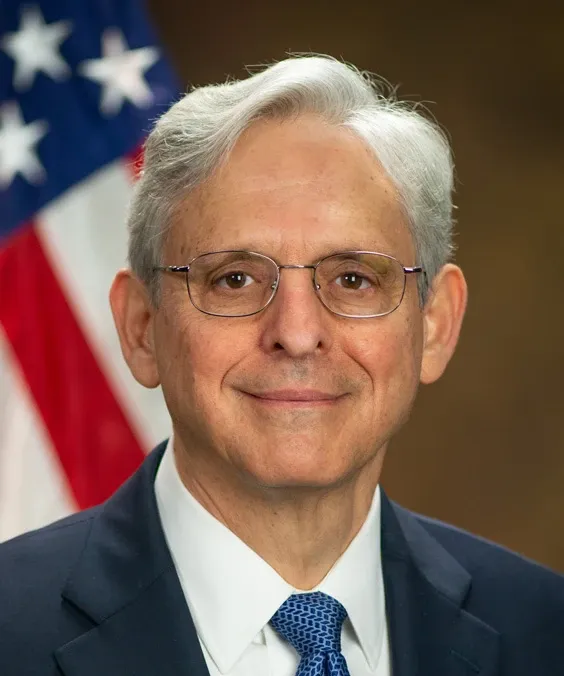
Politicians like Eleanor Holmes Norton