Feb 4, 2013
I mean you will recall that many economists, and I think Members of this body, were very much worried about the impact of the fiscal cliff on the economy.
The Public Record
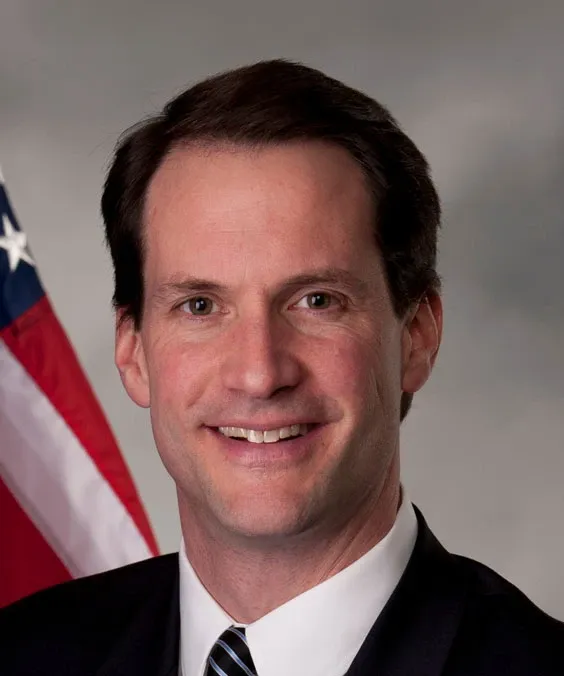
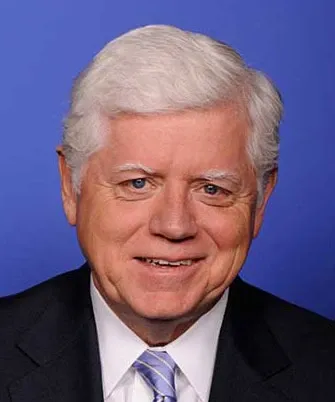
Joe David Courtney is a U.S. Representative for Connecticut's 2nd congressional district, serving since January 4, 2007. A member of the Democratic Party, he has focused on issues such as education, healthcare, and veterans' affairs during his tenure. Courtney has been an advocate for policies that support working families and has worked on initiatives to improve infrastructure in his district. He has also played a role in discussions surrounding military and defense matters, given the presence of military installations in Connecticut.
I mean you will recall that many economists, and I think Members of this body, were very much worried about the impact of the fiscal cliff on the economy.
Again, my largest school district is going to lose two Head Start programs if the domestic discretionary cuts go into effect.
If sequestration and the CR, by the way, go into effect, the impact in terms of the Navy's budget for repair and maintenance...means that 23 ship repair and availabilities are going to be canceled.
The fiscal uncertainty that is out there right now is what I am hearing when I am back home.
Dodd-Frank didn't happen because people just wanted to create some regulatory structure. There was a real need in terms of what happened in 2008 and it is still going on today.
The inability of us to even explain what the heck is going on and what is being done about it, again it just puts everyone in an impossible position.
Thank you, Mr. Chairman. And I really again appreciate the fact that you have organized this hearing on Dodd-Frank implementation...
The good news is 9 out of 12 regions were showing good signs of economic growth.
I certainly echo those requests outlined by Senators Reed and Whitehouse in their testimony when they spoke earlier today.
If we can do even one-tenth of that, then I know we will be rebuilt stronger than ever.
Thank you for the series of hearings, starting with the industrial workforce and leading up to today's hearing this morning.
But I think if we are serious about not having the sequester but equally serious about balancing the budget...
I fully embrace the principle that anyone who served this country is deserving of high-quality health care for the rest of their life.
I am going to vote no, because I think for us to walk away from our responsibilities... is not very responsible.
90 percent of the Members in both Chambers oppose sequestration, we should roll up our sleeves and avoid it.
We have fought two wars on a credit card, and that post-2014 it is not going to be down to zero, but we are going to be bringing down that process of pouring money into Afghanistan.
I can't imagine what it would be like to have the title of Director of Office of Management and Budget and to have had no support in Congress for a budget.
There actually is some overlap between budget documents that have been voted on by the vast majority of the Republicans in the House and what the President actually put forward.
The fact of the matter is we are going to spend $98 billion in Afghanistan this year, isn't that correct?
The Speaker was actually boasting in public that he got 98 percent of what he wanted in terms of negotiations with the White House.
Thank you, Mr. Courtney, and I thank you for conducting this hearing. I would just like to again walk through a few points with the witnesses.
The income-based repayment program is trying to provide student loan relief at a time when student loan debt in this country now exceeds $1 trillion--higher than credit card debt, higher than car loan debt. It is a commonsense program…
Hopefully this measure which is moving forward in the House this week to freeze all regulations in its track, a chainsaw throughout the whole government, won't move forward because even though the stated purpose of that bill is to protect…
Politicians like Joe Courtney