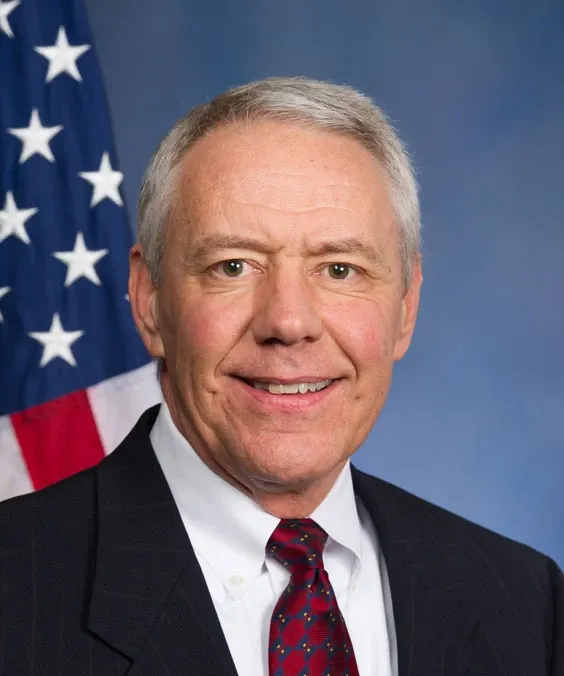
Doug Lamborn
The Public Record
Doug Lamborn is an American politician serving as the U.S. Representative for Colorado's 5th congressional district since January 4, 2007. A member of the Republican Party, he has focused on issues such as military and veterans' affairs, energy policy, and fiscal responsibility during his tenure in Congress. Lamborn has been an advocate for the military presence in Colorado and has worked to support local defense industries. He has also been involved in various legislative efforts aimed at reducing government spending and promoting economic growth in his district.
Nov 3, 2011
I think common sense would tell me, an old farm boy also from Kansas, that if you stop the production of coal mining because the rules for extracting it are more stringent, you are going to have less coal, and therefore you will have less…
Nov 3, 2011
destroying coal mining will kill these one-industry towns, push tens of thousands of American families into poverty, and leave our Nation poorer
Nov 2, 2011
I particularly want to single out my friend and colleague from Colorado, Representative Tipton, for this Chimney Rock bill.
Nov 1, 2011
There has been growing concern that companies will be allowed to expand their engagement with Cuba and that this Administration is weakening the U.S. embargo on Cuba, a state sponsor of terrorism.
Nov 1, 2011
Unfortunately, as previous hearings we have conducted this year have so clearly pointed out, uncertainty is forcing companies to look elsewhere in globally competitive markets.
Nov 1, 2011
It is my hope that an expeditious and fair agreement between the U.S. and the other countries will give the certainty necessary to move forward with energy development along the U.S.-Mexico boundary.
Nov 1, 2011
At a time when world demand for energy is increasing, businesses that provide us with the oil and electricity that we use every day will continue to seek out new places around the world to develop these resources.
Oct 26, 2011
Mr. Lamborn. Thank you, Mr. Chairman. Thank you for the work that you are doing. I will make this very quick because I am not from a Gulf Coast state, and I know that they have some burning questions.
Oct 12, 2011
We lose control. And as we lose control, we will become out of balance and we will not have the military this Nation needs.
Oct 12, 2011
Are you committed to the adequate resourcing of the ground-based missile defense system in the future?
Oct 12, 2011
Do you believe, as you execute budget drills to implement the $489 billion in cuts that have already been sustained to the Defense Department budgets, that the country can continue to afford a robust national missile defense as well as a…
Oct 11, 2011
I think we are beyond the fact that the length of the shutdown and slowdown in the Gulf was both unwarranted and unnecessary.
Oct 5, 2011
When these problems came to the surface last year, many Americans were very concerned, and understandably so.
Sep 25, 2011
Can a state even give an adequate response in five or ten days? I find that when I send something to a state, or even worse, maybe a Federal bureaucracy, it takes them that long to open the envelope and get it to the right desk.
Sep 25, 2011
What we've seen from EPA, what we've seen from the other agencies within the Federal Government has been policy and it's going to trample, we think, congressional intent, whether it's under the Surface Mining Act or under the Clean Water…
Sep 25, 2011
Increasing responsible access to these resources will allow us to be less dependent on foreign sources of energy.
Sep 25, 2011
Some have said, and I happen to share this concern, so I could be saying this just as well as anyone else out there, that the Obama Administration seems to be waging a war on coal.
Sep 25, 2011
Well, I find that really ironic because SMCRA is the Surface Mining Control and Reclamation Act. Surface mining control, so ostensibly, it's not supposed to dictate underground mining, if I heard you correctly?
Sep 25, 2011
The rewritten stream buffer zone rule will result in the direct loss of over 7,000 jobs nationwide.
Sep 25, 2011
I would like to reaffirm my belief that the United States is a nation of excellence.
Sep 25, 2011
We are hopeful, now that OSM has retained a new contractor and pressed the pause button on the EIS process, that it will comply with its obligations under NEPA and conduct a genuine EIS process where States are engaged in real discussions…
Politicians like Doug Lamborn