Nov 14, 2017
I want to thank Congressman Mast for his leadership on H.R. 2712. This is the Palestinian International Terrorism Support Prevention Act.
The Public Record
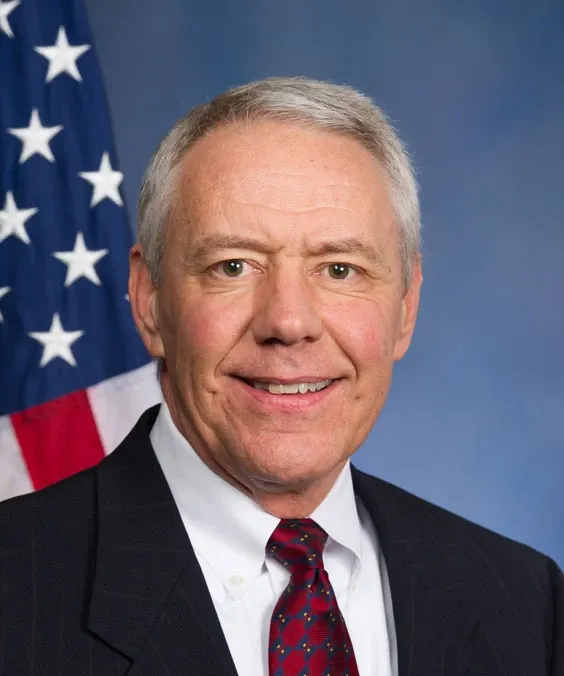
Doug Lamborn is an American politician serving as the U.S. Representative for Colorado's 5th congressional district since January 4, 2007. A member of the Republican Party, he has focused on issues such as military and veterans' affairs, energy policy, and fiscal responsibility during his tenure in Congress. Lamborn has been an advocate for the military presence in Colorado and has worked to support local defense industries. He has also been involved in various legislative efforts aimed at reducing government spending and promoting economic growth in his district.
I want to thank Congressman Mast for his leadership on H.R. 2712. This is the Palestinian International Terrorism Support Prevention Act.
These policies incentivize terrorism. With this legislation, we are forcing the PA to choose between U.S. assistance and these morally reprehensible policies.
I want to thank our ranking member, Eliot Engel, for collaborating with me on this bipartisan text that we are taking up today.
Maybe just a very narrow exception to the Jones Act, possibly, just as we need to look at environmental regulation waivers.
I would like to commend one of our Representatives who is here today, Representative Velazquez, for speaking out on this issue.
What our bill would do, is make sure we dedicate resources for this specific work.
I cannot overstate how critical it is, especially for this Committee, to have a state perspective on resource management activities.
I want to thank Congresswoman Pingree for coming before the Subcommittee today to testify on her bill.
Mr. Young's bill supports the partnership between NOAA and companies such as Fugro that have access to the resources and advanced technologies that can map the ocean floor in a fraction of the time.
While NOAA has covered a lot of ground with this program, inferior techniques and technologies have aided in a significant backlog of U.S. waters that are not adequately mapped.
This bill, championed by the Alaska delegation in the House--the entire delegation--and the Senate reauthorizes NOAA's critical ocean surveying and mapping program.
The Water, Power and Oceans Subcommittee meets today to consider three bills that nearly span the wide range of our Subcommittee's jurisdiction.
While it may not be a surprise that a Federal agency has been slow to adopt efficient techniques and technologies, the private sector has stepped up to the challenge.
Are the arguments in favor of species mitigation entirely reasonable on your part, or is there a possibility that some people have an ulterior motive in wanting to make dams unprofitable?
But do you sometimes have to buy from either nuclear or fossil fuel sources?
If Bonneville, as the fourth-biggest customer, has to buy from other sources, where does that electricity from other sources come from?
I would like to thank all the witnesses for their valuable testimony. You have come a long way to be here, and I and all of us appreciate that.
The time and money wasted by Federal agencies and those impacted by their decisions is frustrating and unnecessary.
It's time for a more efficient and holistic approach to manage species under one, not two, Federal agencies.
Clearly, the ESA process is broken, and the Federal status quo is not working for species, farmers and ranchers, and rural communities that depend on our natural resources.
The FISH Act is a bipartisan solution aimed at clearing up regulatory confusion between two Federal agencies.
Politicians like Doug Lamborn