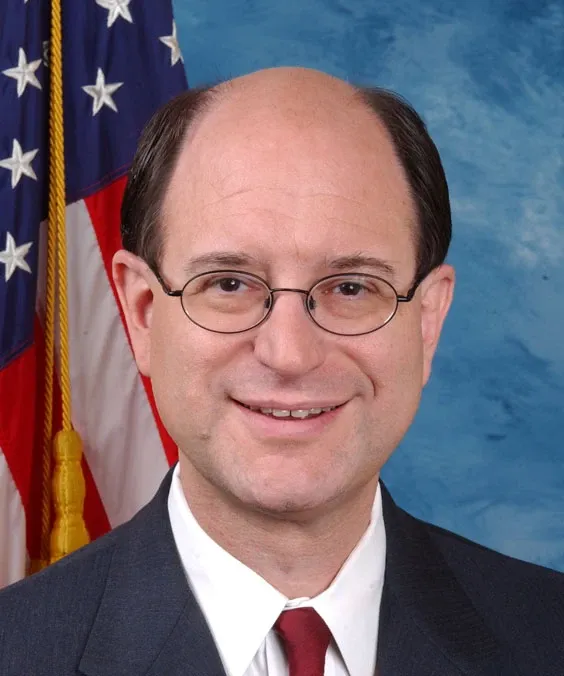
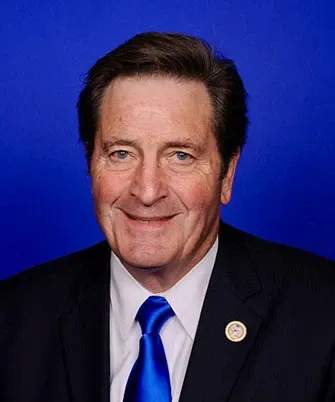
Mark DeSaulnier
The Public Record
Mark James DeSaulnier is a U.S. Representative for California's 10th congressional district, having served since January 6, 2015. A member of the Democratic Party, he has focused on issues such as healthcare, education, and infrastructure during his time in office. DeSaulnier has been an advocate for environmental protection and has worked on legislation aimed at addressing climate change. Before his tenure in Congress, he served in the California State Senate and the California State Assembly, where he gained experience in state-level governance.
Feb 6, 2017
It's nice when public policy actually gets discussed here so thank you very much.
Sep 22, 2016
I just wanted to make a comment that I'm supportive of what the chairman is after here.
Jul 6, 2016
I really believe you have served this country and all Americans well, irrespective of their party affiliation.
Jul 5, 2016
I want to quote from an extensive article that was in the San Jose Mercury News being from the bay area as part of a bay area news group investigation, and it started after the Kate Steinle incidence.
Jul 5, 2016
I for one would enjoy being part of that discussion and just remind and submit for the record if possible a letter that over 100 of us signed to the Republican leadership to continue or re-instate the funding for Center for Disease Control…
Jul 5, 2016
I want to commend, at the same time find it difficult in giving the benefit of the doubt to reconcile what the majority would like to do here in terms of pursuing best practices on storage and inventory control on Federal public safety…
Mar 21, 2016
I appreciate the panel. I think all of us have stories about constituents who have been affected by this.
Mar 15, 2016
I certainly want to thank you for highlighting the importance of skill and workforce training.
Mar 15, 2016
As a former small business owner, who, my success in the restaurant business was directly related to my employees and how they interacted with my clients.
Mar 14, 2016
I wonder if you would be willing to have a meeting with the members of the LGBT Caucus to discuss these important issues?
Mar 14, 2016
Can you speak to whether ACL will be rolling out a guidance focused on LGBT older Americans, and if not, what will they be doing to assist this aging population?
Mar 14, 2016
As you may know, the Congressional LGBT Equality Caucus, of which I am co-chair, has formed an LGBT Aging Issues Task Force.
Mar 14, 2016
I am glad to hear about the administration's continuing commitment to programs that support working families, educate our children, and keep Americans healthy.
Feb 24, 2016
Clearly, these are the kind of things that we now know looking back that if we had fully funded them and kept them going, the achievement gap might not be what it is today.
Feb 2, 2016
I went to South Division High School in Milwaukee, a public school, with a low graduation rate of about 50 percent, but when a student came from one of these taxpayer funded voucher schools, there there was absolutely no records that came…
Feb 2, 2016
However, unlike Mr. Messer, I think I have a little different experience when it comes to taxpayer funded voucher programs.
Jan 6, 2016
It strikes me that public documents are public documents. We all work for the public.
Jul 27, 2015
In Riverside County, which I represent, there are about only 34 primary care physicians for every 100,000 people, half the number of doctors needed to provided adequate access to care.
Jun 15, 2015
His own story is he grew up in a very, very poor environment. He knew what hunger was.
Jun 15, 2015
The Healthy, Hunger-Free Kids Act gives all children the chance at living a healthy life.
Jun 15, 2015
In considering the reauthorization of the Healthy, Hunger-Free Kids Act, the question we must ask ourselves is, how much are the lives of our children worth?
Jun 9, 2015
I would argue that is one of the very reasons an update to the overtime exemption is badly needed.
Politicians like Mark DeSaulnier