Nov 15, 2021
Much more should be said about the disastrous implication raise by the change generated by Congressman Huffman; California-D.
The Public Record
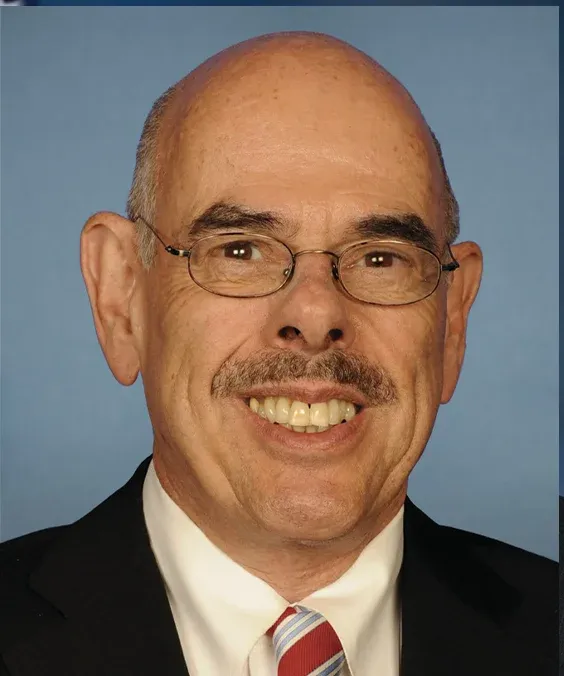
Jared William Huffman is an American politician serving as the U.S. Representative for California's 2nd congressional district since January 3, 2013. A member of the Democratic Party, Huffman has focused on issues such as environmental protection, healthcare, and education during his tenure in Congress. He has been an advocate for science-based policy and has emphasized the importance of government support for scientific research and public safety initiatives.
Much more should be said about the disastrous implication raise by the change generated by Congressman Huffman; California-D.
It is imperative that the Magnuson Stevens Act (MSA) be reauthorized and modernized to sustain our fisheries, jobs and communities in Alaska.
America is truly a leader in sustainable fisheries management, but the MSA hasn't been reauthorized in over a decade.
This legislation is also very heavy on science and data because to keep up with today's fishery management needs, we need to have the best available science.
We learned from this process that we need to make some profound changes and updates to the MSA.
The economic health of our sector, as well as the long-term productivity of our fisheries, depends squarely on the terms and underlying principles of the Magnuson-Stevens Fishery Conservation and Management Act (MSA).
We appreciate the leadership that Representative Huffman, Representative Case and staff have demonstrated to build on the existing MSA.
the intent of this change is to minimize the stigma of fault and recognize environmental and other factors
We wanted the conversation not to be about partisan politics, but to be an inclusive, transparent, and stakeholder driven process.
Removing the qualifier 'to the extent practicable' from National Standard 9 is a much-needed change, which will reorient the MSA toward the original intent of reducing bycatch.
This is not just an issue of conserving marine life; there are heavy impacts on subsistence fishers...
This legislation remains a work in progress. We are going to keep trying to improve it.
I think people are not only tired of the partisan divides they see with so many issues getting hijacked by partisan agendas, they are also tired of backroom deals.
I think both your bill and Congresswoman Dingell's bill, H.R. 5770, make some really significant strides here both in terms of reducing annual catch limits to account for the needs of these predators.
We applaud the Sustaining America's Fisheries for the Future Act's acknowledgment of the importance of subsistence fishing to Indigenous communities in Alaska.
We believe the MSA discussion draft builds upon provisions which contribute to healthy marine resources and healthy communities.
And there is such a disparity, there is such a double standard here when this year alone the industry captured as bycatch 12,000 Chinook salmon and over 500,000 chum salmon.
I feel that what we need to do at NMFS is provide more and better data and science...
This Act ensures that Tribes can meaningfully participate in fisheries management by creating two Tribal voting seats on the NPFMC.
We desperately want to get things done, Anderson. Again, we began this day enthusiastic about delivering a win for the Congress, for the President, and for the country.
Many of my colleagues and I agree with them have been unwilling to put up a vote for that Senate Bill in the absence of more than just that, because it's a final vote, it becomes law at that point. That's why we've asked that both bills…
Well, it's good to see you, Anderson. I think there's a good chance that we could get two votes tonight. Of course, we began this day, not only expecting to put up all three votes, the rule, the Build Back Better Act, and the bipartisan…
Politicians like Jared Huffman