May 15, 2023
The committee report highlighted the progress made in reducing nutrient pollution from the wastewater treatment plants, even as populations in the bay watershed have increased.
The Public Record
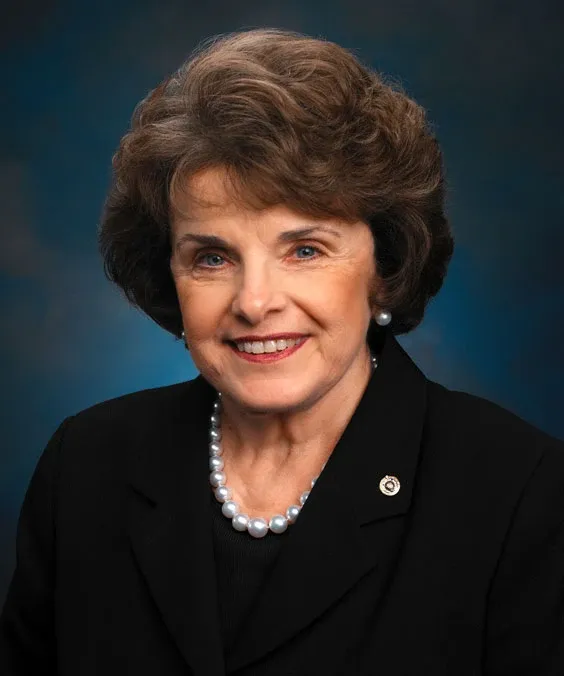
Grace Flores Napolitano is a member of the United States House of Representatives, representing California's 32nd congressional district since 2013. A member of the Democratic Party, she has focused on various issues including mental health, water resources, and environmental protection throughout her tenure. Napolitano has been an advocate for policies aimed at improving the quality of life for her constituents and addressing pressing social issues. Her legislative efforts often emphasize the importance of sustainable practices and mental health awareness.
The committee report highlighted the progress made in reducing nutrient pollution from the wastewater treatment plants, even as populations in the bay watershed have increased.
In response, last Congress, House Democrats delivered with enactment of the largest investment in wastewater infrastructure in generations through the Bipartisan Infrastructure Law (BIL).
The American Petroleum Institute (API) writes regarding the upcoming Water Resources and Environment Subcommittee Hearing.
If we do not protect our Nation's water, this will have a negative impact on business as they will not have the high-quality water they need for production and growth.
Unfortunately, in my opinion, every water bill advanced by this committee in Congress would needlessly weaken Federal and State efforts to protect our waters from pollution, such as excessive nutrients.
Now is not the time to weaken federal and state efforts to protect our nation's waters.
Over the last decade, communities and States have called for additional Federal dollars and resources to address lingering water quality concerns.
The strength of the American economy is reliant on a clean water supply as it is a key ingredient for manufacturing, farming, food processing, small business development, tourism, and recreational businesses.
Now is not the time to pull back on Federal investments on wastewater infrastructure.
On behalf of the National Wildlife Federation and our nearly seven million members and supporters, we urge you to reject attempts to undermine critical Clean Water Act tools that protect our nation's waters and wildlife habitat as well as…
Over the past 50 years, the Clean Water Act has made considerable progress in addressing our nation's water quality concerns.
Ranking Member Payne, I want to associate myself with your comments regarding long trains.
To move backward by cutting our budget with respect to bureau reclamation and water delivery has the potential to severely impact the 40 million people who rely on that basin for fundamental needs such as drinking water and agriculture.
Can you tell the Committee how the budget cuts proposed by the House Republicans related to the debt ceiling would impact funding for water infrastructure projects?
In this letter, the States highlight how this legislation will undermine States' ability to protect water quality within their States, and erode five decades of successful, cooperative federalism. Mr. Chair, I strongly oppose H.R. 1, the…
I am very concerned that the Federal law currently prohibits States from allowing electric vehicle charging stations at highway rest stops.
I was absent due to representing the United States government at the United Nations 2023 Water Conference. Had I been present, I would have voted in the following way: ``yea'' on rollcall No. 144, suspending the rules and agreeing to H.R…
We all deserve clean water to drink, lakes where we can teach our children to swim, rivers where we can fish with family, and assurances that valuable wetlands and waters will flourish for generations to come.
The Dirty Water Rule removed protections of the streams and wetlands that are a source of the drinking water to over 117 million Americans.
We thank you for holding today's hearing, 'Stakeholder Perspectives on the Impacts of the Biden Administration's Water of the United States (WOTUS) Rule.'
We must protect and strengthen the Clean Water Act to preserve the health of our economy as well as our communities, our environment, and our water-dependent futures.
The rule seeks to balance the need to protect waters and wetlands consistent with the goals of the Clean Water Act, while trying to comply with the law, the science, and various opinions of the Supreme Court.
On behalf of the American Fisheries Society (AFS), thank you for the opportunity provide testimony on the impacts of the Biden Administration's Waters of the United States (WOTUS) rule.
Manufacturers prioritize environmental stewardship and protecting our national waterways, but the EPA's current WOTUS rule leaves stakeholders confused.
The Honorable Grace F. Napolitano, Ranking Member, Water Resources and Environment Subcommittee, Committee on Transportation and Infrastructure, U.S. House of Representatives.
Politicians like Grace Napolitano