Sep 10, 2024
Since 1973, American Rivers has protected wild rivers, restored damaged rivers, and conserved clean water for people and nature.
The Public Record
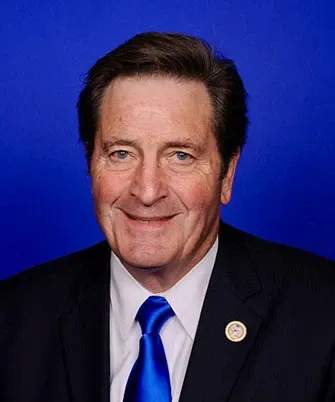
Grace Flores Napolitano is a member of the United States House of Representatives, representing California's 32nd congressional district since 2013. A member of the Democratic Party, she has focused on various issues including mental health, water resources, and environmental protection throughout her tenure. Napolitano has been an advocate for policies aimed at improving the quality of life for her constituents and addressing pressing social issues. Her legislative efforts often emphasize the importance of sustainable practices and mental health awareness.
Since 1973, American Rivers has protected wild rivers, restored damaged rivers, and conserved clean water for people and nature.
The stone, sand and gravel industry urgently needs clarity and certainty regarding Clean Water Act (CWA) permitting.
Each day that passes absent clarity by the Federal government on Sackett compliance is one more day that business and the environment are at risk.
To me, the answer is clear. We should recognize the familiarity and workability of the historic Clean Water Act.
I believe this bill will restore the minimum levels of protections struck down by the conservative Supreme Court.
I believe the Supreme Court purposefully chose to substitute its own philosophy over decades-old, legally grounded efforts to protect water quality.
Clean water was not always a partisan issue, and no issue has more support among American families than the protection of our nation's waters.
In my view, we get lost on questions of who is best suited to protect our water resources, rather than talking about the importance of rivers, streams, lakes and wetlands for current and future needs.
We should recognize the familiarity and workability of the historic Clean Water Act and get on with the preservation of the health of our economy as well as that of our communities.
I believe the Supreme Court purposely chose to substitute its own philosophy over decades-old, legally grounded efforts to protect water quality.
I believe the question of who should ultimately be responsible for protecting rivers, streams, and wetlands has become hyper-politicized.
I believe that every-State-go-it-alone approach is inconsistent with congressional intent on the Clean Water Act.
The Supreme Court's decision makes it impossible for the country to achieve Congress's objective in passing the Clean Water Act
I thank Mr. Rouzer for being a perfect partner, and I wish him well in next year's WRDA. Mr. Speaker, I yield 2 minutes to the gentleman from Arizona (Mr. Stanton).
DOT recently provided an update to the Justice40 initiative. The Department has exceeded its goal of delivering 40 percent of the benefits of Federal investments to disadvantaged communities.
I reiterate the invitation for you to visit the 31st Congressional District in California again.
There must be continuous funding to grow, construct, maintain, and operate these facilities.
It is imperative we work to address the climate change to protect our water supplies and increase the presence of regional, large-scale water projects for the benefit of the future U.S. climate change.
With 500-plus route-miles serving more than 20 million people, how does Metrolink prioritize investments in infrastructure?
I oppose the amendment offered by the gentleman from Florida (Mr. Bean). The Acting CHAIR. The gentlewoman from California is recognized for 5 minutes.
I claim the time in opposition, though I am not opposed. The Acting CHAIR. Without objection, the gentlewoman from California is recognized for 5 minutes. There was no objection.
Politicians like Grace Napolitano