Feb 7, 2023
As an original cosponsor of the rip-and-replace bill, I know this is a national security and economic imperative.
The Public Record
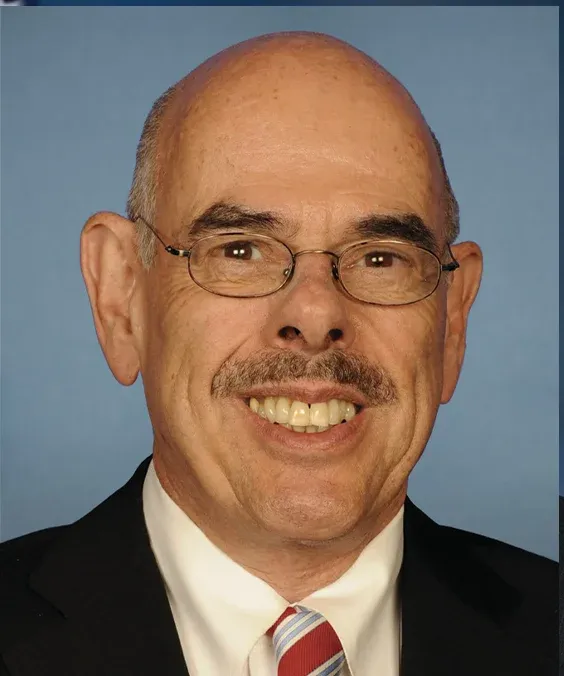
Doris Okada Matsui is a member of the United States House of Representatives, representing California's 6th congressional district since January 4, 2005. A member of the Democratic Party, she has focused on issues such as healthcare, education, and environmental protection throughout her tenure. Matsui has been an advocate for technology and innovation, particularly in relation to the Sacramento region's economy.
As an original cosponsor of the rip-and-replace bill, I know this is a national security and economic imperative.
It is important that this committee and the FCC are working hand-in-glove to advance complementary rather than conflicting policies.
I am glad that we are building on the progress of our first hearing with another bipartisan discussion today.
The nature of satellites is that you can license anywhere in the world and still be able to operate in the lucrative U.S. market.
As more system operators begin to share congested spectrum bands, it will be increasingly important that satellites are spectrally efficient.
Our subcommittee has more bearing on the United States technological leadership in the 21st century than any other.
As a cochair of the Spectrum Caucus, I understand the increasing demand for spectrum across all industries.
I recently sent Chairwoman Rosenworcel a letter urging her to institute continuous and flexible information-sharing requirements to help achieve cooperation.
To keep the satellite marketplace dynamic, we need to strike the right balance between protecting incumbent operations and creating room for new entrants to compete.
I am excited to get to work, continuing the subcommittee's strong tradition of bipartisanship.
It is no exaggeration to say that our subcommittee has more bearing on the United States technological leadership in the 21st century than any other.
It is a privilege for me to be sitting on this dais with you, and I look forward to working with you on these issues that will impact all of America.
I refuse to sit back and watch where States can take away an individual's ability to make personal decisions about their body, their life, and their future. Madam Speaker, I implore you to really think about this and pass this bill.
Thank you, Mr. Chairman, for the opportunity to come before the Committee and lay out my key priorities for the Water Resources Development Act (WRDA) of 2022.
I fear that severe flooding will no longer be 100 or even 500-year events, but a new norm for my constituents.
We need to thoughtfully prioritize projects that consider the long-term consequences of climate change.
For this reason I co-lead the POWER ON Act, which provides funding to make our electricity grid more resilient to extreme weather events.
This is an extremely important subject as we try to figure out what we do with this existential threat of climate crisis.
This bill will help ensure that the United States has a healthy pipeline of spectrum to boost innovation and job creation.
By requiring 200 megahertz of spectrum to be made available, we are asserting a clear commitment to winning the race to 5G and beyond.
Recently, I joined Chairman Doyle in introducing the Spectrum Innovation Act to ensure we are making available as much spectrum as possible for commercial use while recognizing the needs of our federal users.
I believe fully funding the semiconductor programs in the NDAA should be a top national security priority for this Congress.
Politicians like Doris Matsui