Feb 24, 2016
the 2017 budget proposal Specialty Crops Program--Pest Programs to be funded at $146 million. However, the estimated 2016 budget is $164 million.
The Public Record
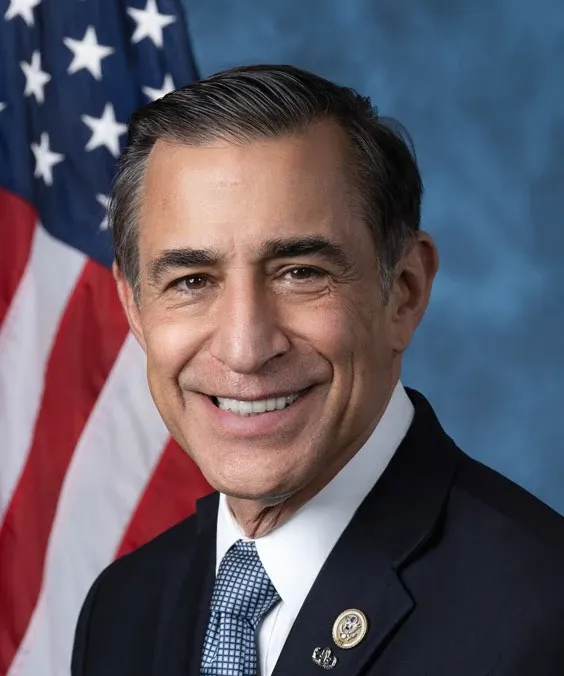
David Valadao is an American politician serving as a Republican member of the United States House of Representatives for California's 22nd congressional district. He was first elected to Congress in 2012 and has served since January 3, 2013, with a brief hiatus from 2019 to 2021. Valadao has been involved in various legislative efforts, particularly focusing on issues related to agriculture, water resources, and healthcare. He is known for his bipartisan approach and has worked on initiatives to support the Central Valley's agricultural community.
the 2017 budget proposal Specialty Crops Program--Pest Programs to be funded at $146 million. However, the estimated 2016 budget is $164 million.
But that is an important issue in some of our counties facing these legal challenges and fighting it out in court is something that we do need to address quickly.
I know the numbers have increased overall, and when you spread it out and throw an average out there, you are including large with small.
If the FCC's Office of Media Relations has the time and the resources to engage in activities more suited for a partisan political campaign than the rule-making process...
I want to stress how important it is to ensure the department gets this done right.
I implore you and the Department to apply common sense and take full advantage of opportunities under the law to store and pump these El Nino rains.
So in--back to those projects and what was mentioned about the water plan, we are at very low levels in a lot of those reservoirs.
If you subtract the water that is sent out to the ocean for the environment you can look at it that way.
Thank you, Chairman. Thank you, Secretary and Lieutenant General. Appreciate your service to our country...
Do you have a number to qualify that big impact? In the studies that I have seen, like I said earlier, about 95 percent of the smelt are consumed by these species.
We have lost 10,000 in my district alone, laid off, trying to find a job at McDonald's, most unsuccessfully.
Not only does this rule burden coal companies and farmers and developers and homeowners with hefty compliance costs.
And some water I think was purchased from Westlands Water District and now is owed back. Am I wrong on that?
What kind of analysis did Reclamation do, use to determine that the selected activities would meet the Congressional directive?
But back to last year, when you were here, I asked you this basically same question and you attributed it to drought and a lack of water.
If we invest in desalinization we then go out in to the ocean, grab that water and spend a bunch of money to take salt out of it when we should have just taken that opportunity and prevented that water from going out to the ocean in the…
I feel like I need to invite everybody out to my part of the country in California.
Politicians like David Valadao