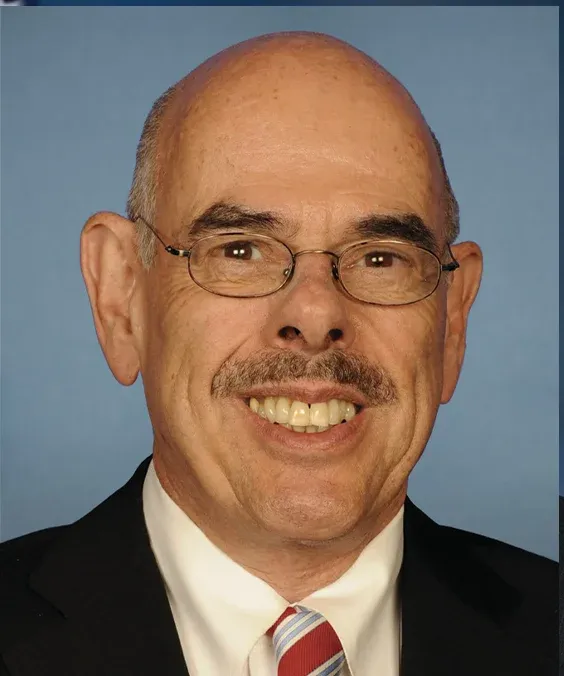
Alan Lowenthal
The Public Record
Alan S. Lowenthal is a Democratic politician from California, born on March 24, 1941. He served as a member of the U.S. House of Representatives from 2013 to 2023, representing California's 47th congressional district. During his tenure, Lowenthal focused on issues such as education, healthcare, and environmental protection, advocating for policies that support working families and promote sustainable practices. He has a background in academia and local government, having previously served in the California State Assembly and as a Long Beach city council member.
Jan 17, 2018
one of the things that is very concerning about this Administration's energy policies is the way that they seem to be cutting down on opportunities for public involvement in the oil and gas leasing process.
Jan 17, 2018
This Administration has shown its true stripes over the past year. Its top priority is doing everything the oil, gas, and coal industries desire.
Jan 17, 2018
While the public has been fascinated by the dysfunction of the White House over the past year, one area where this Administration has been ruthlessly competent is in fulfilling the desires of big oil and big coal.
Jan 17, 2018
Energy dominance simply means letting the oil, gas, and coal industries do whatever they want, whenever they want, however they want, on our public lands.
Jan 16, 2018
So what you are saying is if there was a correct interpretation of the Jones Act by the CBP, we truly would make America great again.
Jan 15, 2018
Report, 'The Benefits of NEPA: How Environmental Review Empowers Communities and Produces Better Projects,' January 16, 2018, by Kevin DeGood, Director of Infrastructure Policy, Center for American Progress; submitted by Hon. Alan S…
Jan 8, 2018
I want to follow up on this, Mr. Chapoose, that the monument review carried out by Secretary Zinke that was ultimately used to justify President Trump's elimination of Bears Ears National Monument, claimed that a lot of the land included…
Jan 8, 2018
We are now engaging in a process to not protect over a million acres that had been protected by President Obama.
Jan 8, 2018
the input from the Inter-Tribal Coalition, the sovereign nations that live there is deafening, the silence.
Jan 8, 2018
Just 3 weeks ago, right before the holiday district period, we had a hearing on a similar rushed piece of legislation to provide cover for President Trump's illegal elimination of the Grand Staircase-Escalante National Monument.
Jan 8, 2018
Ultimately, the Bears Ears Inter-Tribal Coalition, a historic coalition representing the five tribes connected to Bears Ears, felt cut out of the process and left the negotiating table.
Jan 8, 2018
Contrary to what opponents of President Obama's creation of Bears Ears National Monument say, the designation was not some fly-by-night, last-minute proclamation.
Jan 8, 2018
If we were actually seeking to honor tribal concerns, we would be holding a hearing on H.R. 4518, a bill with nearly 100 co-sponsors introduced by Representative Gallego to expand the Bears Ears National Monument.
Jan 8, 2018
I strongly agree that they should be permanently protected for the use and enjoyment of future generations.
Jan 8, 2018
This bill, as I said over and over again at the last hearing and I will say it again today, we should not be considering.
Jan 8, 2018
What we have in this bill is not tribal management, but management by the President and picking people that the President wants.
Jan 8, 2018
But I think you should read the bill. It is not the people who will make that choice.
Jan 8, 2018
The message that we have heard from the tribal leaders, which I want to amplify, is that there is an overwhelming amount of support for the Bears Ears National Monument.
Jan 8, 2018
If this legislation was truly intended to protect the outdoor recreation economy of Utah, it would incorporate my bill, America's Red Rock Wilderness Act.
Dec 20, 2017
The tax bill passed by the House GOP today embodies everything that Americans dislike about Congress: It was drafted behind closed doors where the drafters cast aside expert analysis and relied instead on special interests and faulty…
Dec 13, 2017
I want to make sure I understand the bill as you are presenting it to us, so I am asking you, can you confirm that the bill does not repeal any of the approximately 900,000 acres of wilderness study areas under BLM, within the original…
Politicians like Alan Lowenthal