Apr 9, 2019
The success of the Ports of Los Angeles and Long Beach are only as strong as their partnership with the Federal government in maintaining our infrastructure.
The Public Record
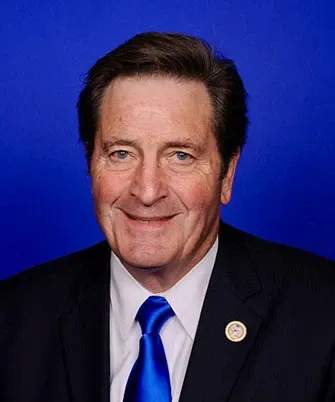
Alan S. Lowenthal is a Democratic politician from California, born on March 24, 1941. He served as a member of the U.S. House of Representatives from 2013 to 2023, representing California's 47th congressional district. During his tenure, Lowenthal focused on issues such as education, healthcare, and environmental protection, advocating for policies that support working families and promote sustainable practices. He has a background in academia and local government, having previously served in the California State Assembly and as a Long Beach city council member.
The success of the Ports of Los Angeles and Long Beach are only as strong as their partnership with the Federal government in maintaining our infrastructure.
So, Ms. Homendy, can you tell us more about the NTSB recommendations, and how great a safety risk is posed by sleep apnea?
For years that the NTSB and other stakeholders have been concerned that Federal agencies haven't implemented clear guidelines to ensure drivers and other transportation workers are screened for sleep apnea.
I am struck by reports that individuals with obstructive sleep apnea are twice as likely to be involved in motor vehicle accidents than are the general public.
I beseech you on behalf of a loving, liberating, and life-giving God who fills all things because He created all things, to pass H.R. 1146 and protect the Holy and Sacred Place Where Life Begins.
I want to encourage my colleague, Mr. Huffman, and offer my support for trying to create a CODEL to this area.
I believe it is important to listen to these local voices regarding the impacts of oil and gas development, and what that will mean to the Coastal Plain and the way of life that it sustains.
Oil and gas development, particularly on the tundra in the Arctic, is irreversible.
There is absolutely no need to open the Arctic Refuge to oil and gas drilling.
I think we should all be able to agree that decisions about the future of the Arctic Refuge should be made thoughtfully, carefully, and with an understanding that this is a one-way street.
And for the Gwich'in people, it is simply sacrosanct. They call it, 'the sacred place where life begins.'
But for others, such as myself and the majority of Americans, it is a fragile ecosystem with exceptional wilderness values.
But destroying a wilderness to get a $1 billion offset to a $1.5 trillion tax bill is clearly not about fiscal responsibility.
For the oil and gas industry, it is a promising cash cow, with billions of dollars of oil awaiting to be sold.
But the way the Coastal Plain was forced open in the 2017 tax bill was not thoughtful.
Production of domestic energy keeps energy prices low for American families and businesses, reduces our dependence on foreign oil, creates American jobs, and generates billions of dollars in revenue to states and the Federal Treasury.
We are proud to share the work we have accomplished to increase responsible access to public lands, streamline administrative processes, and provide savings to the American taxpayers without sacrificing environmental protections.
If that is the case, why are these restrictions not mandatory? And why are we not enforcing them, then?
I look forward to working with my colleagues, and especially I want to include my cochair of the PORTS Caucus, Randy Weber.
I think that much of what we have done in California, I am wondering how that translates to the rest of the Nation.
I represent an area that is impacted by climate change very much, southern California--sea level rise.
Politicians like Alan Lowenthal