May 9, 2023
I am adamantly opposed to blanket lead bans on national wildlife refuges, and I think it is going to hurt the system.
The Public Record
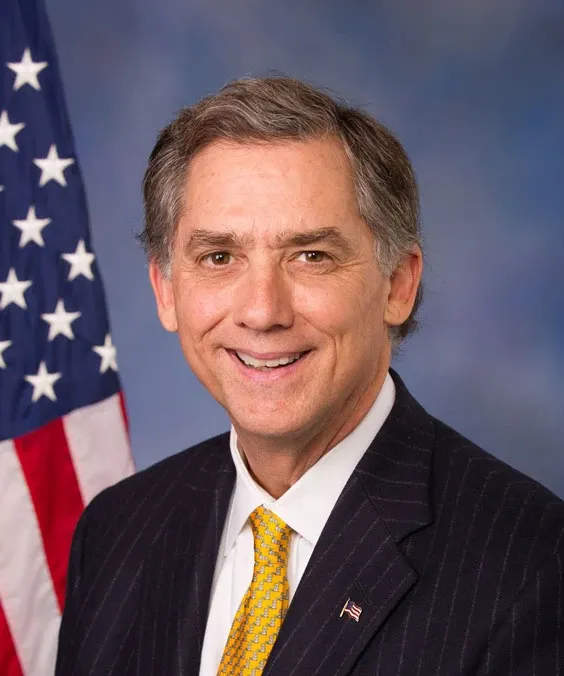
Bruce Eugene Westerman is an American politician serving as the U.S. Representative for Arkansas's 4th congressional district since January 6, 2015. A member of the Republican Party, Westerman has focused on issues such as natural resources, forestry, and environmental policy during his time in office. He has been an advocate for sustainable forestry practices and has worked on legislation aimed at improving the management of public lands. Westerman has also been involved in discussions around economic development and job creation in Arkansas.
I am adamantly opposed to blanket lead bans on national wildlife refuges, and I think it is going to hurt the system.
I hope that after today's hearing, Members on both sides of our dais will consider co-sponsoring this important piece of legislation.
The bipartisan Save Our Sequoias Act will codify emergency actions, provide the necessary funding to complete the work, and enhance the coordination.
If we don't clear out these hazardous fuels, it is not an exaggeration to say, as the video said, the giant sequoias could disappear in our lifetime.
I have made statements before that this can't happen on our watch. I am going to do everything in my power to make sure it doesn't happen on our watch.
I challenge each of you to work with us across party lines to prevent these giants from going extinct on our watch.
A grove of giant redwood sequoias should be kept just as we keep a great and beautiful cathedral.
This is not a partisan bill; this is something that everybody can work together.
Time is of the essence. And every day we wait can harm these giant sequoias even greater.
I am proud of the fact that we have 50 bipartisan co-sponsors who have shared commitment to protecting our giant sequoias for future generations.
The only thing that is changing on the East Coast is the wind industry. I don't know if that's affecting the whales or not, but we should probably do some kind of a study to find out what is causing those whale deaths.
Had that happened in the Gulf of Mexico, everybody would be blaming the oil industry.
I find that amazing. It doesn't change the fact that there are dead whales washing up on the shore. You would think the environmental groups would be raising the red flag. But they are turning a blind eye.
Feeling confident and aspirational won't do much to help our energy situation here.
I just think diverting $8 million from catastrophic wildfire to electric vehicles is a waste of taxpayer money.
Congress advanced funding to decrease the $17 billion maintenance backlog in our national parks and public lands.
Our public lands belong to every single American, and we want to make careers in this public service available to as many people as possible.
The way we push back against China and the CCP [Chinese Communist Party] is we produce our energy and minerals here. And we for sure don't let China come to America and own any kind of lease on federal lands--or private lands. We produce…
I hope to hear from you on what this Administration's plan is moving forward to provide American workers with certainty, reduce permitting roadblocks, and help us build right here at home.
Yet, in 3 years since then-President Trump signed this legislation into law, DOI's backlog has ballooned by more than $14 billion to roughly $31 billion.
While this Administration seems content to just throw money at a problem and call it a day, we know oversight is essential to ensure each taxpayer dollar is spent responsibly.
I have significant concerns about these proposals, starting with the fact that the Biden administration has yet to provide transparency on the staggering amount of money it has already allocated to Federal agencies.
When you create habitat for the woodpecker you create habitat that falls right in line with what the bat likes.
Politicians like Bruce Westerman