May 15, 2023
I hope everybody in the House and the Senate on both sides of the aisle can come together this Congress so we can enact real change.
The Public Record
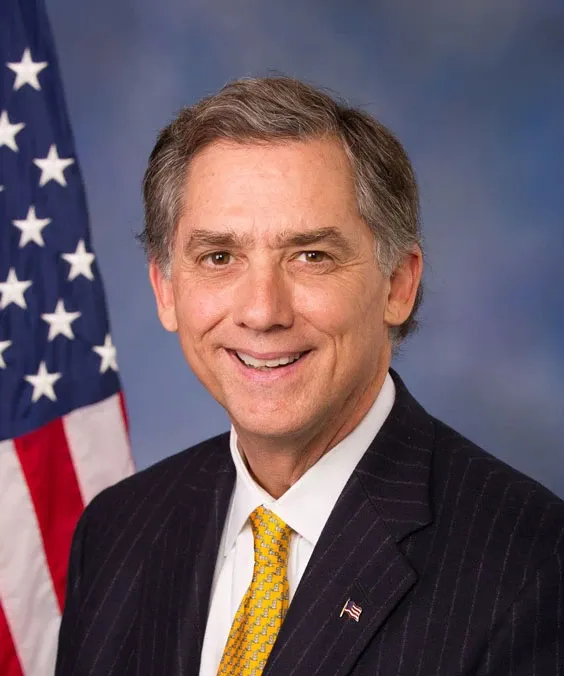
Bruce Eugene Westerman is an American politician serving as the U.S. Representative for Arkansas's 4th congressional district since January 6, 2015. A member of the Republican Party, Westerman has focused on issues such as natural resources, forestry, and environmental policy during his time in office. He has been an advocate for sustainable forestry practices and has worked on legislation aimed at improving the management of public lands. Westerman has also been involved in discussions around economic development and job creation in Arkansas.
I hope everybody in the House and the Senate on both sides of the aisle can come together this Congress so we can enact real change.
The U.S. compacts with the FAS countries are a balance of extraordinary security and defense right and strategic stability secured for the United States, and extraordinary economic gains and stability for the Freely Associated States.
Their sacrifices highlight why it is a strategic imperative to ensure a free and open Indo-Pacific.
We need to remember that those U.S. lands in the Pacific, including the-then U.S. territories of Hawaii and the Philippines, were directly attacked and in some cases occupied by an aspiring imperialist dictatorship attempting to conquer…
The record we create today will support the mission and work of this Committee to ensure that U.S. citizens and our locally self-governing U.S. territories of American Samoa, Guam, and the Northern Mariana Islands benefit and prosper under…
Thank you, Chairman Hageman, and also thank you to the witnesses for being here today as we convene to take testimony from expert witnesses on the preservation of U.S. critical interests in the Pacific Islands and, more broadly, the…
The Department of the Interior has a long history of leasing federal land containing coal deposits to mining companies willing to mine those deposits under the Mineral Leasing Act of 1920.
We have asked for that information, and nobody has been able to provide it so far.
My idea of conservation is you use it and leave it better for future generations.
This was intended to simply add new funding to cleanup efforts, not overhaul a program that has been working well since the 1970s.
In 1995, we produced over 3 times more copper than China. Today, they produce about 11 times more copper than we do.
And that needs to be verified. And we need to apply lessons that have been developed through industry.
So, if you are below ground in the mine, can water flow up to the Boundary Waters from there?
It is not like we have a choice to go somewhere where there is not copper ore, or cobalt, or nickel and build a mine because you are not going to find any there.
We have an administrative state that tries to usurp the will of Congress, which, really, if you can tell, probably gets under my skin.
Here is an area that could be managed, where the resources can be used, and that is the law.
Having done engineering work before I came to Congress, when I hear 2.8 years or 2.5 years, that causes people real problems that are actually trying to do projects, to have it delayed that long where you are waiting for permitting.
Thank you again, Chairman Gosar, and thank you to the witnesses for being here today.
The Administration has, without statutory mandate from Congress, sought to inject vague notions of environmental justice into every decision-making process
The Administration is attempting to use old fuel efficiency mandates to mandate electric vehicles
The Administration has participated in numerous sue-and-settle deals with environmental groups so that they can use the settlements to prevent oil and gas production
The Administration is actively seeking to halt oil and gas production on Federal lands by any means in direct contravention of congressional intent
The Biden administration has launched a full spectrum assault on domestic energy production, trying to crush production on Federal lands
In the spirit of the current system rewarding those who seek to delay rather than those who seek to build, litigation under NEPA has become the favored tool of those who seek to indefinitely delay projects through procedural lawsuits.
Judicial review is the biggest wildcard in the current permitting system, and H.R. 1 appropriately recognized it as an area that could have the most meaningful impact toward efficient project deliverability.
Politicians like Bruce Westerman