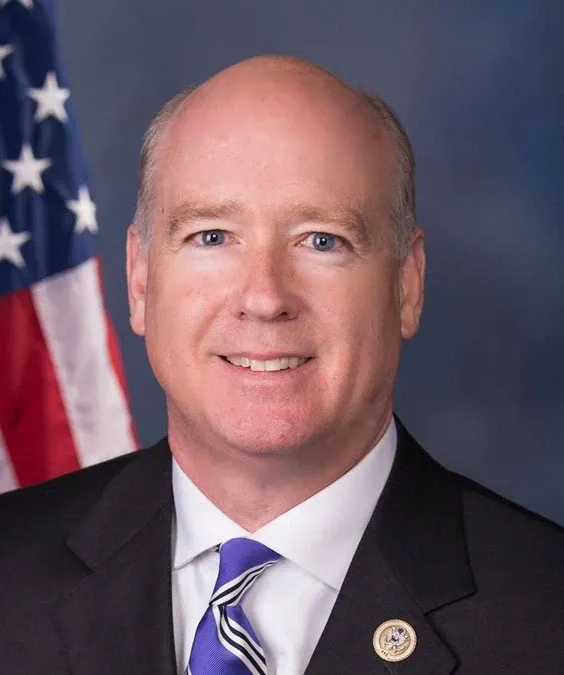
Mike Rogers
The Public Record
Mike Dennis Rogers is a former U.S. Representative for Alabama's 3rd congressional district, serving from 2003 to 2015. A member of the Republican Party, Rogers held various influential positions in Congress, including Chairman of the House Permanent Select Committee on Intelligence. During his tenure, he focused on national security and intelligence issues, advocating for policies to strengthen the military and enhance oversight of intelligence operations.
Feb 7, 2012
I do believe it is unprecedented in history that such a massive and sustained intelligence effort by a government to blatantly steal commercial data and intellectual property to use against the United States is well underway.
Feb 7, 2012
I want to thank Anna Eshoo. We did a seminar out at Stanford University on this very issue.
Feb 7, 2012
The real number we think is closer to somewhere between $300 billion and $1 trillion in lost intellectual property per year.
Feb 7, 2012
Eighty percent of the attacks that happen every day can be prevented by the operator.
Feb 6, 2012
I intend to hold a hearing on SPP and the handling of the MCI contract in the coming weeks.
Feb 6, 2012
I continue to feel strongly that the private sector has an important role to play in security and must be properly leveraged, not forced out of the process in favor of a larger Federal workforce.
Feb 6, 2012
Rather than trying to insulate a giant Federal workforce, TSA should be working to strengthen and improve the private screening program and make it more cost-efficient.
Feb 6, 2012
Limiting SPP's growth is the wrong approach, in my opinion, especially since both TSA and GAO have determined that the performance of Federal screeners and private screeners are roughly the same.
Feb 6, 2012
I am a strong supporter of the Screening Partnership Program, or SPP, and was disappointed with the TSA's decision last January not to expand the program beyond the existing 16 airports utilizing private screening services.
Jan 31, 2012
The academy also wishes to acknowledge and thank Representatives Mike Rogers and Ed Markey, who together authored the Pediatric Medical Device Safety and Improvement Act of 2007.
Nov 29, 2011
80 percent of our problem in the House of Representatives could be cured by changing human behavior.
Nov 29, 2011
The cyberthreat is one of the most serious threats that we have in our country.
Nov 16, 2011
I would just like to firstly thank you again very much and other members for your leadership on this issue.
Nov 16, 2011
The Catholic Church has clearly no veneer because it does not have a priest.
Nov 16, 2011
Anyone engaged in religious activity ends up in one of the prison camps and in some cases, not all, but in some cases they face execution for their religious faith.
Nov 2, 2011
The Honorable Mike Rogers, a Representative in Congress From the State of Alabama, and Chairman, Subcommittee on Transportation Security.
Nov 1, 2011
When you talk to these companies behind closed doors, they describe attacks that originate in China and have a level of sophistication and are clearly supported by a level of resources that can only be a nation state entity.
Oct 25, 2011
Because once we take anything off the table, that is only going to embolden Iran.
Oct 25, 2011
I think it is essential that we begin to enforce sanctions against Iran's Central Bank.
Oct 25, 2011
I do not believe they have been designated as a foreign terrorist organization.
Oct 25, 2011
I think, for instance, we should expel Iranian officials both in New York at the United Nations and also here in Washington.
Politicians like Mike Rogers